


I did not like this color.
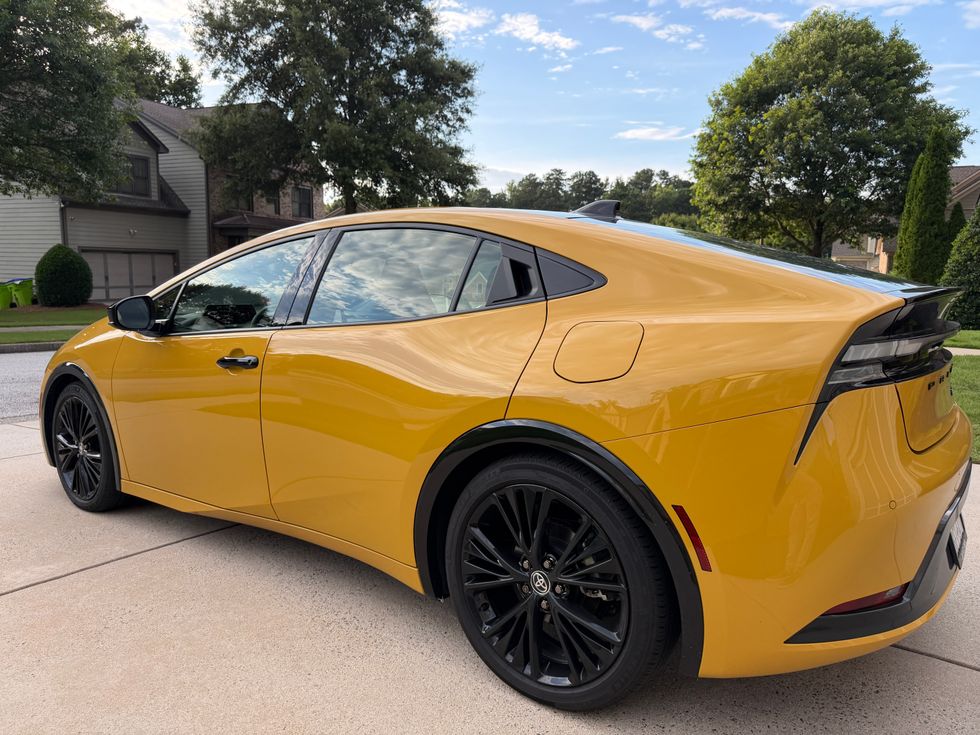
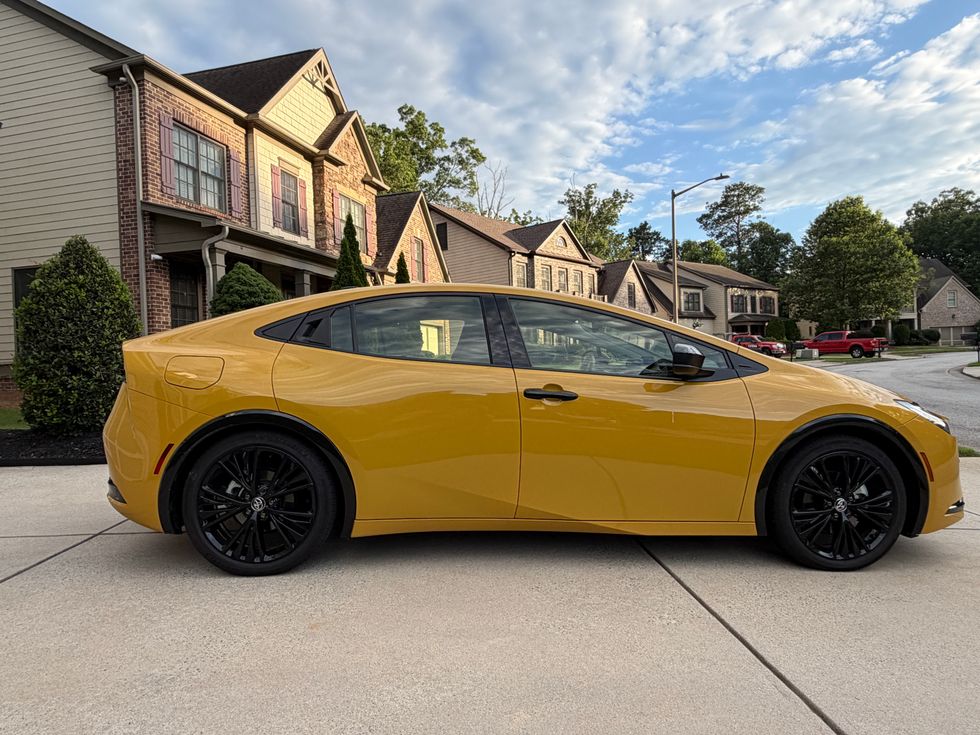
That was my first reaction when the 2026 Toyota Prius Plug-in Hybrid Nightshade arrived wearing Karashi paint.
Karashi is inspired by a popular Japanese hot mustard, which explains the bold yellow and gold appearance. Once I learned the meaning behind the name, I understood what Toyota was trying to accomplish.
I am still not convinced American buyers are going to rush into showrooms asking for a mustard colored Prius. But at least the name gives the color a good story.
More importantly, after spending a week with this car, the paint became one of the least surprising things about it.
The electric driving range was useful. The fuel economy was impressive. The acceleration felt quick and smooth. The handling exceeded my expectations, and the ride was more refined than I anticipated.
For the first time, I found myself evaluating a Prius as a genuinely desirable car instead of simply respecting it as an efficient one.
 Daryl Killian
The first Prius I find attractive
I have always respected the Prius for helping make hybrid technology mainstream.
Respecting a car and wanting one are two different things.
Earlier generations looked as though they were deliberately designed to announce that the driver had chosen a hybrid. Efficiency was the priority, while conventional proportions and mainstream styling seemed secondary considerations.
This generation is different.
The long windshield, low roofline, wider stance, and sharp lighting give the Prius the appearance of a sporty sedan. Technically, it remains a hatchback, but it no longer looks like an economy car shaped primarily by a wind tunnel.
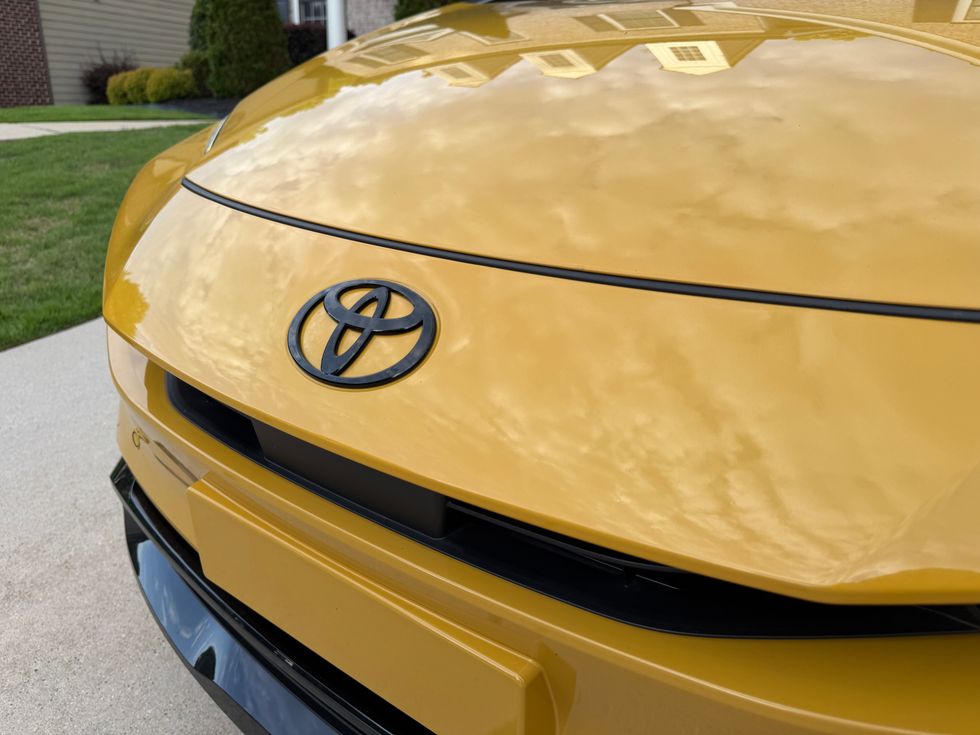
This Nightshade Edition enhances that appearance with 19-inch black-finished wheels, black exterior badging, black door handles, black bumper trim, a black shark-fin antenna, and other dark exterior details.

 Daryl Killian
Against the Karashi paint, those black accents provide strong contrast. The car looks lower, wider, and more athletic than most people probably expect from anything wearing a Prius badge.
This is the first Prius generation that I find somewhat attractive. In Nightshade form, I might even remove the word somewhat.
Quick and smooth like an electric vehicle
The biggest surprise came when I pressed the accelerator.
The Prius Plug-In Hybrid produces 220 combined system horsepower from a 2.0-liter gasoline engine, electric motors, and a lithium-ion battery.
 Daryl Killian
That output changes the car's personality.
Acceleration is immediate, quiet, and smooth. The electric motor delivers power without waiting for the gasoline engine to build speed, so the Prius responds quickly when leaving a traffic light, merging onto the interstate, or passing slower traffic.
It does not feel like an old economy car working hard to create momentum. It feels more like an electric vehicle that has a gasoline engine available when needed.
The transition between electric and hybrid operation is also well managed. The gasoline engine can enter the conversation without unsettling the powertrain or dramatically changing the driving experience.
That smoothness may be one of this car’s most important strengths.
Drivers who enjoy the quiet response of an electric vehicle but are not ready to depend entirely on public charging may find this configuration especially appealing.
Handling that exceeded my expectations
I did not expect the Prius to be a sports car, and it is not.
But I also did not expect it to feel this composed.
The steering is predictable, the body remains controlled through corners, and the car feels planted during quick direction changes. Sport mode sharpens the response, but even in the normal setting, the Prius feels more agile than its reputation might suggest.
The 19-inch wheels contribute to the Nightshade model’s athletic stance, yet the ride remains neither harsh nor uncomfortable. It remains smooth enough for commuting and relaxed highway driving.
The result is a car that balances efficiency and driving enjoyment better than previous Prius generations.
You are not buying a Prius to attack a racetrack. But you are also no longer accepting dull performance as the price of saving fuel.
The plug-in hybrid advantage
The Prius Plug-in Hybrid gives its owner two different ways to drive.
With a charged battery, it can complete many local trips using electricity alone. When the battery reaches its minimum charge level, the vehicle continues operating as an efficient gasoline-electric hybrid.
There is no need to stop and recharge before continuing a longer trip.
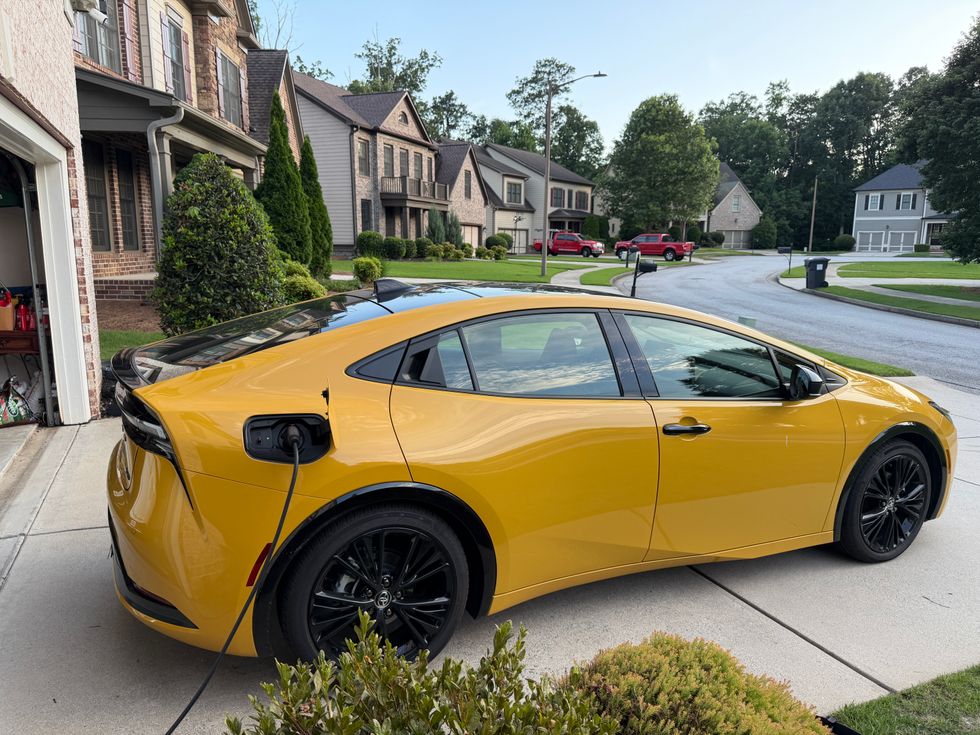
The EPA label on my Nightshade tester lists an all-electric driving range of 39 miles. Toyota originally described the Nightshade as offering approximately 40 miles, so the difference is essentially a matter of the final EPA certification.
Thirty-nine electric miles can cover a substantial portion of a normal commute. Owners who can charge at home and drive fewer than 40 miles during a typical day may complete most weekday travel without using much gasoline.
Once the battery is depleted, the Nightshade is rated at 48 miles per gallon combined while operating on gasoline and hybrid power.
The EPA label also gives the vehicle an MPGe rating of 114 when electricity and gasoline operation are combined.
That combination is what makes a plug-in hybrid useful.
You can experience quiet electric driving around town without planning a road trip around charging stations. When your destination is hundreds of miles away, the gasoline engine lets you continue traveling as you would in a conventional hybrid.
The supplied charging cable can be connected to a normal household outlet. Toyota estimates approximately 11 hours for a full charge using 120-volt service and about four hours with a Level 2 charger under ideal conditions.
Unlike a full electric vehicle, the Prius does not become unusable when charging is unavailable. It simply continues driving as a hybrid.
A more spacious interior than it appears
The sloping windshield and roofline create the impression that interior room must have been sacrificed for styling.
That was not my experience.
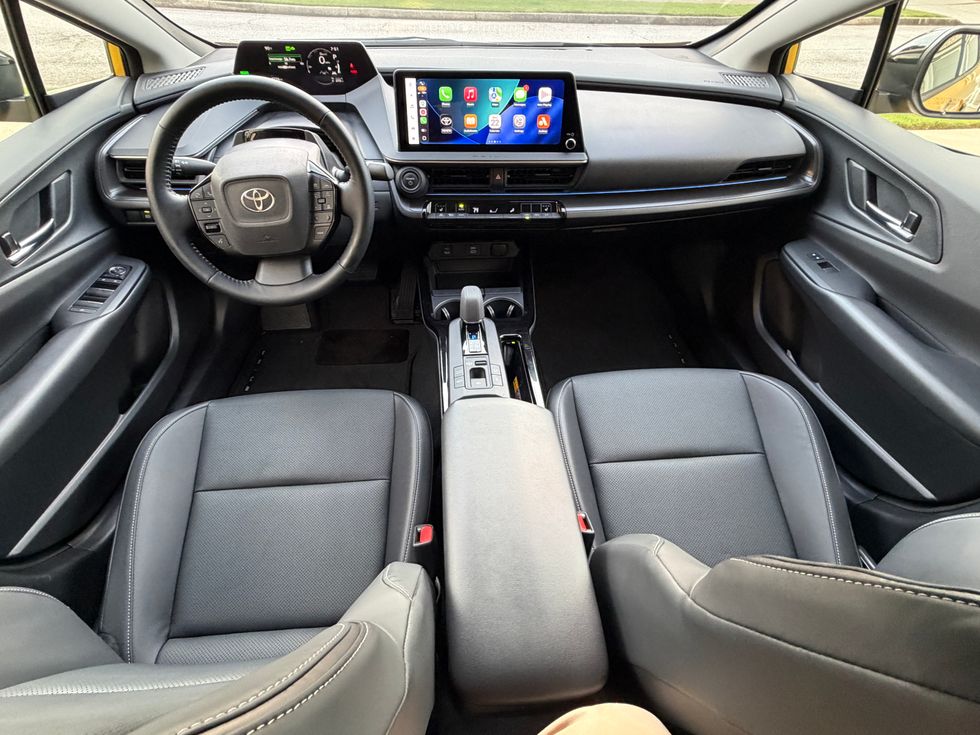
Front-seat space is comfortable, and rear-seat room is better than the exterior profile suggests. My passengers did not feel as though they had been squeezed into the back of a low-roofed compact car.
 Daryl Killian
The seating position is low compared with a crossover, but the cabin does not feel claustrophobic. The fixed glass roof in my tester helped bring more light into the interior.
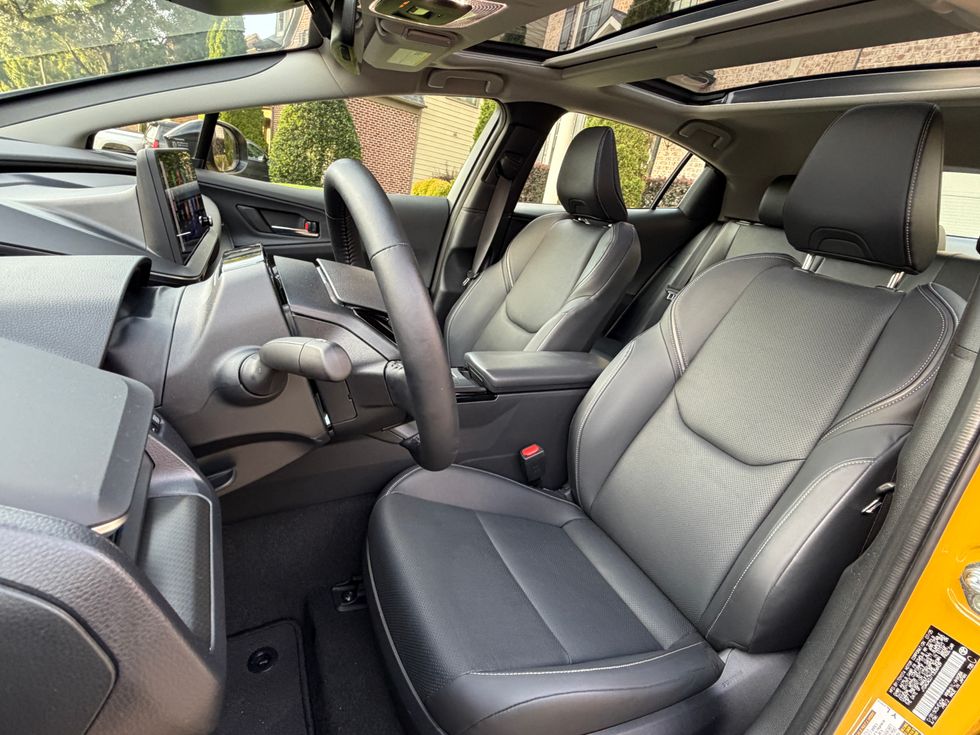 Daryl Killian
The design is modern without becoming unnecessarily complicated. The digital instrument display is positioned high in the driver’s line of sight, and the controls are generally easy to understand after a short adjustment period.
The interior does not meet luxury-car standards, but the ride quality, technology, and overall presentation give this Prius a more upscale character than the nameplate traditionally suggests.
Technology without abandoning usability
My Nightshade tester included the available 12.3-inch Toyota Audio Multimedia display.
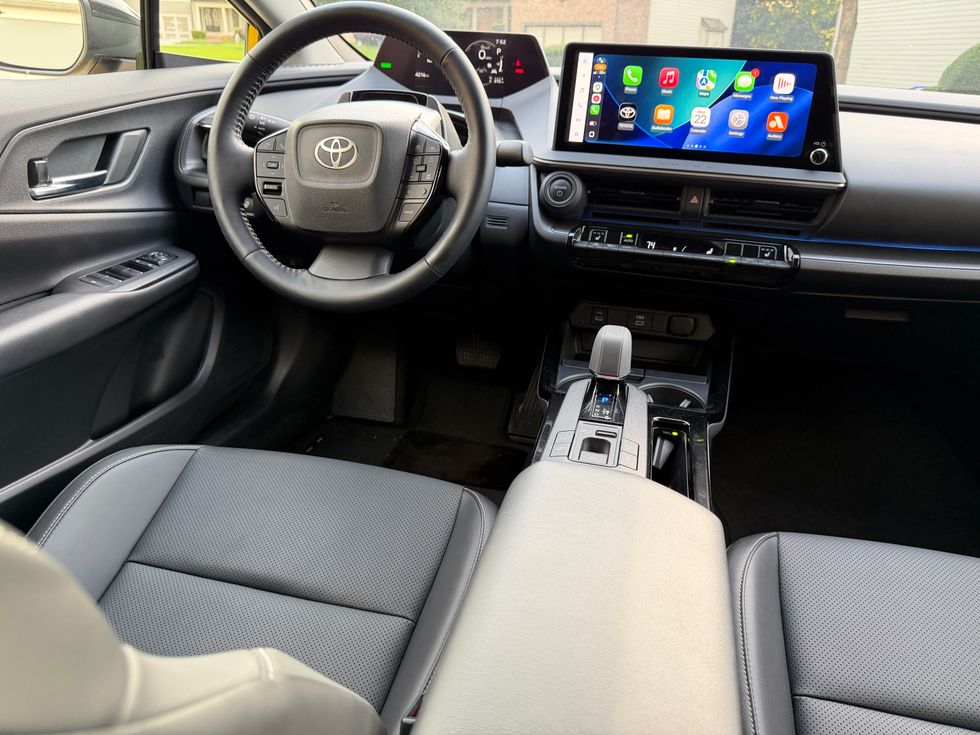 Daryl Killian
The system supports wireless Apple CarPlay and Android Auto, dual Bluetooth phone connectivity, and voice-activated functions. The cabin also includes a wireless charging pad, multiple USB-C ports, and a digital gauge display.
Toyota also includes its Safety Sense 3.0 driver assistance suite. Features include adaptive cruise control, lane departure alert with steering assistance, lane tracing assistance, and a pre-collision system with pedestrian detection.
The technology is substantial, but Toyota did not force every basic function into the touchscreen. That matters because drivers should not need to navigate several menus to complete common tasks.
The Easter egg my daughter found cringey
Toyota added a few playful details for owners to discover.
One of them appears near the rear seatbelt and reads “#safetyfirst.”
I thought it was a fun little message.
My 18-year-old daughter thought it was cringey.
That may be the most accurate focus group Toyota could have assembled.
Whether you find it clever or corny, it shows that the designers were willing to give this Prius a little personality. Previous versions sometimes felt like transportation appliances. This one contains details intended to make owners smile, or at least make their teenagers roll their eyes.
Hatchback practicality without the crossover penalty
The Prius may resemble a sedan from the side, but the rear hatch makes it significantly more useful than a traditional trunk.
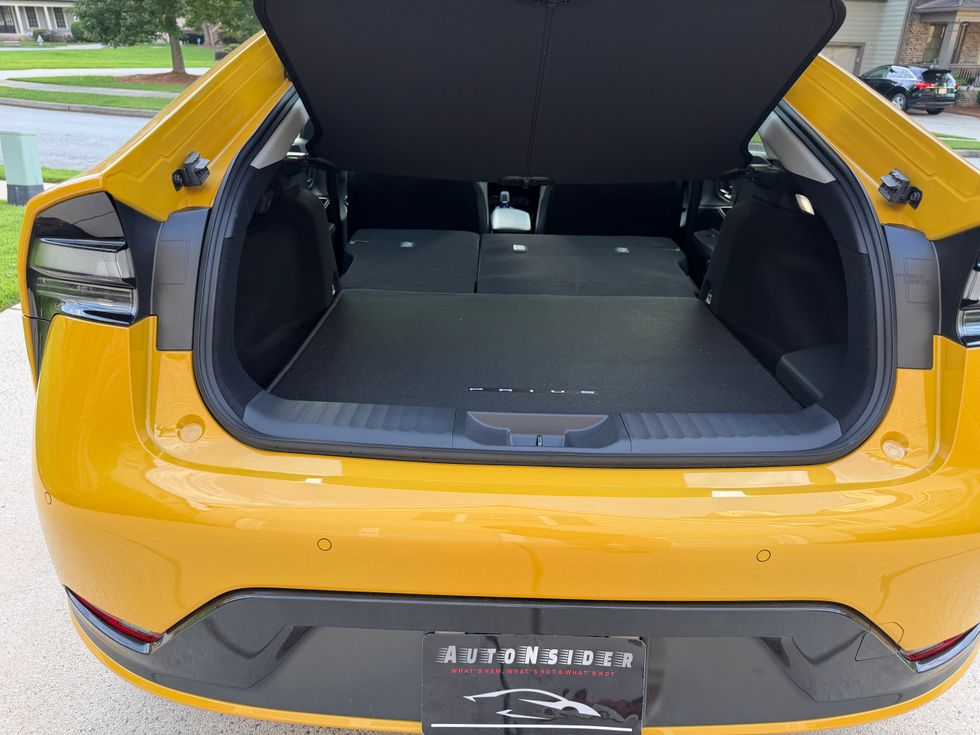 Daryl Killian
The opening is wide, giving owners better access when loading luggage, groceries, camera equipment, or other bulky items.
The second row uses a 60/40 split folding design. Folding one or both sections creates enough space for longer cargo while still leaving part of the rear seat available.
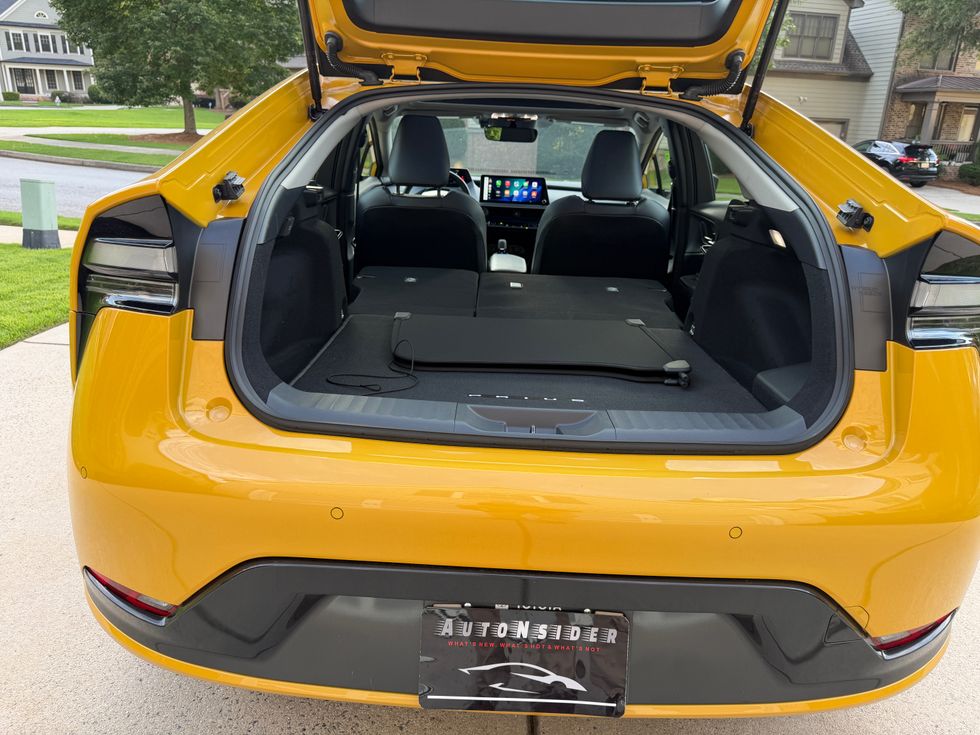 Daryl Killian
This flexibility is important because many consumers automatically assume they need a crossover to gain useful cargo space.
The Prius cannot replace every sport utility vehicle, but it may handle more family and household duties than its sleek profile suggests. Buyers who do not need All Wheel Drive, a tall seating position, or maximum cargo height may discover that the hatch and folding second row provide plenty of everyday utility.
You gain much of the flexibility people want from a small crossover while retaining excellent fuel economy and a lower, more carlike driving experience.
Price and equipment
The 2026 Prius Plug-in Hybrid Nightshade has a base price of $37,795 before destination and optional equipment.
My tester added the 12.3-inch multimedia display, fixed glass roof, digital key capability, wheel locks, key gloves, and carpeted floor and cargo mats.
Including the $1,195 destination charge, the total suggested retail price was $41,304.
That is no longer inexpensive transportation.
At more than $41,000, the Prius enters a price range where buyers may also consider larger hybrids, compact crossovers, and some fully electric vehicles.
The value depends heavily on how the vehicle will be used.
A driver who can charge at home, completes most daily travel within the electric range, and still needs uncomplicated long-distance capability can take full advantage of what the Prius Plug-In Hybrid offers.
A buyer who cannot charge regularly may be better served by the less expensive conventional Prius hybrid. Without frequent charging, you are paying more for hardware that you are not fully using.
Who should buy it?
The Prius Plug-In Hybrid makes the most sense for someone who wants the electric-vehicle experience without committing entirely to an electric vehicle.
It is especially well suited to drivers with home charging, a daily commute of fewer than 40 miles, and occasional longer trips that would make charging stops inconvenient.
It also deserves consideration from buyers who believe they need a small crossover but rarely use the added height or cargo capacity. The Prius offers practical hatchback versatility, strong passenger room, and significantly better efficiency than many compact utility vehicles.
Drivers who need All Wheel Drive, maximum rear headroom, or a taller seating position should probably look elsewhere. The Plug-In Hybrid is currently Front Wheel Drive, and its low roofline may not work for every body type.
The AutoNsider verdict
The 2026 Toyota Prius Plug-in Hybrid Nightshade changed my opinion of the Prius.
Not because it is efficient. Prius models have been efficient for decades.
This one impressed me because it no longer feels defined only by efficiency.
It looks good. It is surprisingly quick. It rides smoothly. It handles with confidence. It provides a usable electric range, excellent hybrid fuel economy, and the freedom to take a long trip without depending on the charging infrastructure.
It is also far more practical than the low roof and dramatic profile suggest.
As for Karashi, I am still not certain that America is ready for a car painted to resemble Japanese hot mustard.
But the color grew on me.
So, did the car.
 Daryl Killian
For buyers who can charge at home and want a single vehicle that handles electric commuting and gasoline-powered road trips, this may be one of the most complete plug-in hybrid packages currently available.
For the first time, the Prius is not merely the responsible choice.
It may also be the one you actually want.


