


Vehicle recalls aren't new. Anyone who's worked inside a dealership service department understands recalls are simply part of the business. What's changed is how quickly the public finds out about them, how complicated modern vehicles have become, and how much more information consumers can access before making a purchase.
When I was a service manager at Baranco Acura, recalls were handled through factory bulletins, mailed owner notices, dealer communication, and direct conversations with customers. The customer didn't care about the technical bulletin number. They wanted answers to three simple questions:
- Is my vehicle safe to drive?
- How long will the repair take?
- Will it cost me anything?
Those same questions still matter today.
The difference is that consumers now have more tools than ever. Owners can check their VIN through the National Highway Traffic Safety Administration recall lookup. NHTSA says a VIN or license plate search can show whether a specific vehicle has an unrepaired safety recall. The agency also notes that newly announced recalls may not immediately display every affected VIN, so it's worth checking again if a recall has just been announced.
What's important to understand is that the recall itself isn't always the whole story. The bigger issue is how the automaker handles the recall.
Questions worth asking include:
- Did the automaker find the problem early?
- Did owners complain for years before action was taken?
- Was NHTSA forced to investigate?
- Was the repair ready when the recall was announced?
- Were replacement parts available?
- Were owners told to keep driving, park outside, or stop driving altogether?
Those answers often separate a proactive recall culture from a reactive one.
QUICK REFERENCE: RECENT MAJOR RECALL THEMES BY BRAND
| Brand | Major Recall Theme | Consumer Concern Level |
| Honda/Acura | Suspension, brake pedal, tire repair kit | Moderate |
| Toyota/Lexus | Camera systems, twin-turbo V6 engines | Moderate-High |
| Mazda | Steering investigations on new platforms | Moderate |
| Ford/Lincoln | Rearview cameras, software, repeat recalls | High |
| Stellantis (Jeep/Ram/Dodge) | Fire risk, electrical systems | Very High |
| GM | Camera systems, V8 engine concerns | High |
| Tesla | Camera systems, Cybertruck hardware | Moderate |
| Hyundai/Kia | Software breaking, fire-related themes | High |
HOW RECALLS HAPPEN
According to NHTSA, a recall can be issued when a manufacturer or NHTSA determines that a vehicle, equipment, car seat, or tire creates an unreasonable safety risk or fails to meet minimum safety standards. NHTSA also says most recall decisions are made voluntarily by manufacturers before the agency gets involved.
That's the ideal scenario. The manufacturer identifies a defect through testing, warranty claims, dealer reports, supplier information, or field monitoring and then develops a remedy before the issue grows.
The more concerning pattern looks different. Owners begin complaining. Dealers see repeat failures. NHTSA receives complaints and opens an investigation. Media coverage increases. Then a recall follows.
That doesn't automatically mean the automaker acted improperly, but it should get the attention of anyone shopping for a new or used vehicle.
HONDA AND ACURA: GENERALLY ORGANIZED, BUT STILL WORTH WATCHING
Honda and Acura have experienced several significant recalls over the past year.
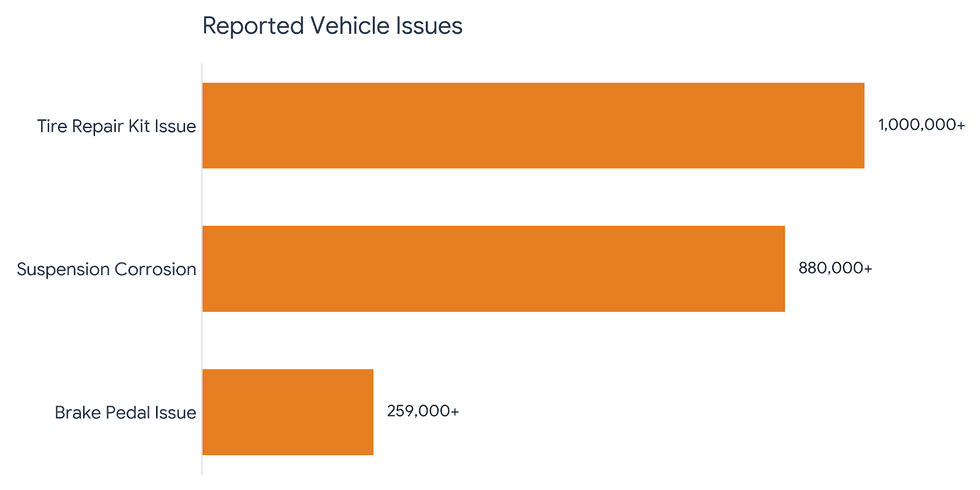
Honda recalled more than 880,000 Pilot, Ridgeline, Passport, and Acura MDX vehicles because rear suspension components could fail due to corrosion at the rear subframe, according to Reuters and AP. Honda estimated that only about 1% of affected vehicles actually had the defect.
The company also recalled more than 1 million Accord Hybrid, CR-V Hybrid, and CR-V Fuel Cell EV models because a tire-repair kit sealant bottle could build up pressure and eject its cap. According to Road & Track, Honda first identified the issue in 2023 but didn't confirm a manufacturing defect until 2026.
Another recall affected more than 259,000 Honda Pilot, Acura MDX, and Acura TLX vehicles due to a brake pedal pivot pin issue.
Honda/Acura Snapshot
Recall Volume (Approx.)
Overall, Honda and Acura appear organized and methodical in their recall responses. Most remedies are clearly defined, and dealer networks generally handle repairs efficiently. Still, the tire repair kit example shows that even highly respected brands don't always move quickly from early reports to final confirmation of a defect.
Consumer takeaway: Honda and Acura remain strong choices, but don't let reputation replace due diligence. Always verify completion of recall before purchasing a used Pilot, Passport, Ridgeline, MDX, TLX, Civic, or Accord Hybrid.
TOYOTA AND LEXUS: STRONG REPUTATION, BUT MAJOR RECENT RECALLS MATTER
Toyota and Lexus continue to enjoy some of the strongest reputations for reliability in the industry, but recent recalls remind buyers that no manufacturer is immune to problems.
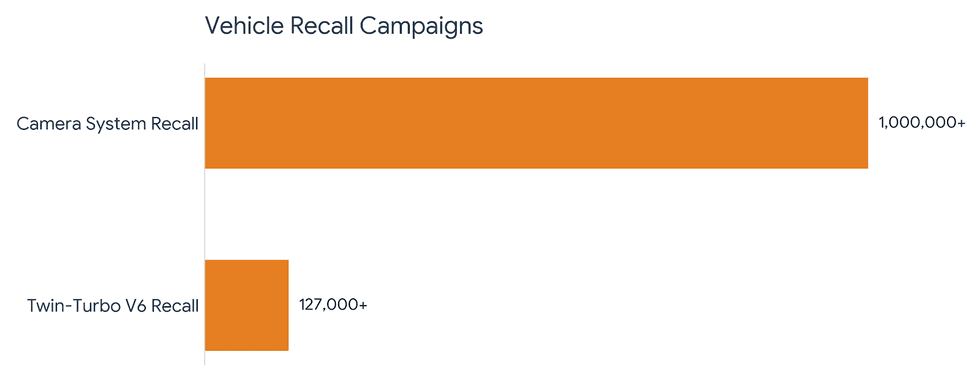
Toyota recalled more than 1 million Toyota, Lexus, and Subaru vehicles because rearview camera images could freeze or disappear. Dealers addressed the issue through software updates.
More concerning was Toyota's recall of its twin-turbo V6 engine. Road & Track reported that machining debris left inside engines could lead to catastrophic engine damage or failure.
Toyota/Lexus Snapshot
Recall Volume (Approx.)
Toyota's reputation wasn't built overnight, and these recalls don't erase decades of reliability success. However, they do highlight the risks associated with new powertrains and manufacturing processes.
Consumer takeaway: If you're shopping for a Tundra, Sequoia, Lexus LX, GX, TX, RX, or NX, verify that any recalls have been completed and ask detailed questions about engine-related repairs.
MAZDA: LOWER VOLUME, BUT NEW PLATFORM ISSUES NEED ATTENTION
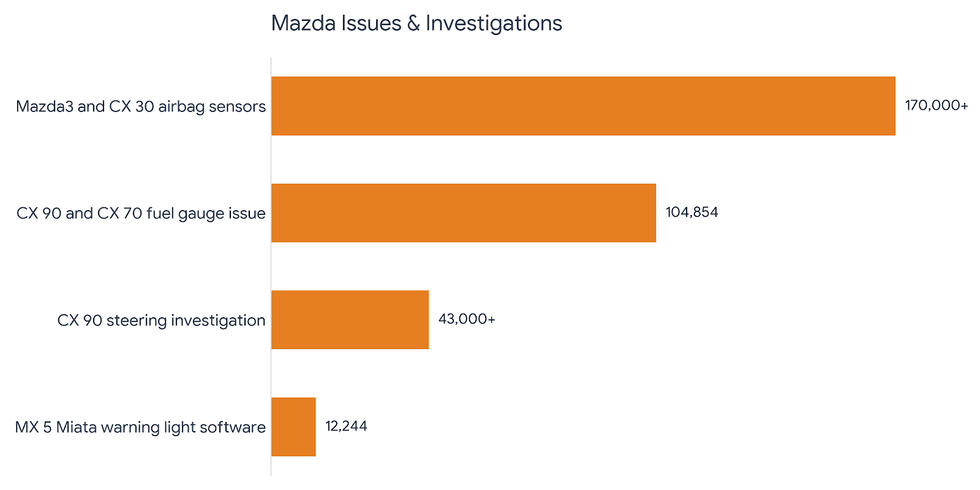
Mazda hasn't generated the same recall volume as Ford, Stellantis, Honda, or Toyota in the examples reviewed here. However, lower recall volume doesn't automatically mean lower risk.
The newer CX-90 and CX-70 platforms deserve attention because they're built on a relatively new architecture with new powertrain technology. Road & Track reported that NHTSA opened an investigation into steering complaints after a previous recall repair.
That doesn't mean buyers should avoid the CX-90 or CX-70. It simply reinforces a long-standing automotive rule: first-generation products often experience more growing pains than mature platforms.
Consumer takeaway: Mazda generally appears cleaner than many competitors in terms of recall volume, but buyers should still check recalls, software updates, and technical service bulletins before purchasing.
FORD AND LINCOLN: HIGH RECALL VOLUME AND REPEAT CAMERA PATTERNS
Ford has become one of the most closely watched manufacturers when it comes to recalls.
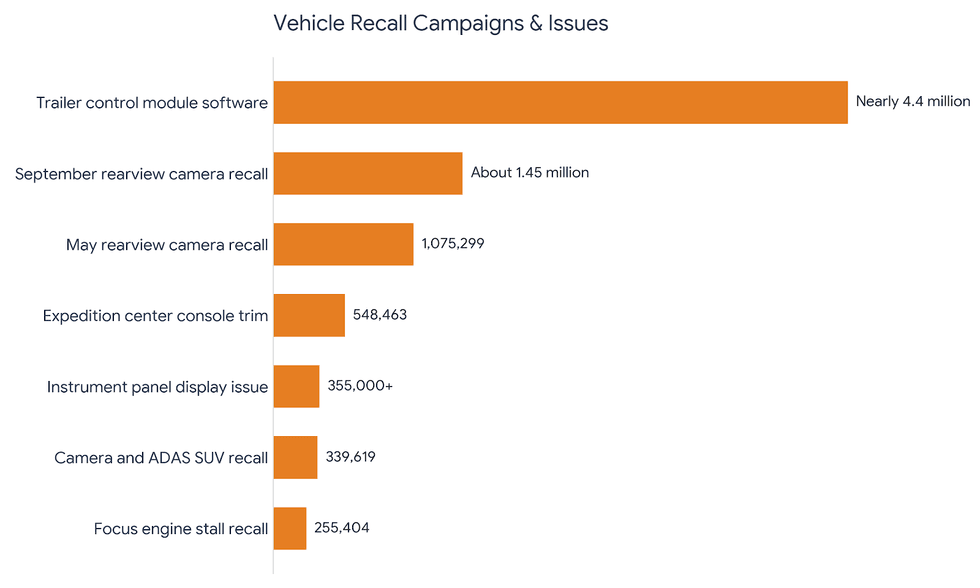
In 2025, Ford recalled more than 1 million vehicles because rearview camera images could freeze, delay, or fail entirely. The affected vehicles included popular models such as the F-150, Bronco, Escape, Expedition, Mustang Mach-E, Ranger, and several Lincoln products.
The concern isn't just the size of the recall. According to The Verge, NHTSA previously fined Ford over delays related to earlier camera recall actions.
Ford also recalled more than 255,000 Focus models because they could stall unexpectedly due to fuel system and software-related issues.
The issue isn't that every Ford product is problematic. The concern is the recurring presence of certain systems across multiple recalls.
Consumer takeaway: If you're buying a used Ford or Lincoln, insist on written proof that all recalls have been completed. Pay particular attention to camera systems, driver-assistance technology, and any recall involving previous repair effectiveness.
STELLANTIS: FIRE RISK RECALLS DEMAND URGENCY
Stellantis, which includes Jeep, Chrysler, Dodge, Ram, and Fiat, generated one of the most serious recall stories in recent memory.
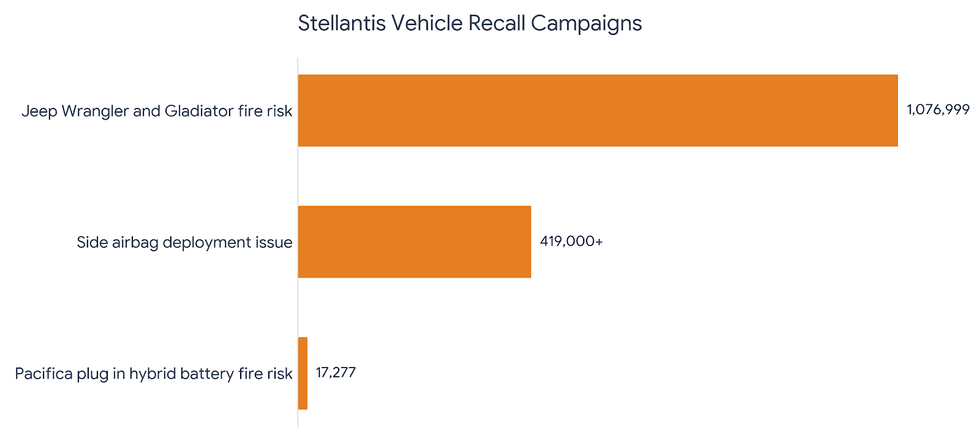
The company recalled more than 1 million Jeep Wrangler and Gladiator vehicles because the power steering pump wiring could overheat, potentially causing fires—even when the vehicle was parked and turned off.
More concerning, Stellantis advised owners to park affected vehicles outside and away from structures until repairs could be completed.
Recall Severity Scale
| Recall Warning | Risk Level |
| Software Update Available | Low |
| Schedule Service Soon | Moderate |
| Safety Recall Repair Needed | High |
| Park Outside Warning | Very High |
| Do Not Drive Warning | Critical |
Whenever an automaker tells owners to park outside, consumers should pay attention. That's not routine recall language.
Consumer takeaway: Carefully review recall histories on Jeep, Ram, Dodge, Chrysler, and Fiat vehicles. Fire-related recalls deserve immediate attention.
GENERAL MOTORS (GM): MIXED PICTURE, WITH TRUCK ENGINE CONCERNS STANDING OUT
GM's recall history presents a mixed picture.
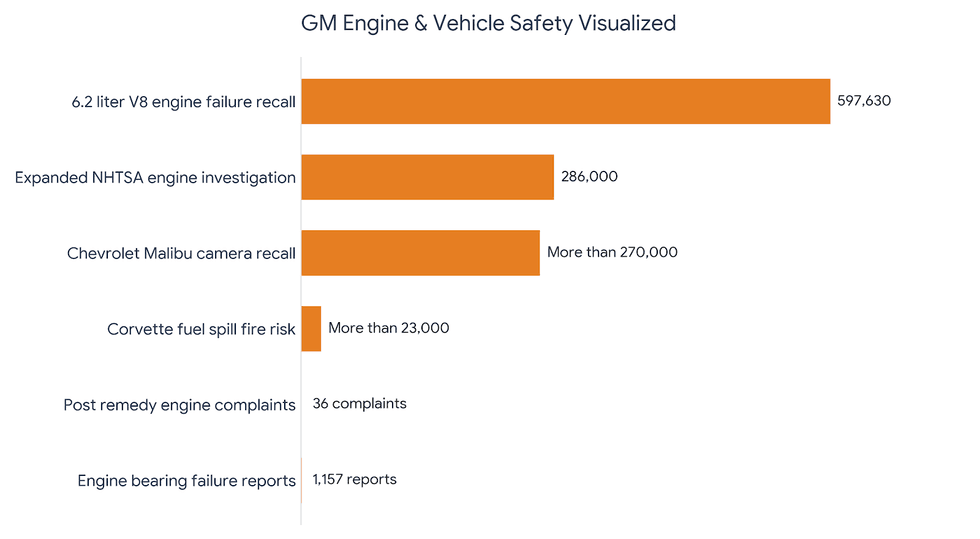
Some recalls, such as the Chevrolet Malibu rearview camera issue, appear relatively straightforward and easy to remedy.
The bigger concern involves GM's 6.2-liter L87 V8 engine. NHTSA expanded an investigation after receiving more than 1,100 reports of engine bearing failures affecting vehicles such as the Chevrolet Silverado and Cadillac Escalade.
Because GM's trucks and SUVs often command premium prices, buyers naturally expect long-term durability and reliability.
Consumer takeaway: If you're considering a Silverado, Sierra, Tahoe, Yukon, Escalade, or other GM truck equipped with the 6.2-liter V8, ask detailed questions about recall completion and service history.
TESLA: SOFTWARE FIXES CAN BE EASY, BUT NOT EVERY RECALL IS SOFTWARE
Tesla has changed the recall conversation because many fixes can be delivered through over-the-air software updates.
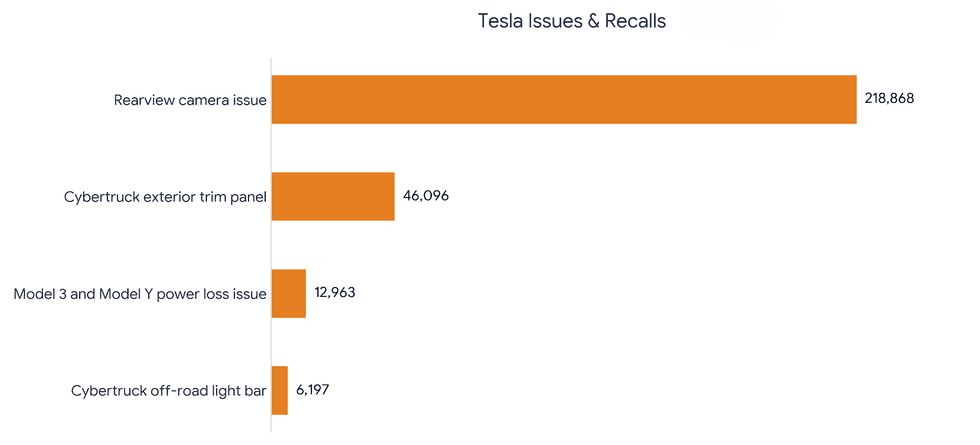
For example, Tesla recalled approximately 239,000 vehicles due to a rearview camera issue that could be corrected remotely.
That's a significant convenience advantage. Owners often don't need to schedule service appointments for software-related fixes.
However, Tesla's recall history also includes hardware concerns. Cybertruck recalls involving detached trim panels and lighting components demonstrate that not every issue can be solved with a software patch.
Consumer takeaway: Tesla owners may enjoy one of the easiest recall experiences in the industry when software fixes are available. Still, Cybertruck buyers should verify that all hardware-related recalls have been completed.
HYUNDAI AND KIA: ACTIVE RECALL RESPONSE, BUT RECURRING FIRE AND SOFTWARE THEMES
Hyundai and Kia continue to gain market share thanks to attractive styling, strong warranties, and competitive pricing. At the same time, they've experienced recurring recall themes involving fire risks, software issues, braking systems, and electrical components.
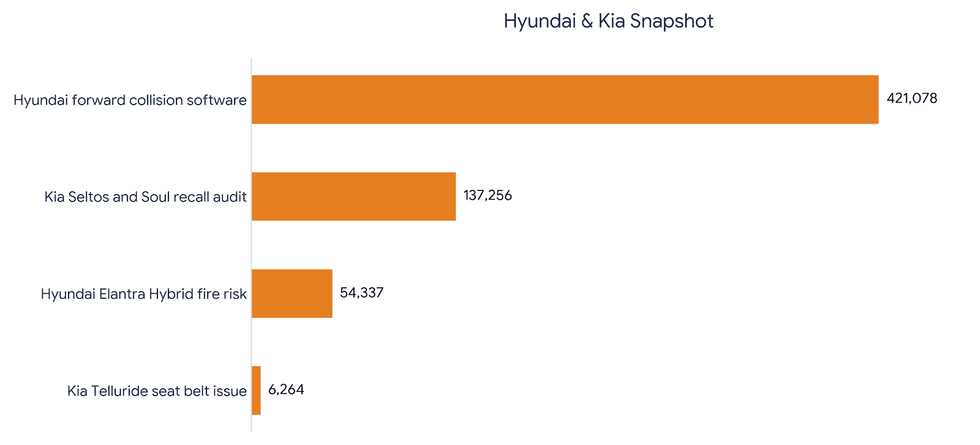
Hyundai recalled more than 421,000 vehicles because a software issue in the forward collision avoidance system could trigger unexpected braking.
Kia also recalled more than 6,000 Telluride and Telluride Hybrid vehicles because of a seat belt defect.
The recall count alone doesn't tell the whole story. Hyundai and Kia have improved dramatically over the past decade, but recurring safety themes deserve attention.
Consumer takeaway: Always check VINs carefully and pay close attention to recalls involving engines, brakes, batteries, charging systems, and fire risks.
WHAT THIS MEANS FOR NEW AND USED CAR SHOPPERS
A recall isn't automatically a reason to avoid a vehicle. Some recalls involve simple software updates. Others affect only a small percentage of vehicles. In fact, a manufacturer that issues recalls quickly may actually be demonstrating a stronger safety culture than one that waits years before acting.
That said, some recalls should immediately influence your buying decision.
Highest-Priority Recall Categories
| Recall Type | Buyer Concern Level |
| Fire Risk | Critical |
| Brake Failure | Critical |
| Steering Failure | Critical |
| Airbag Defects | Critical |
| Battery Overheating | Critical |
| Engine Stalling | High |
| Fuel Leaks | High |
| Camera/Display Issues | Moderate |
| Software Updates | Low-Moderate |
Before buying any vehicle:
- Check the VIN at NHTSA.gov/recalls.
- Ask the dealer for a manufacturer's recall report.
- Confirm all recalls and service campaigns have been completed.
- Request written proof of completion.
- Don't rely solely on vehicle history reports.
- Don't assume certified pre-owned means recall-free.
- Never ignore an interim recall notice.
If a recall involves convenience features, it may simply become part of the negotiation process. If it involves safety systems, fire risks, steering, braking, airbags, batteries, or engine failures, the repair should be completed before you buy.
THE BOTTOM LINE
The best automakers aren't the ones with zero recalls—because that automaker doesn't exist.
The best automakers are the ones that identify problems early, communicate clearly, provide remedies quickly, and make the repair process as painless as possible for owners.
A recall isn't always a red flag.
A poor recall response is.