

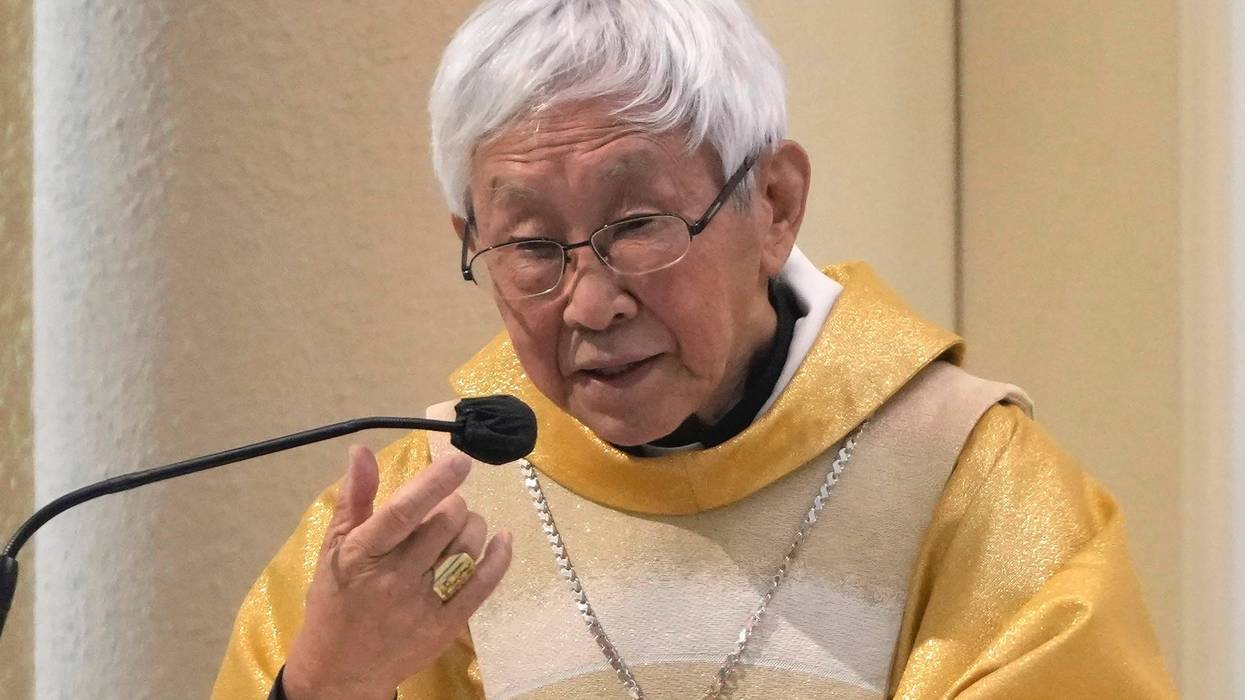

HONG KONG (AP) — A Hong Kong court on Thursday dismissed appeals brought by a 94-year-old Roman Catholic cardinal and four others over their convictions for failing to register a now-defunct fund that aimed to help people arrested during anti-government protests.
Cardinal Joseph Zen, a retired bishop and vocal advocate for democracy in the city, was a trustee of the 612 Humanitarian Relief Fund, which helped pay medical and legal fees for arrested protesters until it ceased operations in October 2021. The other defendants — singer Denise Ho, scholar Hui Po Keung, and former pro-democracy lawmakers Margaret Ng and Cyd Ho — also served as trustees.
The five were found guilty and fined 4,000 Hong Kong dollars ($512) each in 2022 for breaching the Societies Ordinance, which requires local organizations to register or apply for an exemption within a month of their establishment. Their convictions were the first of their kind.
Observers say the case was significant to the city's freedom of association and it has been closely watched amid the city's drastic political changes following massive anti-government protests in 2019.
Judges Jeremy Poon, Aarif Barma and Derek Pang said the fund did not apply for registration or exemption within one month following its establishment. They said the five former trustees had intended to use the fund as a vehicle to appeal for, collect and apply donations for supporting the 2019 protests.
The fund is more than “mere sum of moneys held by the appellants on trust,” they said.
“Nothing in the evidence suggests that any individual including the appellants would be subject to an unacceptably harsh burden by the restrictions imposed by the registration scheme on their exercise of the right to freedom of association,” they wrote in their judgment.
After the hearing, Ng told reporters that the defendants would appeal to the city's top court. She said the top court needed to clarify what counted as a “society” and whether people would need to register with police or apply for exemption when taking part in any activity with others.
“It has a great impact on Hong Kong's civil society,” she said.
Zen appeared in court with a walking stick in his hand. He and the four others were first arrested in 2022 on suspicion of colluding with foreign forces under a Beijing-imposed national security law, although they were not charged under that law. Zen's arrest at that time sent shock waves through the Catholic community.
After he was convicted in 2022, Zen said his case should not be seen as connected to the city’s religious freedoms.
The 2019 protests were sparked by a since-withdrawn bill that would have allowed criminal suspects to be extradited to mainland China, and evolved into months of violent unrest.
The security law has crippled Hong Kong’s pro-democracy movement since its enactment in 2020, with many activists being jailed under it. The impact of the law has also damaged faith in the freedoms of the former British colony, which returned to Chinese rule in 1997.
Beijing and Hong Kong authorities insist the law is necessary for the city's stability.