



QINYUAN, China (AP) — Authorities in northern China were investigating a coal mine operator with a focus on safety lapses, as rescuers searched for those missing in the country’s deadliest coal mine explosion in recent years that killed at least 82 people.
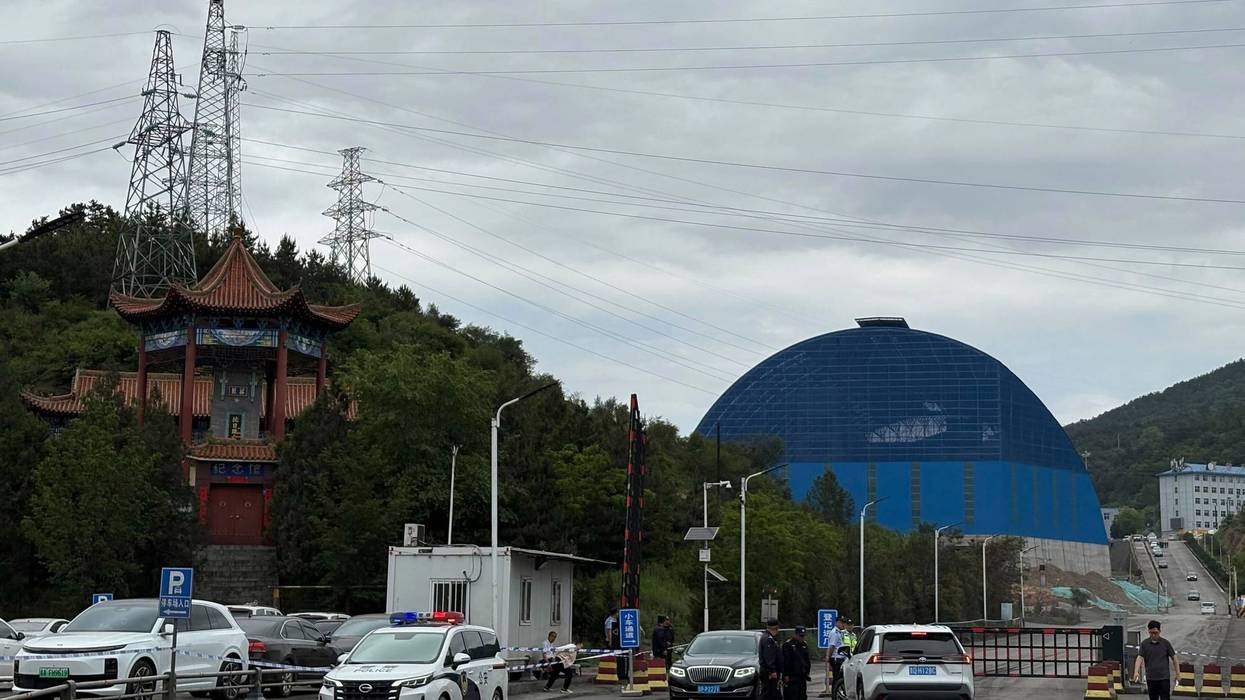
An Associated Press reporter on Sunday witnessed police and security guarding the entrance to the mining facility located in Qinyuan county in the city of Changzhi as emergency vehicles were on site.
Hundreds of emergency responders and medical personnel were sent to help with rescue efforts, state media reported. Rescuers were taking turns to go down the mine shaft, according to the official Xinhua News Agency, facing hurdles including flooded tunnels.
Two were missing and dozens of miners were hospitalized, local officials said late Saturday, following the gas explosion Friday evening at the Liushenyu coal mine in the northern province of Shanxi.
The death toll was revised down from 90, with officials blaming “chaotic” scenes in the aftermath and inaccurate information provided by the mine operator. Chinese President Xi Jinping has called for a thorough investigation and accountability of those responsible.
Some hospitalized miners recalled seeing smoke and blacking out, according to state media reports. Many among the injured were hurt by toxic gas, the reports said.
Shanxi is a coal-rich province
The inland Shanxi province, located southwest of Beijing with a population of around 34 million, is China’s main coal-mining area.
A few hundred meters (yards) from the mine lies the village of Shangzhuang, where some of the miners who work at the site live, including some of the victims, residents said.
The village includes a single main street through which mining trucks pass. On both sides stand two-story houses, some with red-tiled roofs. Some of them are divided into separate rooms and rented out to people including miners.
After the explosion, other mines in the area shut down and some miners left, while others stayed behind waiting to receive their pay, residents said.
Wang Linjun, a coal miner at Liushenyu, said he was at home when the gas explosion occurred.
“My heart is very heavy,” he told the AP. “Thinking that those who eat together and work together suddenly are gone, no one would feel good.” Wang said he does not want to continue at the job, but doesn’t know where to go.
Miners can be paid more than 10,000 yuan ($1,500) a month.
Feng Renfu, also a miner at Liushenyu, said he was working underground in a pit next to the one where the accident took place. Feng said he and his co-workers smelled gas and withdrew from the underground.
“My father is over 80 and he is worried about me. He always calls me to check if I am safe and well in my job,” Feng said. “There are eight people in my family and they all depend on me.”
Safety lapses investigated
The coal mine has “seriously” violated the law, according to local officials, although they did not elaborate on the specific violations. China’s state broadcaster CCTV reported that blueprints provided by the Liushenyu coal mine did not match the actual layout, which hampered rescue efforts.
State media said those responsible had been “placed under control.” On Sunday, a commentary in the official People’s Daily newspaper called for all regions and departments to learn from the accident and to “always keep safety in mind.”
Local authorities also announced a “comprehensive, blanket” inspection of the coal mining sector that would include checks of coal mines’ gas drainage, ventilation, safety monitoring systems and their underground layouts.
A broader inspection of coal mines could put pressure on the province’s ability to produce its annual capacity of around 1.3 billion metric tons of coal, which accounts for nearly a third of China’s total. The country's total coal output rose to approximately 4.8 billion metric tons last year.
China still relies on coal
Coal remains a major energy source in China, given its high availability and low cost, even as the country accelerates its green energy transition. Mining accidents were common and authorities had implemented measures to help improve safety over the past years.
China’s National Mine Safety Administration in 2024 put the Liushenyu mine, operated by the privately run Shanxi Tongzhou group, on a national list of disaster-prone coal mines.
___
Chan reported from Hong Kong.