

ROME (AP) — U.S. President Donald Trump’s attacks on Italy’s premier have had an unintended consequence.
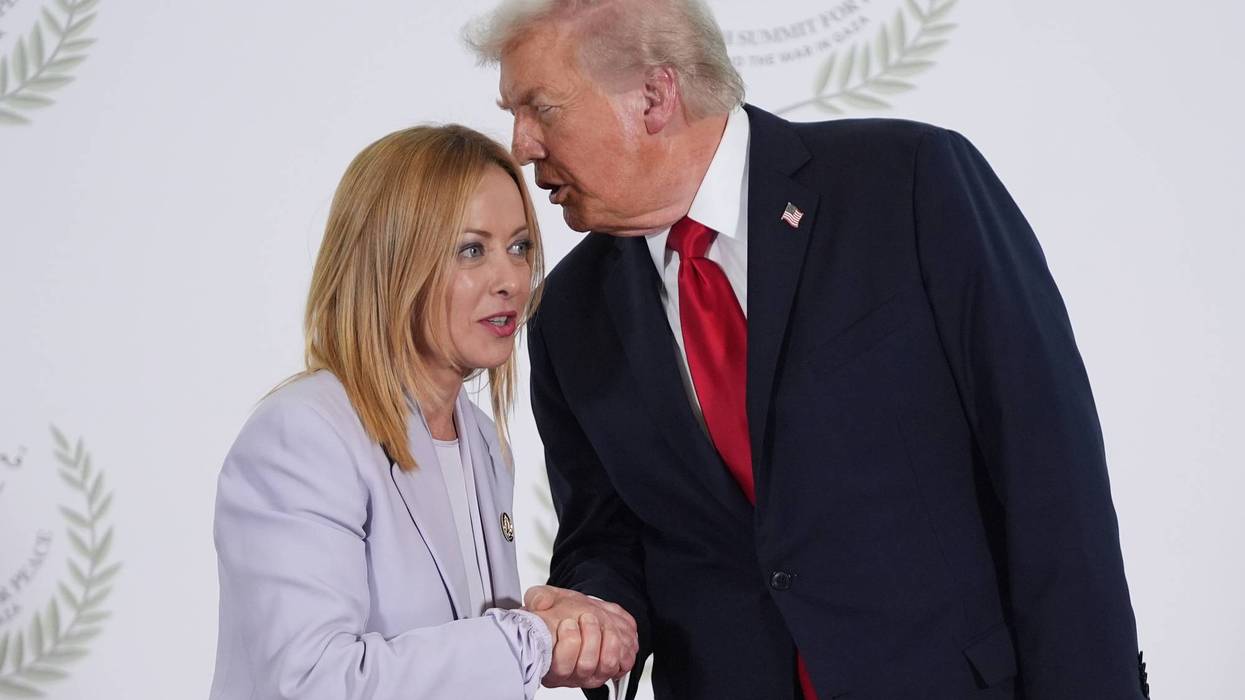
After Trump questioned Italy’s reliability as a wartime ally and claimed Giorgia Meloni had groveled for his attention, European leaders rallied to Meloni's side, thawing what had been a frosty relationship over her hard-right political roots.
It is the latest example of how the often divisive American president is helping to draw Europe closer together.
European leaders are finding more reasons to coordinate on defense, tariffs and foreign policy as they confront wars in Ukraine and Iran, a ballooning trade deficit with China, and threats from Russia. That leaves Trump, who has often preferred to negotiate with European countries individually, with less ability to do so, analysts say.
“Most of the mainstream leaders realize that Europe is getting squeezed between China and America, and so, if not now, then when?” said Sudha David-Wilp, vice president at the German Marshall Fund. “They need to act as a bloc in order to maintain Europe’s place in the world.”
This newfound European unity could be tested next week at a NATO summit in Turkey.
European leaders rally around Meloni
Meloni's spat with Trump has helped her strengthen ties with European leaders once wary of her party’s post-fascist roots.
A pivotal moment came in March when she wouldn't allow U.S. bombers headed to the Middle East to use a base in Sicily without parliamentary approval.
For years before then, France and Germany often kept Meloni outside the small-group talks that helped shape Europe’s response to major foreign policy crises. That persisted into 2026 amid disagreements over the Russian war on Ukraine, including Meloni’s rejection of a proposal by Britain and France to send European troops there following a possible ceasefire.
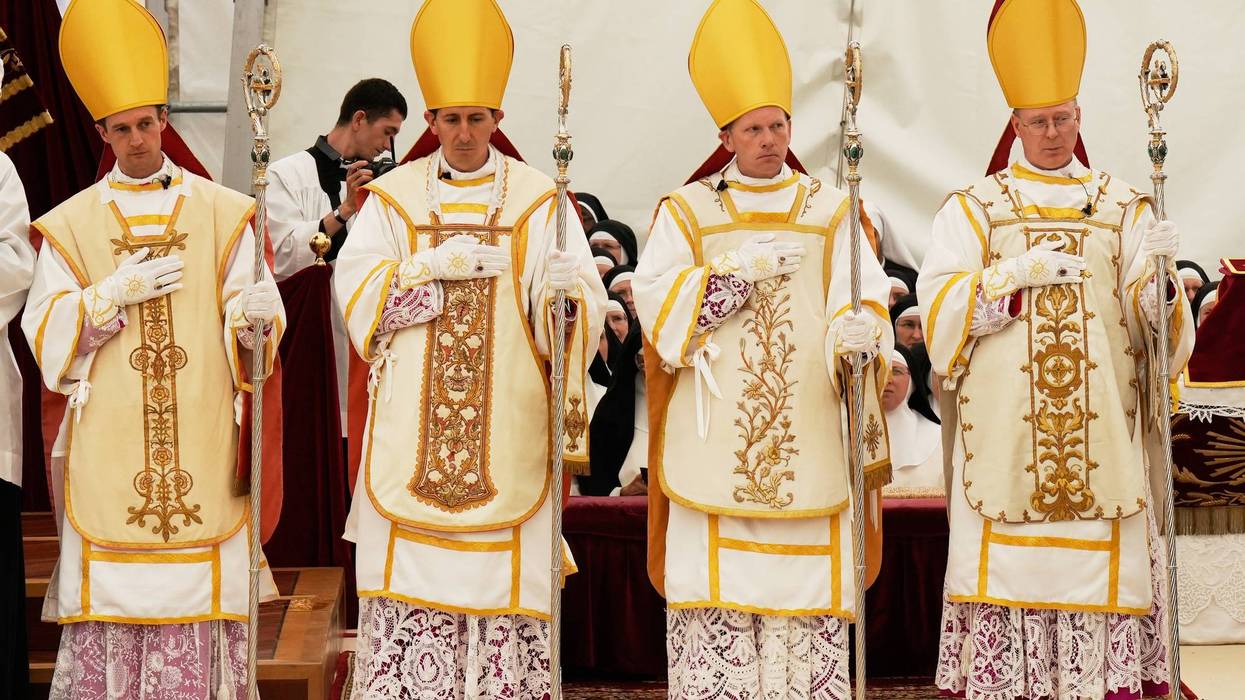
But Trump’s escalating attacks on Meloni — who called Trump's criticism of Pope Leo “unacceptable” — helped shift the dynamic, prompting European leaders to rally around her.
After all, they, too, have been on the receiving end of Trump's barbs.
Meloni was firmly in the fold at a late June meeting in Berlin with the leaders of Germany, France, Britain and Poland. And she met the next day with French President Emmanuel Macron in southern France — the first bilateral summit since the pandemic.
Europe's nationalist parties are adjusting
Even nationalist parties across the continent once aligned with Trump are recalibrating their stances because his trade policies and war with Iran are proving unpopular with voters.
In France, far-right leader Jordan Bardella recently blasted U.S. actions as “foreign interference” and described Trump as “erratic” and “extremely unsteady.” Bardella had previously welcomed Trump's brand of nationalism as a “wind of freedom.”
In Germany, leaders of the far-right Alternative for Germany party have criticized the U.S. military campaign against Iran. The co-leader of the party, Tino Chrupalla, said in March he was “extremely disappointed” with Trump, whom he had viewed as a politician who would avoid new conflicts.
The changing rhetoric comes as elections approach, putting more focus on domestic issues.
“This pushes everyone to consider a European horizon more than an international one," said Lorenzo Castellani, a political analyst and professor at Rome’s LUISS University,
Beyond Europe’s biggest powers
These dynamics are playing out beyond the European Union, from the Arctic Ocean to the Balkans.
When Trump threatened to take Greenland by force, protests erupted in its capital, Nuuk, and in the Danish capital of Copenhagen. Leaders across the political spectrum bristled at the threatened infringement of European sovereignty and feared it could shatter the already stressed NATO military alliance.
In Albania, a luxury development being planned that is linked to Trump’s family business has become a major political issue, drawing protests in June.
The political risks of close alignment with Trump were perhaps most clearly illustrated in Hungary. Prime Minister Viktor Orbán — long regarded as Trump’s closest ally in the European Union — was voted out of office in April despite support from the U.S. president and prominent figures in the MAGA movement.
An analysis by the consultancy Maplecroft suggested that negative perceptions of the Trump administration may have weighed on Orbán politically.
Meloni’s balancing act
Though Meloni remains closely aligned with Trump on issues like immigration and security, she has long diverged from him on Ukraine. Her steadfast support for Kyiv has strengthened Italy's ties with European allies and has become a key factor in their increasingly united front toward the U.S.
During their public spat last month, Meloni said her friendship with Trump came with a heavy political cost.
In her response to his accusation that she had “begged” to be photographed with him while at the recent G7 summit in France, she wrote on social media: “As for my popularity, being your friend has certainly not helped it, nor does it depend on my relationship with you.”
A recent Pew Research Center survey found that Trump is deeply unpopular in Italy. According to the survey, the vast majority of Italians — 83% — have no confidence in Trump’s ability to do the right thing regarding foreign affairs. His handling of a range of issues -- including Iran, tariffs, and U.S. immigration policies -- received a low level of support.
With a national election due by 2027 — and possibly as early as next spring — Meloni faces mounting political pressures, including fallout from the unpopular Iran war and her former ties to Trump.
Voters across Europe could hold their own politicians accountable for the actions of an American president beyond their control, said Castellani, the political analyst.
“At a certain point, when voters see the price of gasoline rising because of a war perceived as distant, they ask Meloni for the bill, not Trump.”
___
McNeil reported from Brussels. AP writers Sylvie Corbet in Paris, Geir Moulson in Berlin, and Justin Spike in Budapest, contributed to this report.