


BEIRUT (AP) — Israel's military clashed with the Iran-backed militant Hezbollah group on Tuesday along a strategic river in southern Lebanon as Israeli troops pushed farther north, days ahead of talks in Washington between Lebanese and Israeli delegations.
A U.S.-brokered ceasefire in thee Israel-Hezbollah conflict appeared more nominal by the day, complicating efforts at a broader peace in the Iran war as Tehran wants an agreement to include end to the fighting in Lebanon.
The Litani River has been a de facto boundary in Lebanon, with large areas to the south under Israeli military control despite the ceasefire that's been in place for over a month.
An Israeli strike kills 12, including several relatives
The latest strikes and clashes came after Israel's Prime Minister Benjamin Netanyahu said he had authorized more intensive strikes targeting Hezbollah across Lebanon.
Meanwhile, an Israeli security official said the military had called up an additional battalion to Lebanon, speaking on condition of anonymity in line with regulations.
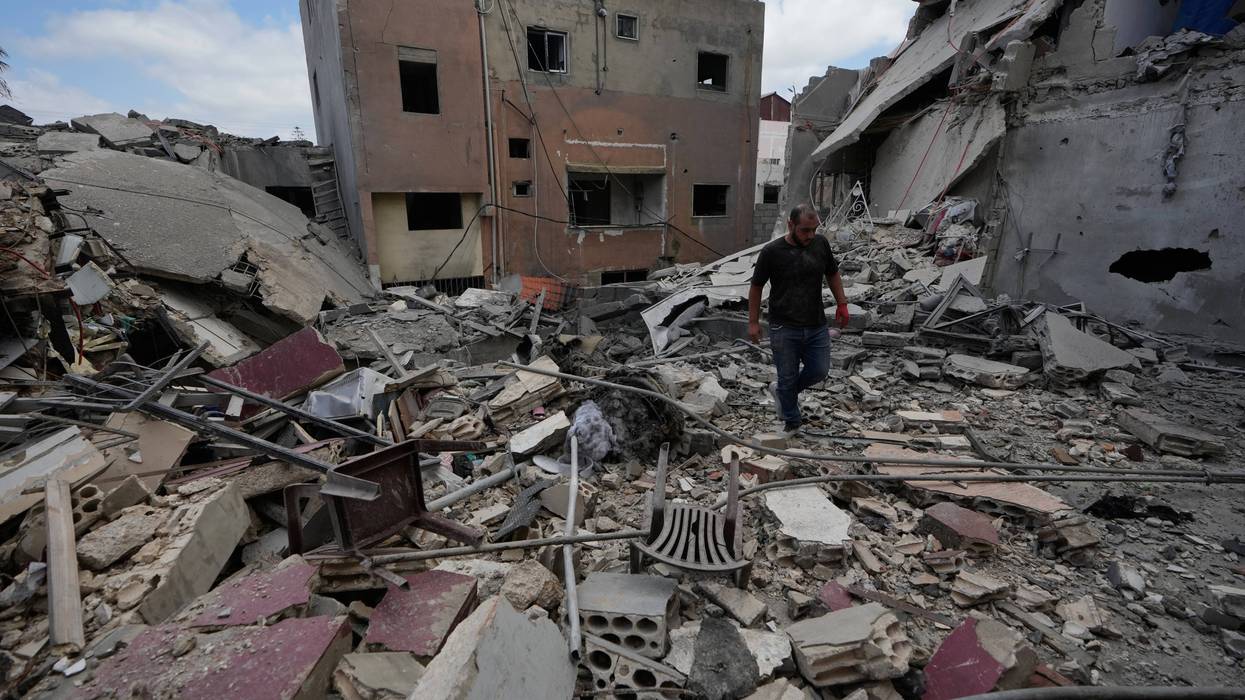
Israel's military said it struck more than 100 Hezbollah sites across southern Lebanon and the eastern Bekaa Valley area overnight, adding that it targeted storage facilities, command centers and observation points used to attack Israeli troops and residents in northern Israel.
One strike hit the eastern village of Mashghara, killing 12 people, including several members of a family, Lebanon’s state-run National News Agency said.
Israel in recent days has intensified strikes in the city and province of Nabatiyeh, just north of the river. On Tuesday it warned city residents to leave.
Hezbollah, meanwhile, said it launched several rocket, artillery and exploding drone attacks on Israeli troops and vehicles mobilizing along the river toward the Nabatiyeh villages of Yohmor al-Shaqif and Zawtar al-Sharqieh. Hezbollah's Al-Manar TV said the militant group repelled attacks along the river banks.
Beirut, the Lebanese capital, has been spared from strikes since the start of the ceasefire, but Israel's latest moves have caused fear.
“By just saying a few words on TV, (Netanyahu) causes everyone to panic and flee their homes,” said Tony Aboud in Beirut’s bustling Hamra district. “I don’t know what’s going to happen and how long we can live like this.”
Lebanon hopes for an agreement that will see Israeli withdrawal
The Lebanese government, which came to power on a platform of reform and disarming Hezbollah and other armed groups, hopes that the direct talks with Israel — which Hezbollah opposes — will lead to a permanent ceasefire and withdrawal of Israeli troops.
Israel says it will not withdraw until Hezbollah no longer poses a threat to residents of its northern towns. Hezbollah has vowed to continue fighting until Israel stops its daily airstrikes and withdraws its troops from Lebanon.
In recent weeks, Hezbollah has boasted that it is using new fiber-optic drones that Israeli troops have struggled to intercept, hitting both Israeli forces and northern Israeli villages.
Israel has told people there not to gather in large numbers.
“What this requires of us now is to increase the blows, to increase the intensity. We will smite them hip and thigh,” Netanyahu said Monday.
Over 1 million people in Lebanon have been displaced in the war, sparked when Hezbollah fired rockets into northern Israel on March 2 in solidarity with Iran, two days after the Iran war began.
At least 3,185 people have been killed in Israeli strikes since the start of the war, according to the Lebanese Health Ministry, with over 9,600 wounded.
According to Netanyahu’s office, 23 Israeli soldiers and a defense contractor have been killed in or near southern Lebanon, and two civilians have been killed in northern Israel, the vast majority by drones.
___
Associated Press writers Sam Mednick and Melanie Lidman in Tel Aviv, Israel, and senior video producer Malak Harb in Beirut contributed to this report.