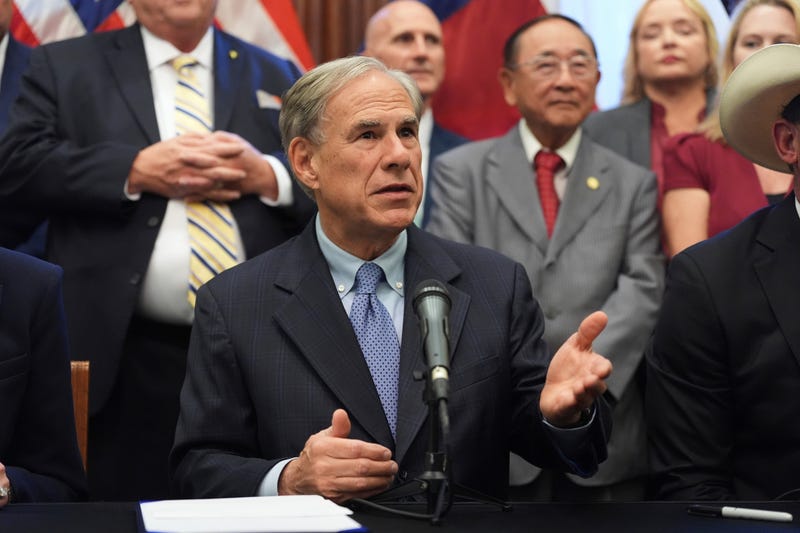
Gov. Greg Abbott ordered Texas universities and state agencies on Tuesday to halt new H-1B visa petitions, which are used by employers to hire foreign workers with specialized skills, until next year.
The pause in the red state, which is home to tens of thousands of H-1B visa holders, comes amid actions by the Trump administration aimed at reshaping the visa program. Critics argue that it has become a pipeline for overseas workers willing to work for lower pay and is taking job opportunities from Americans. But supporters say the program is crucial to attract top global talent, fill specialized roles and drive innovation.
The pause in Texas, which only applies to state agencies “controlled by a gubernatorially appointed head” and public universities, is scheduled to last until May 31, 2027. Abbott's order does allow exceptions if permission is granted from the Texas Workforce Commission.
Abbott said the freeze will give lawmakers time to “establish statutory guardrails for future employment practices regarding federal visa holders in state government” and for Congress to “modify federal law” and for the Trump Administration to “implement reforms aimed at eliminating abuse of this visa program.”
Currently, the public university in the state with the most H-1B visas is the University of Texas Southwestern Medical Center in Dallas with 228 visa holders, based on data reported by the U.S. Citizen & Immigration Services in September. The university employees more than 23,000 people, according to their website. University staff did not immediately respond to messages from The Associated Press seeking comment on the pause.
Other institutions with H-1B visa holders include: the Texas A&M University in College Station with 214; the University of Texas MD Anderson Cancer Center in Houston with 171; the University of Texas at Austin with 169; and Texas Tech University in Lubbock with 143.
While there is a wide range of employers who can apply for HB-1 visas — including hospitals, bands and universities — at least 60% of the H-1B visas approved since 2012 have been for computer-related jobs, according to the Pew Research Center.
Last year across the country, Amazon was by far the top recipient, with more than 10,000 visas approved, followed by Mumbai-based informational technology company Tata Consultancy Services, Microsoft, Apple and Google. In Texas, Cognizant Technology Solutions Corporation — a multinational information technology company — has the most H-1B visas in the state with 3,172.
Abbott, who along with Republicans allege that the visas are being abused, said he is also reviewing the program's use. As such, he is ordering agencies and universities to provide information on the number of new or renewed H-1B visa petitions they filed last year, the number of visa holders currently sponsored, job titles, countries of origin and visa expiration dates. The Republican also asked for documentation showing employers made an effort to give "qualified Texans candidates with reasonable opportunity to apply” for positions filled by H-1B visa holders.
“State government must lead by example and ensure that employment opportunities — particularly those funded with taxpayer dollars — are filled by Texans first,” Abbott wrote in his letter.
Abbott is not the only GOP governor taking action against the visa program. Last year, Florida Gov. Ron DeSantis called for fewer H-1B hires, alleging abuse of the program to fill non-specialized roles. On Thursday, the Board of Governors, which oversees the Florida's public university system, is scheduled to discuss pausing the use of H-1B program to hire new personnel until next year.
President Donald Trump signed a proclamation last year imposing a $100,000 annual H-1B visa fee on highly skilled workers, which is being challenged in court.
Created by the 1990 Immigration Act, H-1B visas allow American companies to bring in people with technical skills that are hard to find in the United States. The visas, which are good for three years and can be extended another three years, are not intended for people who want to stay permanently. Some eventually do, but only after transitioning to different immigration statuses.
The number of new visas issued annually is capped at 65,000, plus an additional 20,000 for people with a master’s degree or higher. Some employers, such as universities and nonprofits, are exempt from the limits.