


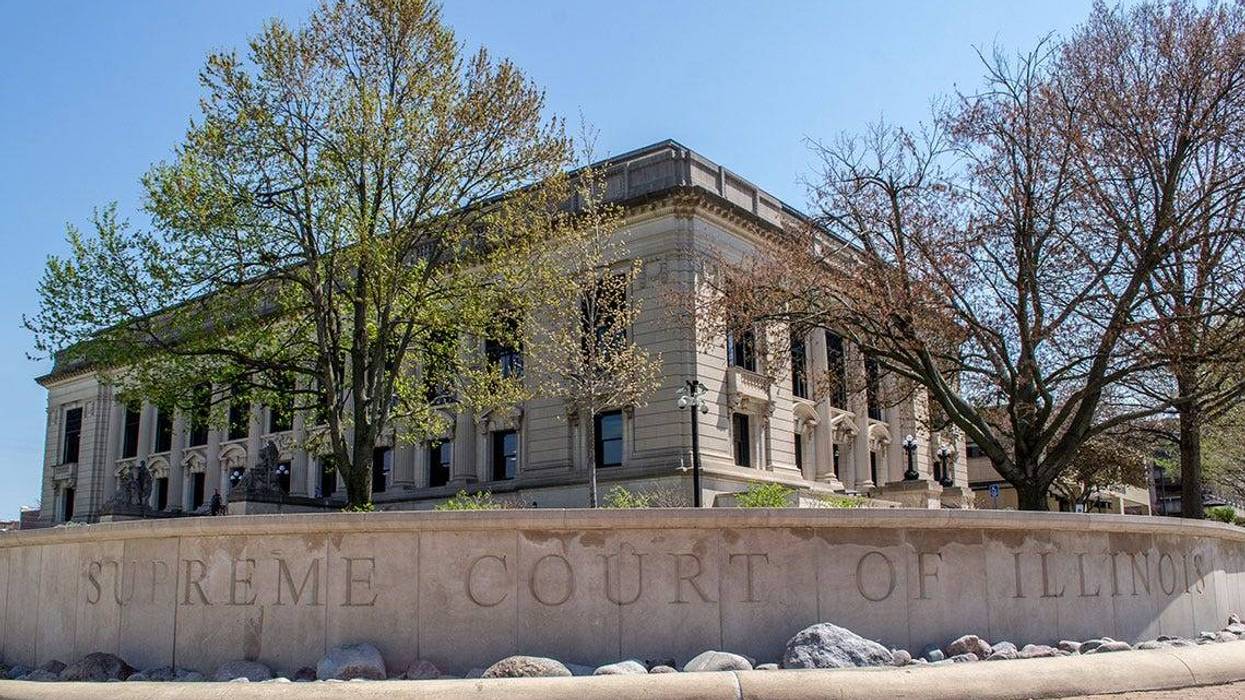

SPRINGFIELD — Illinois law does not specifically shield companies from having to pay employees for time spent completing required pre- and post-work activities, the state Supreme Court unanimously ruled.
Although federal regulations exclude that requirement, the court found Illinois' wage law does not include any similar provisions. That means employers could be required to compensate employees for required activities outside of the normal work day.
The U.S. Court of Appeals for the Seventh Circuit asked the state's high court to decide if state law includes the federal regulation found in the Fair Labor Standards Act. The question originates from a civil suit brought against Amazon by two former employees, although the court's ruling is not an official ruling in that case.
In the opinion, Justice David Overstreet wrote that the court's goal was to determine the legislature's intent at the time Illinois' 1971 Minimum Wage law was enacted, emphasizing that the court aimed to adhere to the plain language of the law.
"We must refrain from departing from the statute's plain language by reading into it exceptions, limitations, or conditions that conflict with the express language of the statute," Overstreet wrote.
Justice Overstreet delivered the court's opinion, with Chief Justice P. Scott Neville and Justices Lisa Holder White, Joy Cunningham, Elizabeth Rochford, and Mary O'Brien concurring. Justice Sanjay Tailor did not take part in the decision.
Johnson v. Amazon
In 2020, Amazon required its employees to complete 10-15-minute pre-shift health screenings to avoid transmission of COVID-19. Two employees, Lisa Johnson and Gale Miller Anderson, later sued the company in the Cook County circuit court, arguing they should have been compensated for that time under federal and state law.
Amazon requested the case be moved to federal court in the U.S. District Court for the Northern District of Illinois and moved to dismiss the case, arguing they were not required to pay Johnson and Anderson based on federal exemptions for preliminary work activities in the Fair Labor Standards Act.
The federal court approved the dismissal under federal and state statutes, finding that federal law had frequently been used to interpret Illinois' Minimum Wage Law.
Johnson and Anderson appealed, this time arguing they were entitled to compensation only under state law, which does not include those federal exemptions. Amazon, in reply, said federal law supported the district court's conclusion that the exclusions apply to state law.
The Seventh Circuit asked the Illinois Supreme Court to settle the question, who then found that Amazon could not rely on federal regulations to inform Illinois' minimum wage law because the General Assembly chose not to include the specific exclusions on preliminary activities.
A plain reading of the law "reveals that the General Assembly did not signify any intention to incorporate the preliminary and postliminary activities exclusions," Overstreet wrote, referencing a subsection of the wage law that includes a list of exceptions.
"Notably, four of these exceptions incorporate by reference specific provisions of the FLSA, regulations of the United States Department of Labor (USDOL), or both," Overstreet wrote.
"The General Assembly delegated the authority to define 'hours worked' to IDOL (the Illinois Department of Labor). In turn IDOL adopted a definition of 'hours worked' that necessarily includes preliminary and postliminary activities, explicitly encompassing all time that an employee is required to be on an employer's premises."
The case will now return to the Seventh Circuit court. Pending that decision, or any action by the legislature, Illinois employers may soon have to compensate employees for that extra time spent preparing for a shift.
Capitol News Illinois is a nonprofit, nonpartisan news service that distributes state government coverage to hundreds of news outlets statewide. It is funded primarily by the Illinois Press Foundation and the Robert R. McCormick Foundation.


