

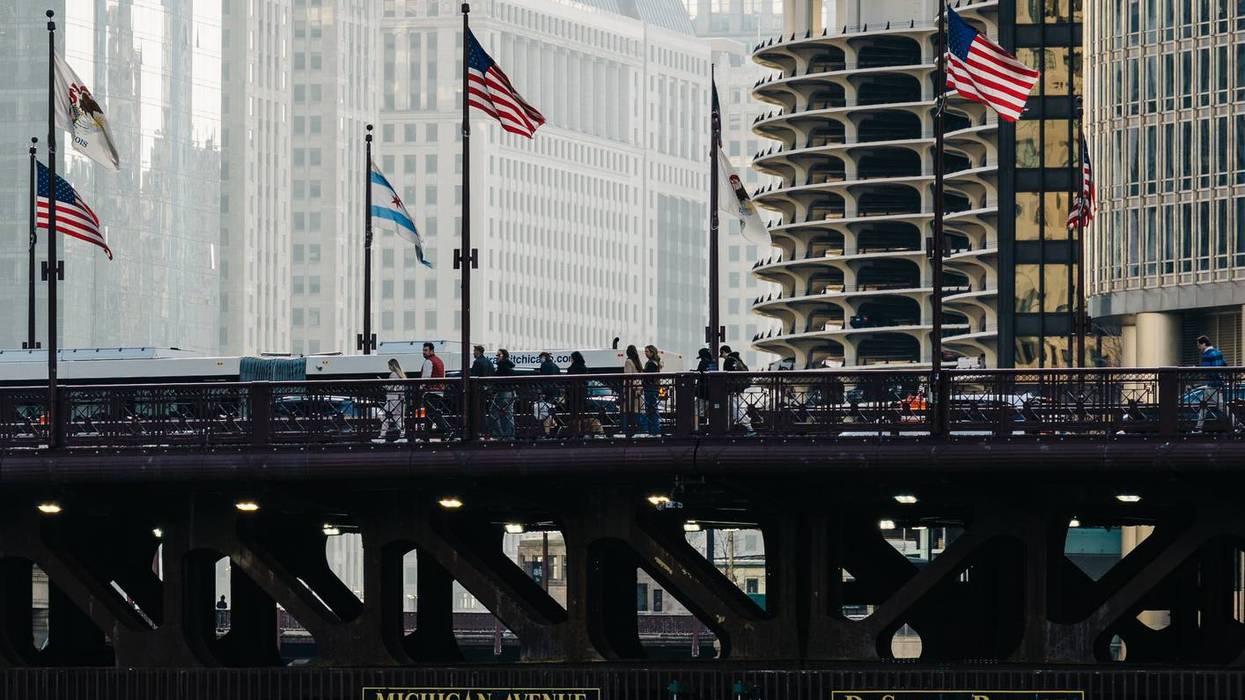

On Wednesday, two Chicago bridges got stuck in a raised position due to severe heat. The stuck bridges caused hours of disruptions and traffic jams.
The DuSable Lake Shore Drive bridge was stuck for more than four hours after a routine lift around 10 a.m. to let a yacht pass.
Crews spent hours trying to close the bridge completely. A Chicago Fire Department boat sprayed water to cool it down on Wednesday, which was Chicago’s second day under a heat advisory.
Then at 4:30 p.m., the Torrence Avenue Bridge — located over the Calumet River on the Far South Side — got stuck for more than an hour. “Thermal expansion caused by the high temperatures affected the bridge’s operation,” said a Chicago Department of Transportation spokesperson.
Why did the bridges get stuck?
“Extreme heat causes the metal on bridges to expand and cause jams which prohibit bridges from opening or closing,” the Chicago Fire Department said in an X post.
Temperatures peaked at 95 degrees Tuesday and 96 degrees Wednesday at O’Hare Airport, according to the National Weather Service. The heat index peaked at 106 degrees Tuesday at Midway Airport.
When closed, Chicago bascule bridges like DuSable Lake Shore Drive bridge are somewhat protected from thermal expansion due to cooler air from the river below, explained Jim Phillips, founder of website ChicagoLoopBridges.com. (Translated from French, “bascule” means “seesaw.”)
“Once raised, the bridge leaf is exposed to higher temperatures and it expands,” he said. Sometimes the expansion “is enough to cause problems returning the leaf to the closed position.”
Has this happened before?
Yes. But it’s not very common.
ChicagoLoopBridges.com features a 2010 photo showing workers hosing down the stuck and open State Street Bridge. That day, it was more than 85 degrees, according to the website.
Phillips lived in Chicago from 2008 to 2016 and followed most of the bridge lifts but never witnessed a thermal expansion problem himself. “As a Chicago bridge geek, I was disappointed,” he said.
Could stuck bridges become more common in Chicago?
As a city with so many older movable bridges and extreme hot and cold weather, Chicago is vulnerable to stuck bridges, said Joseph Schwieterman, director of DePaul University’s Sustainable Urban Development Program.
Chicago also has the most moveable bridges of any city in the U.S., making it potentially more vulnerable to heat-related closures, said Grace Truslow, policy analyst at the Eno Center for Transportation, a Washington D.C. think tank.
“Aging bridges often become misaligned due to wear and tear, minor bending and slight shifts in the pylons supporting them. That heightens the risk that they will not close properly,” added Schwieterman.
About 17% of Chicago’s bridges are “structurally deficient”, according to a Sun-Times analysis.
Exactly 100 of Chicago’s 601 bridges are listed in the same “poor” condition as the State Street Bridge, which unexpectedly shut down in April 2025.
That’s 16.6%, according the analysis of federal bridge inspection records, and well above the national average of 6.7%.
In March, the city reopened the State Street Bridge after nearly a year of emergency repairs.
Do stuck bridges happen in other places?
Yes. In 2024, New York’s Third Avenue Bridge on the Harlem River couldn’t close during extreme heat. Last year the Casco Bay Bridge in South Portland, Maine, got stuck open.
“Movable bridges are at particular risk of operational delays due to heat because heat can disrupt the mechanical mechanisms that open and close bridges,” wrote Truslow in an Eno Center article last week.
Should Chicago not lift bridges in hot weather?
That’s not realistic.
“So many vessels, including sailboats, use our river system that it is unrealistic to avoid opening and closing the bridges during heatwaves,” said Schwieterman.
“We can make modest adjustments, such as avoiding lifting them in the hottest part of the day, but we must provide nearly constant river access. The Chicago River is a federally designated navigable waterway, which limits our options,” he said.
The city schedules bridge lifts in the spring and fall to let boat owners take their vessels in and out of storage.
Spraying water on bridges can cool them. Officials can also monitor bridges with sensors and inspections “when temperatures rise above a certain threshold and preemptively decide to keep bridges opened or closed,” Truslow said.
Has hotter weather affected other infrastructure?
Definitely.
This summer, severe heat caused tire blowouts on Interstate 49 in Louisiana and buckling pavement on U.S. Highway 69 in Greenville, Texas, according to Eno Center.
Extreme and frequent temperature increases have caused concrete to expand and roads to buckle. Asphalt softens in heat and can warp.
Extreme heat can cause rail, bridge and overhead wires to expand. Amtrak may enact heat restrictions that require trains to reduce speed, which can result in possible delays.
Transportation infrastructure is not designed for extreme levels of heat these days, wrote Truslow for Eno Center. “Transportation agencies, airport operators, and rail operators must be planning for a present and future with higher average temperatures.”
Chicago has the most moveable bridges in the U.S. Could “stuck” bridges be a regular occurrence in the future?
Chicago has the most moveable bridges in the U.S. Could “stuck” bridges be a regular occurrence in the future?