


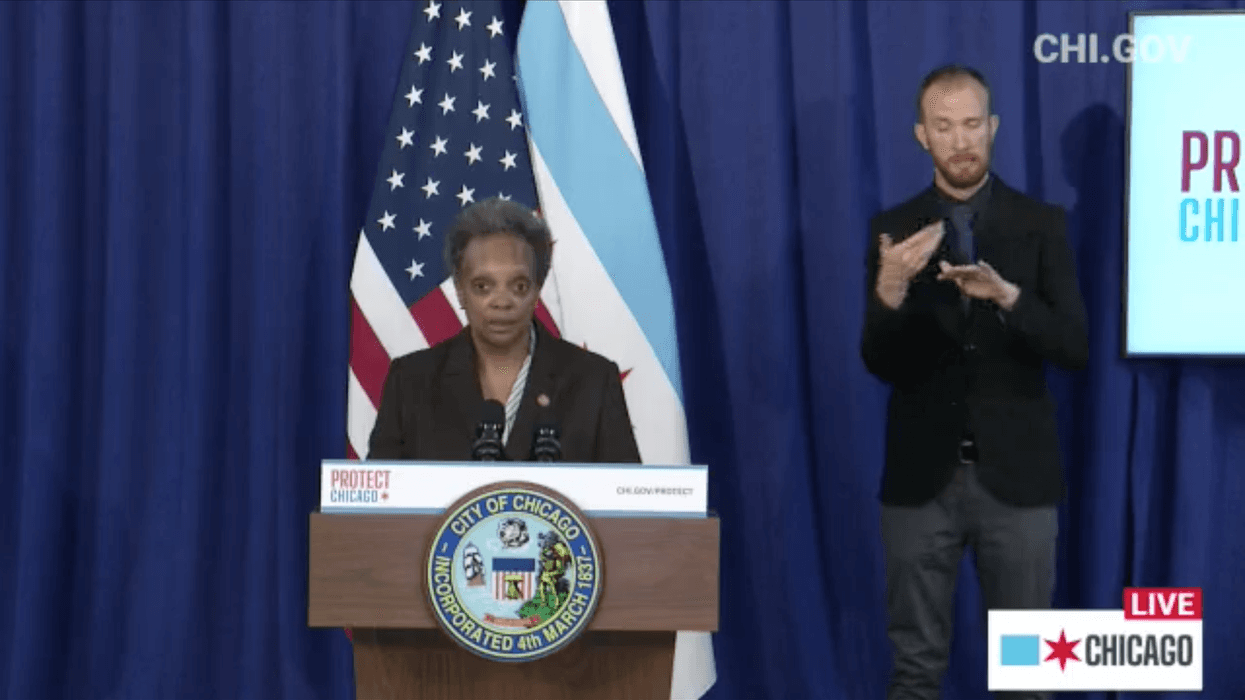

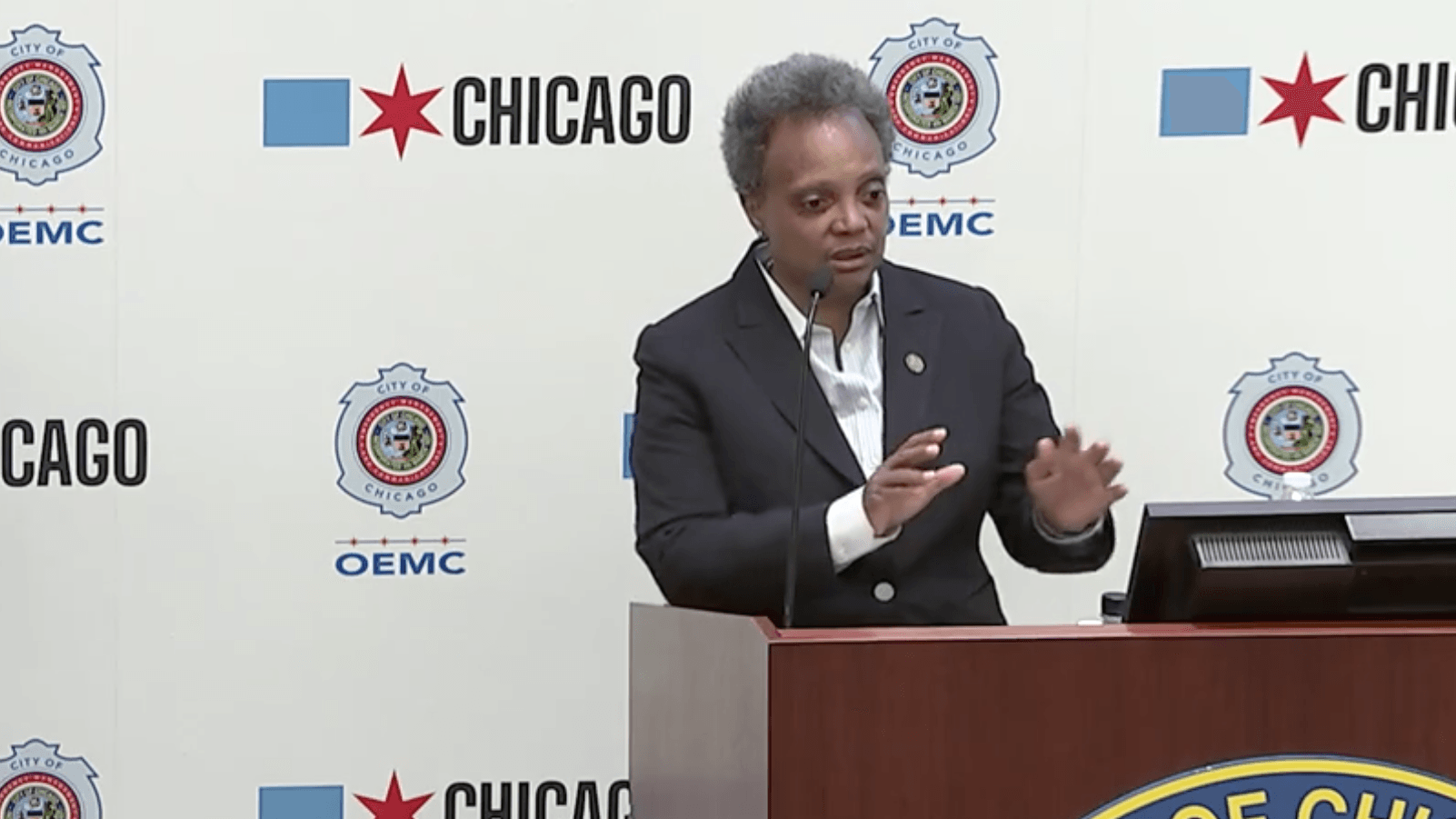
CHICAGO (WBBM NEWSRADIO) — Mayor Lori Lightfoot and the Chicago Department of Public Health announced Monday distribution plans for the COVID-19 vaccine when it becomes available with a commitment to allocate initial doses to all 34 hospitals in the city and to ensure the individuals and communities most impacted by the pandemic are prioritized in the weeks and months to come.
The first vaccines could be allocated the week of Dec. 14 in Chicago, pending final approval from federal regulators; and based on guidance, healthcare workers who treat COVID patients or conduct procedures that put them at high risk for COVID-19 spread will be the first to receive it.
"The vaccine development represents a long-awaited milestone in Chicago's – and the nation's – fight against COVID-19, and we look forward to working with our citywide partners to ensure the distribution process is executed as efficiently and safely as possible through an equity lens," said Mayor Lightfoot. "However, as encouraged as we are by the COVID-19 vaccine, widespread community distribution is still months away, and we must remain diligent in adhering to the public health guidelines as we continue to move forward toward a brighter and more resilient future for all of us."
The Mayor said the city expects to receive 23,000 does of the vaccine starting next week.
"And on this point I want to make something clear: two doses needed for one person to be fully vaccinated. Every vaccine in the cue, except one, the leading ones require two doses. That's very important for us to remember," Lightfoot said.
"This will be for health care workers who treat COVID-19 patients or who conduct health and medical procedures that put them at high risk for the virus. The first tranche of the 23,000 is going to frontline healthcare workers, who are at high risk of the virus, because of treating COVID-19 infected patients. Each of Chicago's 34 hospitals will have the vaccine and our support in its distribution."
After the first round, the city will open vaccination clinics by appointment only for healthcare workers in late December into early January.
"Under CDC guidance, there's a very specific cadence and protocol on who gets vaccine," Lightfoot said. "We also expect to receive additional doses of the vaccine every week and could have over 100,000 doses by the end of 2020, but again keeping in mind it's two shots."
The Mayor said while 100,000 by the end of 2020 sounds like a lot, the city estimates there are approximately 400,000 health care workers in Chicago.
"We are only going to be able to immunize a fraction of the frontline workers who are going to need it overtime," she said.
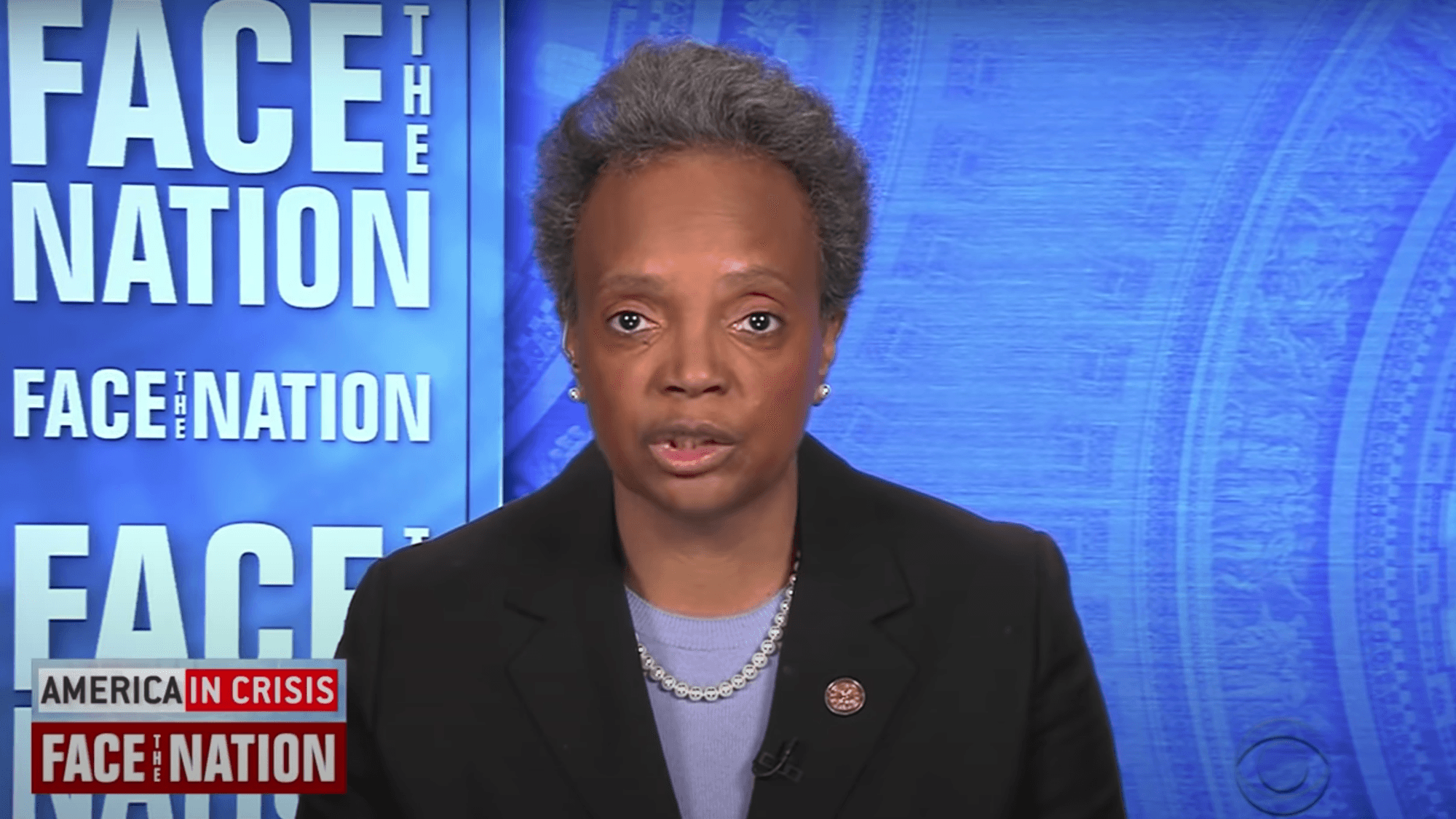
After healthcare workers, priority will be given to residents and staff at long-term care facilities, as well as workers serving in essential and critical industries, such as emergency services. Lightfoot said that group will then be followed by individuals with underlying medical conditions that make them high-risk for COVID-19, as well as adults over 65. She said it will go on from there per CDC guidance.
"Our singular goal is to have every Chicagoan to have safe and easy access to the COVID-19 vaccine as soon as possible, and I want to emphasize, at no charge," Lightfoot said. "And our hope is to have all Chicagoans vaccinated sometime in 2021, and we are going to do everything we can to get that vaccine to people across our city as expeditiously as possible. Obviously, we don't control the speed of the manufacture, but when we get it, we will be using the infrastructure that we built up to make sure we're putting it out there and available for people to get vaccinated."
When the time comes, Mayor Lightfoot said flexible programs will be put in place to ensure equitable access that will be able to accommodate different setups and different environments, ranging from large centralized sites, such as the City Colleges to mobile sites deployed at trusted community settings and high traffic community areas.
"Central to our focus of equity is the participation of trusted community partners, both in the form of medical professionals, but also in the form of local leaders, who will be crucial in helping us get the word out and ensure folks feel comfortable getting the vaccine," Lightfoot said.
Chicago Department of Public Health Commissioner Dr. Arwady said despite the recent surge in COVID-19 cases in Chicago and across Illinois, they are excited about a COVID-19 vaccine being on the horizon.
She said once the FDA grants the emergency-use authorization for the Pfizer vaccination, the CDC and ACIP will put guidelines in place. And once ACIP and CDC recommendations are in place, Chicago can begin vaccinating.
Arwady explaining the Pfizer trials: "Where we say this vaccine was 95 percent effective in preventing COVID-19, that's because 95 percent of the people who ended up getting COVID had not actually gotten the real vaccine."
She said there are side effects that were reported, and that information is available online.
"But I do want you to know that we want people to understand side effects are the result of the body producing an immune response. They're not unexpected," she said.
About 78 percent of people said they had some pain at the injection site, 59 percent of people felt some fatigue. But even people who hadn't actually gotten the vaccine reported that.
"Those are not COVID-19. You cannot get COVID-19 from this vaccine," Dr. Arwady said.
"The risk of side effects for 1-2 days after vaccination is far outweighed by the risk of severe illness and loss of life caused by COVID-19 infection. We also need to remain focused on the fact that we're still in the midst of this pandemic. COVID-19 cases are surging around the country and the risk of becoming ill is significant. People need to continue to follow the public health guidance. Chicago remains under a Stay-at-Home Advisory and we have to continue to focus on bending the curve even as the vaccine becomes more and more available."
As more vaccine is available, several thousand vaccination providers will be ready, including doctors' offices, retail pharmacies, hospitals, and federally qualified health centers. CDPH has regular meetings with healthcare providers, community-based organizations and other partners, and has increased vaccine storage capacity and acquired vaccine supplies. The department has identified vaccine clinic locations and leveraged its flu campaign this year to test this out.
Big pharmacy chains like Walgreens and CVS will be part of the effort.
"Vaccinations and getting out and protecting Americans is what pharmacy has been core at. When you look at it from the COVID pandemic, obviously, we've been working tirelessly over the last six to eight months with ["Operation Warp Speed," the U.S. Department of Health and Human Services, the Centers for Disease Control and Prevention ]and the states to ensure that we have a very solid plan for when there is vaccine approved and then getting it out into plans with the states to get to long-term care facilities," Rick Gates, senior vice president of pharmacy and healthcare at Walgreens, told CBS This Morning on Wednesday.
Walgreens and CVS are looking to hire pharmacists and pharmacy technicians to help with the vaccination program.
Timeline estimates will change as more safety and effectiveness data from clinical trials is available and other types of vaccine are made available. Each COVID-19 vaccine that the FDA authorizes will have different instructions for shipping and storage. The City of Chicago will share updates on vaccine availability within Chicago at https://ww.chicago.gov/COVIDvax.