

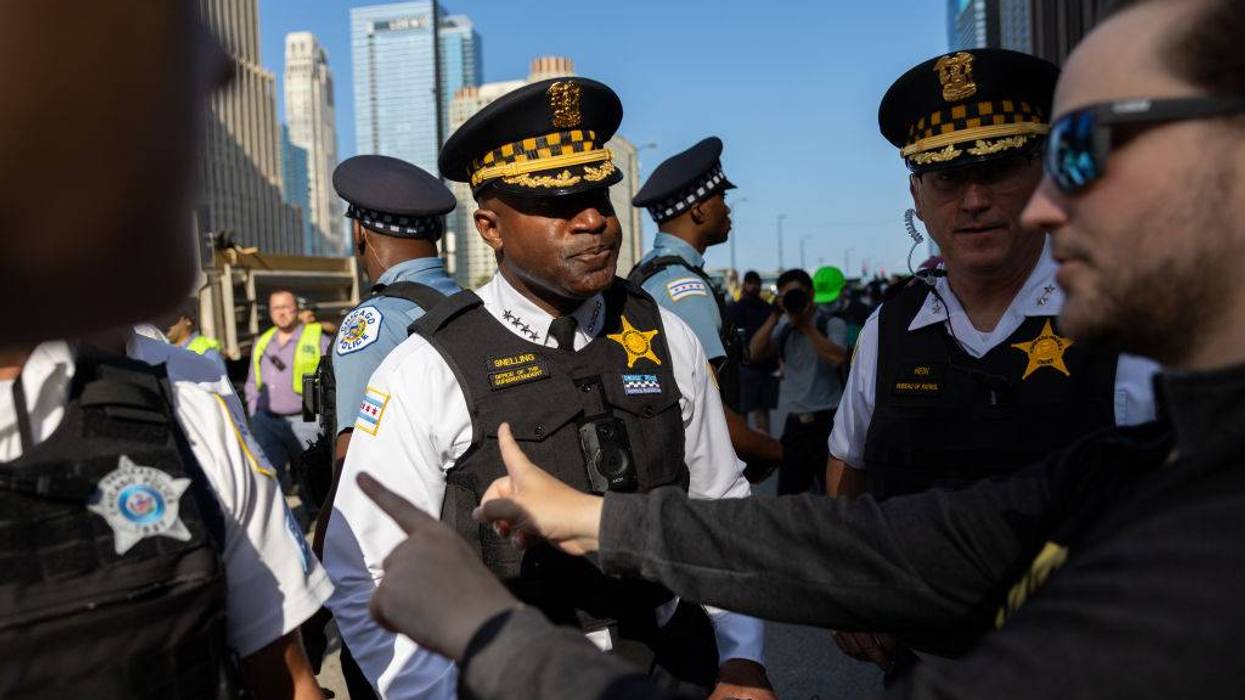

Larry Snelling had to be convinced to put his name into consideration for the job of Chicago Police Superintendent following the firing of former Superintendent Eddie Johnson. But Mayor Brandon Johnson, and indeed a lot of Chicagoans, are probably thankful he did.
This week's announcement that Snelling will retire July 15th after 34 years of service to the city is prompting tributes from many elected leaders, with Mayor Johnson calling him "a Chicagoan through and through," and City Council Public Safety Committee chair Ald. Brian Hopkins describing the 34-year veteran as "a lawman's lawman."
It also represents a new challenge for a mayor who has frequently praised the work of police officers, but has also drawn attention for suggesting that the job of maintaining public safety does not solely rest with police, and who made news last September when he paraphrased the Rev. Dr. Martin Luther King Jr. in referring to law enforcement as a "sickness" that he was bent on eradicating.
Snelling is certainly going out on top, having been the police Superintendent during a significant drop in violent crime over the last two years, and having presided over what was widely seen as a successful and largely safe Democratic National Convention in 2024. He has also deftly navigated an increasingly thorny political scene at City Hall, staying largely out of the public debate over Mayor Johnson's decision to end Chicago's contract with the ShotSpotter gunshot-detection technology and standing up for officers accused of violating the spirit of the city's "welcoming" ordinances during Operation Midway Blitz. "He's risen to every challenge he's faced. I can't find anything to criticize him about," said Ald. Hopkins (2nd Ward).
In his statement congratulating Snelling on his retirement, the mayor sought to communicate that his public safety plan is bigger than one person: "Leadership may transition, but our commitment to building safe communities and serving our residents with care and compassion does not ... (R)esidents can be confident that the comprehensive summer safety plan already underway will continue without interruption."
Indeed, so is the process by which the next Superintendent will be selected. The Community Commission for Public Safety and Accountability will launch a search for potential candidates after asking Chicagoans their priorities for the ideal candidate. That commission will submit a list of finalists to the mayor, whose selection will be considered by City Council. It's a process proscribed by terms of the consent decree designed to bring reform to the Chicago Police Department.
And as Chicago begins to focus on the February 2027 mayoral election, Mayor Johnson's selection of a new Superintendent will be closely scrutinized during his expected re-election campaign. It's an opportunity for him to put what could be a lasting mark on policing in Chicago, and rumors are already hinting that the Commission could include a civilian on a potential list of candidates. Ald. Hopkins, for one, is hinting that would be a non-starter: "They should have extensive law enforcement experience," he told me about any potential superintendent.
One of the mayor's frequent statements is that "public safety is my top priority," and this appointment will show Chicagoans what he believes public safety looks like.