


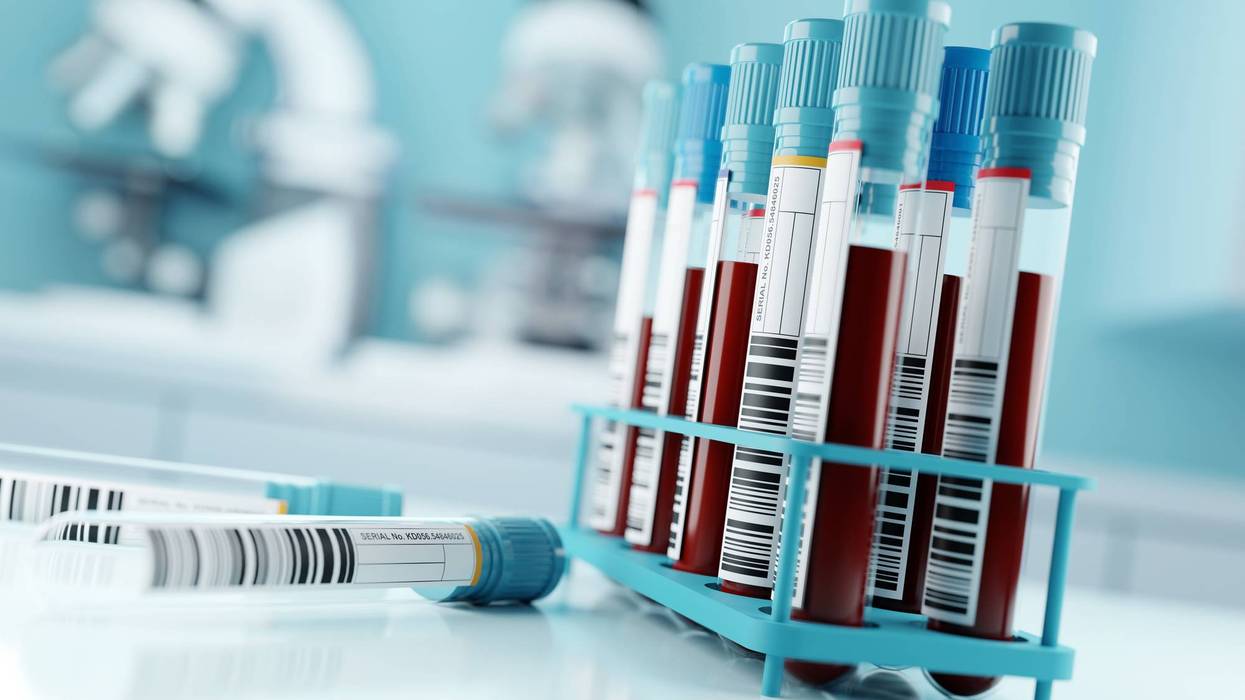

A new blood test that could help diagnose Alzheimer’s disease was just cleared for marketing by the U.S. Food and Drug Administration, according to Washington University in St. Louis, where it was developed.
More than 7 million Americans have Alzheimer’s, the most common form of dementia in the U.S., per the Alzheimer’s Association. Research has shown that the condition is linked to amyloid plaques and tau tangles found in the brain.
The new test is called recivityAD2 and it was created by C2N Diagnostics, a Wash U startup. It was developed to identify the presence of amyloid plaques in the brain.
Research cited by the National Institutes of Aging explained that amyloid plaques begin as strings of amino acids called amyloid-β (Aβ) peptides. In some people these peptides can form into protofilaments and eventually plaques.
“Unlike some other FDA-cleared blood-based tests that use immunoassay methods to analyze biomarkers associated with Alzheimer’s, PrecivityAD2 uses high-resolution mass spectrometry to provide quantitative measurements of the biomarkers,” Wash U explained in a Friday press release. Ratio levels of amyloid (Aβ42 and 40) and two forms of tau protein (p-tau217 and total tau217) in the blood can be observed through this method.
It also said that blood-based biomarker testing may be able to help clinicians evaluate patients for Alzheimer’s disease using a less invasive approach than cerebrospinal fluid testing. According to the Alzheimer’s Association, this fluid can be accessed through minimally invasive procedure called a lumbar puncture or spinal tap. Still, the Mayo Clinic notes that spinal tap procedures can come with risks like headache, bleeding, back pain and brainstem herniation.
“Early detection of Alzheimer’s disease is important since the first treatments capable of slowing the progression of the neurodegenerative disease recently became available to patients, and these drugs are more effective when started sooner rather than later. Other promising investigational drugs are in the pipeline,” Wash U noted.
While there is currently no cure for Alzheimer’s, there are some medications that have been shown to slow its progress. Last year, Audacy also reported on research that suggests that the condition could be reversed and about the role glucose plays in the disease as well as tips for lowering the risk of developing condition.
According to Wash U, “fundamental technology” underlying the new test was initially developed by a WashU Medicine team co-led by Randall J. Bateman, MD, the Charles F. and Joanne Knight Distinguished Professor of Neurology, and David M. Holtzman, MD, the Barbara Burton and Reuben M. Morriss III Distinguished Professor in the Department of Neurology. Bateman, Holtzman and others co-founded the C2N Diagnostics startup nearly 20 years ago.
“The PrecivityAD2 test provides an accurate and reliable way to detect the presence of brain amyloid plaques associated with Alzheimer’s disease pathology based on a single blood draw,” Bateman said. He added that “with FDA clearance, this innovation can reach more patients, increasing early and accurate diagnoses for people who are seeking causes of cognitive symptoms such as memory loss.”
What that FDA marketing clearance really means is that PrecivityAD2 has undergone “rigorous evaluation to confirm it has comparable accuracy to cerebrospinal fluid tests and brain scans,” Wash U said, even in patients with mild symptoms. In fact, research shows that the test can diagnose amyloid pathology of Alzheimer’s disease with more than 90% accuracy. Now it can be marketed to clinicians and health systems more broadly
“Clearance can also facilitate insurance coverage, which makes the test more affordable and accessible,” Wash U explained. Holtzman said the FDA clearance hurdle is a “key milestone” in the mission to transform Alzheimer’s diagnosis and management.