


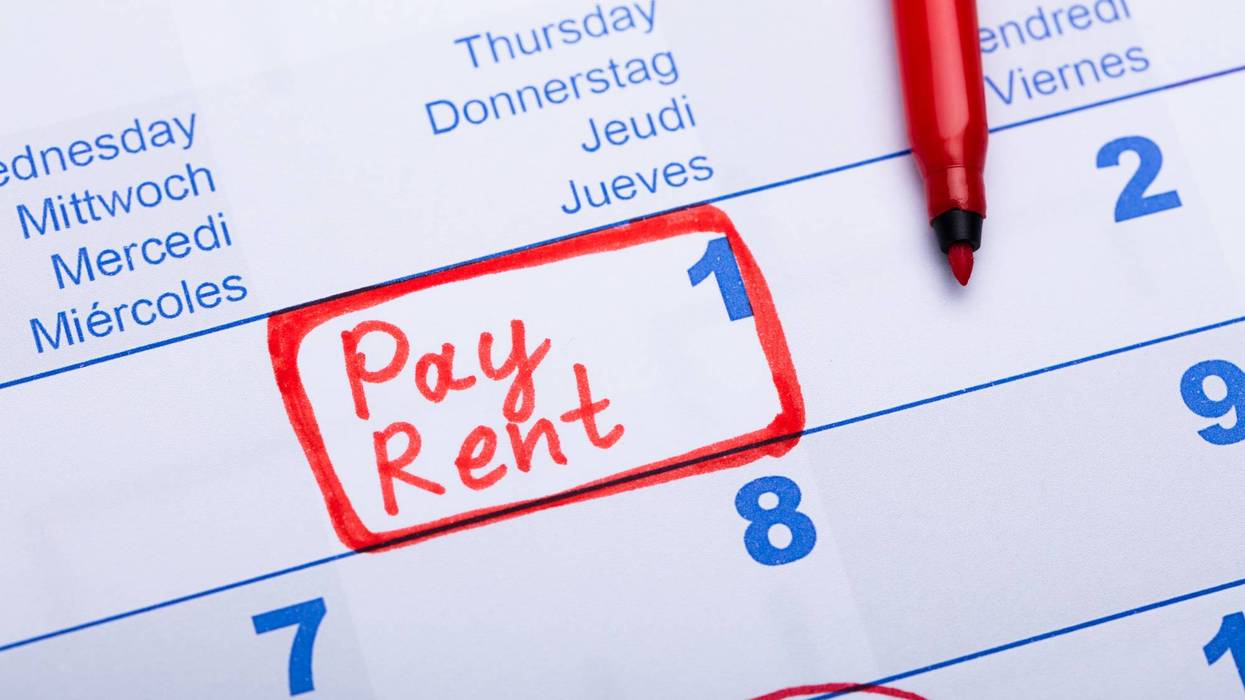

If you live in the city of Chicago, chances are you're renting your home. More than half of Chicagoans pay rent, and Zillow says the average rent for a one-bedroom apartment in the city is just over $2,000 a month.
But Chicago's landlord-tenant ordinances have not had a meaningful update since the 1980s ... and in the interim, tenants' rights advocates have called on city leaders for years to take action against what they consider the worst practices in the rental industry, including the charging of non-refundable "junk fees" such as application or move-in/move-out fees, the rise of anonymous property owners working through limited license corporations (LLCs), and threats to evict tenants who complain about conditions in their units.
This week, David Wilson from the Metropolitan Tenants Organization stood with activists and elected leaders outside City Hall to talk about the issues facing tenants, including one woman whose landlord refused to renew her lease after she reported bedbugs in her unit. "Tenants shouldn't be living with bedbugs, ceiling falling down and then when they complain about it the landlord retaliates against 'em," he said.
There appears to be broad agreement among Chicago aldermen that the time to tae action is now ... but City Council's response has once again exposed the deep ideological rift between Mayor Brandon Johnson and aldermen who have grown increasingly independent during his time in office.
On Wednesday, the mayor's progressive allies in City Council gave preliminary approval to a measure Mayor Johnson has called the "Protecting Renters Ordinance," or PRO. It would establish a tenants' bill of rights, ban "junk fees," provide legal assistance for tenants trying to fight eviction, and require owners of rental property to pay the city to be included in a registry intended to identify landlords. Those fees would bankroll a new 12-member "Bureau of Rental Housing Services" inside the Department of Housing that would oversee rental properties.
However, the PRO measure passed without its most controversial planks: a requirement that landlords provide "just cause" for not renewing a tenant's lease, and in some cases requiring property owners to provide relocation assistance for tenants whose leases are not being renewed.
Even so, moderate aldermen expressed concern that PRO would increase costs for property owners, especially individuals who own one or two units, and would force them to pass on increased costs to their tenants. As an example, property owner Bryan Esenberg told me this week that background checks on prospective tenants costs money: "If you want me to ensure safety for my residents in the building, how are you doing that by limiting my opportunities to ensure safety?"
One day later, members of a different City Council committee advanced a competing measure called "Fair and Accountable Illinois Rental" (FAIR) Ordinance. It would cap some non-refundable fees and security deposits and require owners of rental property to register with the city, but landlords would not have to pay to be on the registry, and it would not create a separate city agency, but would instead have the Department of Buildings handle administration.
FAIR is the work of Zoning Committee chair and West side Ald. Gilbert Villegas, who says it was crafted after months of discussions with tenants-rights groups as well as property owners, investors and others. It's also broadly supported by members of the "Budget Accountability Coalition," which spearheaded passage of a budget last year over the Mayor's objections.
"There are some differences, but not a lot of differences," between FAIR and PRO, Ald. Villegas (36th Ward) told me after Wednesday's vote. However, progressives and the Mayor say FAIR is unfair to renters because it does not include a tenants' bill of rights and also requires tenants fighting eviction to pay their landlords' legal fees, even if they win. Each side also accuses the other of including "unfunded mandates" in their plan, which is a tough ask in a city facing an $800 million budget shortfall.
"Tenant rights should not infringe on the development of more housing," said Housing Committee chair and Pilsen Ald. Byron Sigcho-Lopez (25th Ward), who supports PRO and delivered a forceful critique of FAIR during Ald. Villegas' Zoning Committee hearing Thursday.
Both proposals are now headed for consideration at next Wednesday's meeting of the full City Council, and at least one of them is likely to be delayed while all sides talk through how best to protect tenants while also not driving up costs for property owners. But the other factor here will be February's citywide election. Mayor Johnson formally launched his re-election campaign last weekend with a forceful defense of his progressive agenda, and he's expected to lean on aldermen for a win. At the same time, his City Council opponents will be working as hard to deny him a talking point he can use in his campaign.
All of this seems to indicate that the plight of renters - and the electoral fortunes of the mayor - will live rent-free in aldermen's heads until a compromise is reached.