

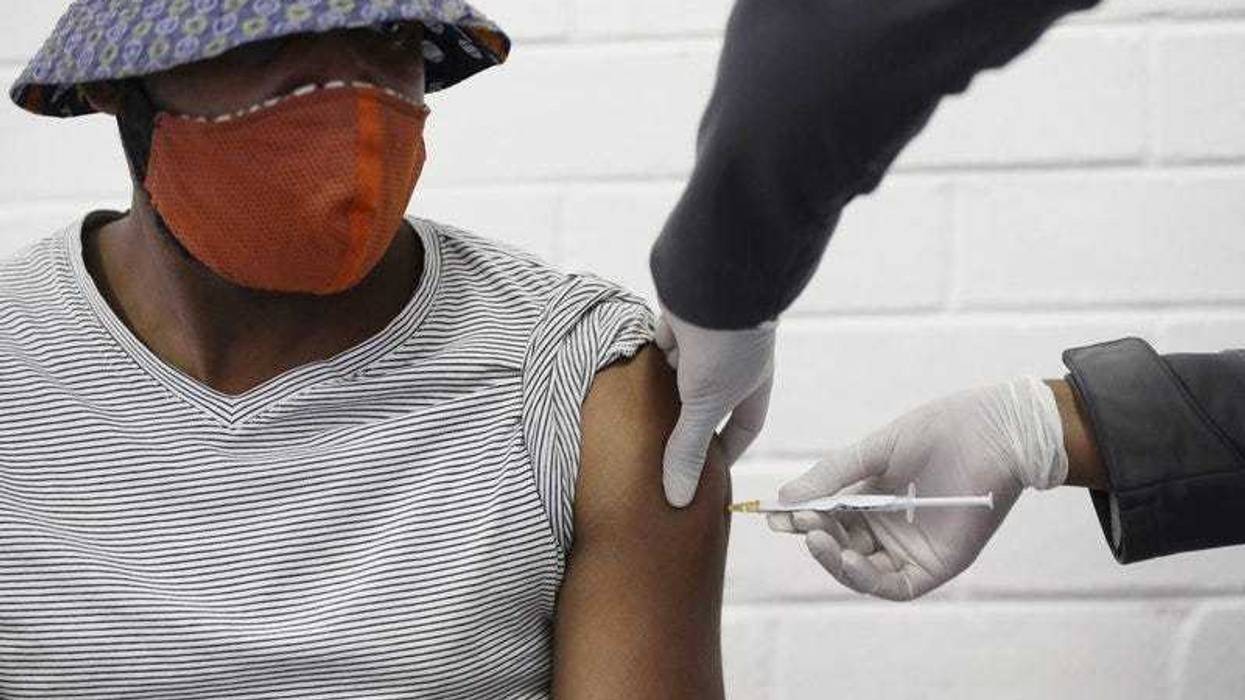

ALBANY (WBEN) - It's no secret the rollout of the COVID vaccine has been more frustrating and slow than many had hoped in the run-up to distribution, as demand is obviously outpacing supply.
In Erie County, officials have already had to cancel vaccination appointments on several occasions, and when asked how residents should go about obtaining a vaccine, County Executive Mark Poloncarz replied, "I don't know."
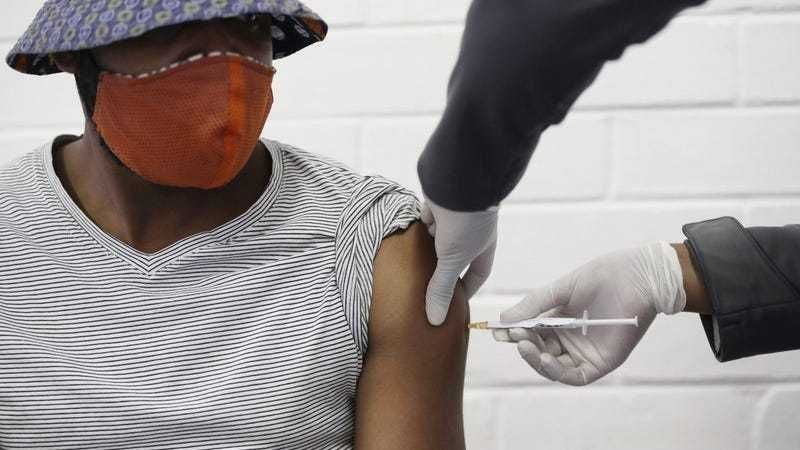
In a Tuesday afternoon press conference, Governor Andrew Cuomo addressed some of that supply concern and even mentioned an idea that has recently been floated regarding dose management.
"There's been a dialogue by some governors and some health experts, saying we should start to use the second dose as a first dose," said Cuomo. "In other words, we have about 300,000 second doses this week - use them for a first dose."
Cuomo explained that this idea isn't currently possible because the federal government sends the vaccine in two separate allocations - first doses and second doses. According to Cuomo, the federal government separates the second dose and reserves it for the people who receive the first dose.
If a person receives the first dose of the Phizer vaccine, they are supposed to receive their second dose 21 days later, and if someone receives the Moderna vaccine, they are supposed to get their second shot 28 days later.
"The federal government does not now allow (for second doses to be used as first doses)," said Cuomo. "Why? Because then you have to really know what your future production is. If you start using the second doses as first dosages, that means your production has to ramp up very quickly, because then in 21 days, your numbers are going to exponentially increase."
Dr. Tom Russo serves as the Chief of Infectious Diseases at the Jacobs School of Medicine, and he explained some of the pros and cons of the theory, saying there isn't a blatant correct choice.
"We know that a single shot at two weeks affords a degree of protection but not optimal protection," said Russo. "The concept would be that even if some of those individuals that only get a single shot subsequently get infected, they're more likely to have a mild illness, less likely to be hospitalized and less likely to have a bad outcome. That's the rationale, and it's trying to find that balance - it's a difficult one, and if we didn't have supply issues, we wouldn't be having this conversation."
As for where Russo stands on the side of the argument?
"It's really a difficult one," he continued. "I'm kind of leaning toward getting getting shots in arms as soon as possible certainly for our most vulnerable, certainly for our 65-plus group, and certainly for our essential workers that have comorbidities that put them at increased risk."