

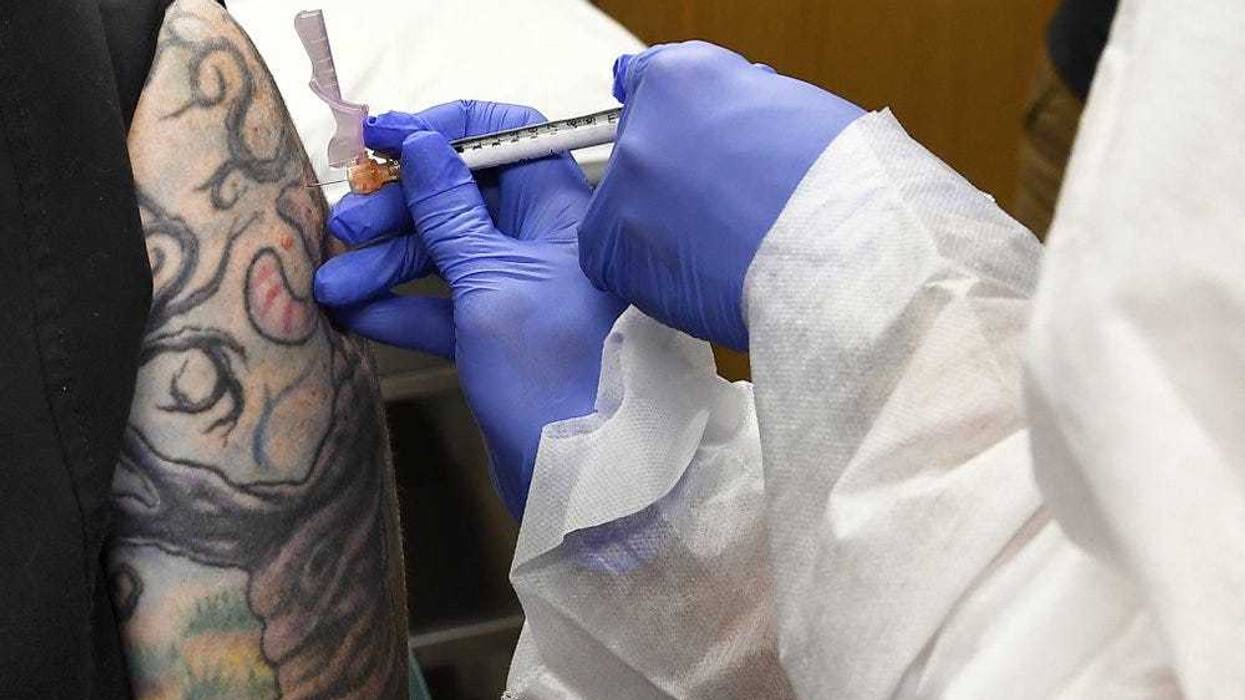

NEW YORK (WBEN) - As the mission for distributing a safe and effective COVID-19 vaccine presses on, Governor Andrew Cuomo is raising flags about the federal government's distribution plan, saying it leaves out poorer communities.
"Trump's way is give the private sector companies the drugs, they'll distribute it. Yeah, that takes care of the rich and the white communities, but it leaves out the poorer and the Black and the Brown community," said Cuomo on WQHT 97.1 FM Tuesday. "I'm saying, we need a vaccine distribution plan that gets into those poor communities, where we have teams going into public housing projects, teams going into low-income communities. That's what I did with COVID testing. This should be the most massive army ever assembled in this country to get this vaccine to people."
Dr. Tom Russo serves as the chief of infectious diseases at the Jacobs School of Medicine, and he shares much of the same concern as Cuomo.
"This is one of the struggles we have with a non-single payer healthcare plan where everyone's under the umbrella of one large EMR and we can easily identify these individuals and then prioritize them," said Russo. "It's going to be a greater challenge to go ahead and do that because a number of these individuals don't have healthcare and don't have regular physicians."
So, what would be a practical way of distribution? Russo suggests officials start by analyzing the data to find the hardest hit pockets of the country because those areas often align with the examples of healthcare inequity.
"A way to approach this is we know that certain zip codes have had a larger number of cases," said Russo. "If we identify the hardest hit areas based on positive cases then that would be a starting place to go ahead and develop a vaccination plan for those particular communities and sub-communities, if you may, which we know involve here in Erie County, the African American and Hispanic populations, as pointed out by Governor Cuomo."
Russo explained that initial estimates indicate, between the Moderna vaccine and the Phizer vaccine, there will likely be enough doses to vaccinate 20 million people in the United States in December, which represents just a fraction of the population.
Further, Russo said roughly 40-50% of the U.S. population falls into a higher risk category based on age and underlying conditions, as well as obesity and other health factors.
"We know there are concentrations of those individuals in some of the more crowded, more economically less well-off parts of Erie County, based on they've taken the brunt of this disease in the number of cases and the number of deaths that have occurred," Russo continued. "We can use that information to help guide us in terms of these being particularly vulnerable populations, and make sure then there is equitable distribution and availability of the vaccine for those individuals."
Black Rock Pharmacy Owner Brad Arthur believes the best way to quell concerns about access is to truly make distribution a healthcare issue as opposed to a political one.
"Those of us in the healthcare side of the business remain determined to ensure that, once the vaccine is approved by the FDA, we remain in position to be able to provide the vaccine to those who need it," said Arthur, who added that they've already taken measures with a major national wholesaler so they'll be able to deliver the vaccine once it's made available. "Let's not raise barriers to access the distribution channels by making it political, so that people like me and other providers should be encouraged to get in at the ground level - let's not make it a political thing at all, it should be an access issue."