



Buffalo, NY (WBEN) The fall means deer are on the move. Those in charge of controlling deer populations have several factors to take into consideration.
Paul Vaicunas of Whitetail Properties says an irrefutable fact is going to be harvest reports. "So a hunter is successful. They harvest a deer. They put their tag on it, and and that data gets recorded by the by the DEC. So when you take a look at a county like Steuben County or Erie County, just Erie County alone, 6,400 deer were killed," says Vaicuans. "You think about that, and you go, okay, that's an irrefutable fact. And if you go back in time, you can see that harvest report whether the population is growing or declining." He says a lot of the game managers take a look at that data and they make management decisions based on that.
He says there is also a balance that needs to be met. "The broader conversation would be what's the game management objective of the entire county, and and all of those have to be balanced out based on safety, what weapon you're going to use, whether it's a firearm, whether it's a bow or a crossbow, etc., all of those things enter into the conversation before they actually make a decision on what is going to be, how many deer are going to be harvested, how many doe tags are going to be issued, and what weapons of choice are going to be permitted in a particular area," notes Vaicunas. "In the Hamburg Orchard Park, Clarence kind of in that wrap around the Buffalo Market or the Buffalo area, you can't use a rifle anywhere in any county,, but you can use a shotgun, right? So the firearm choice is a limiting factor. Where every other county, you can use a rifle because typically it's bigger ground."
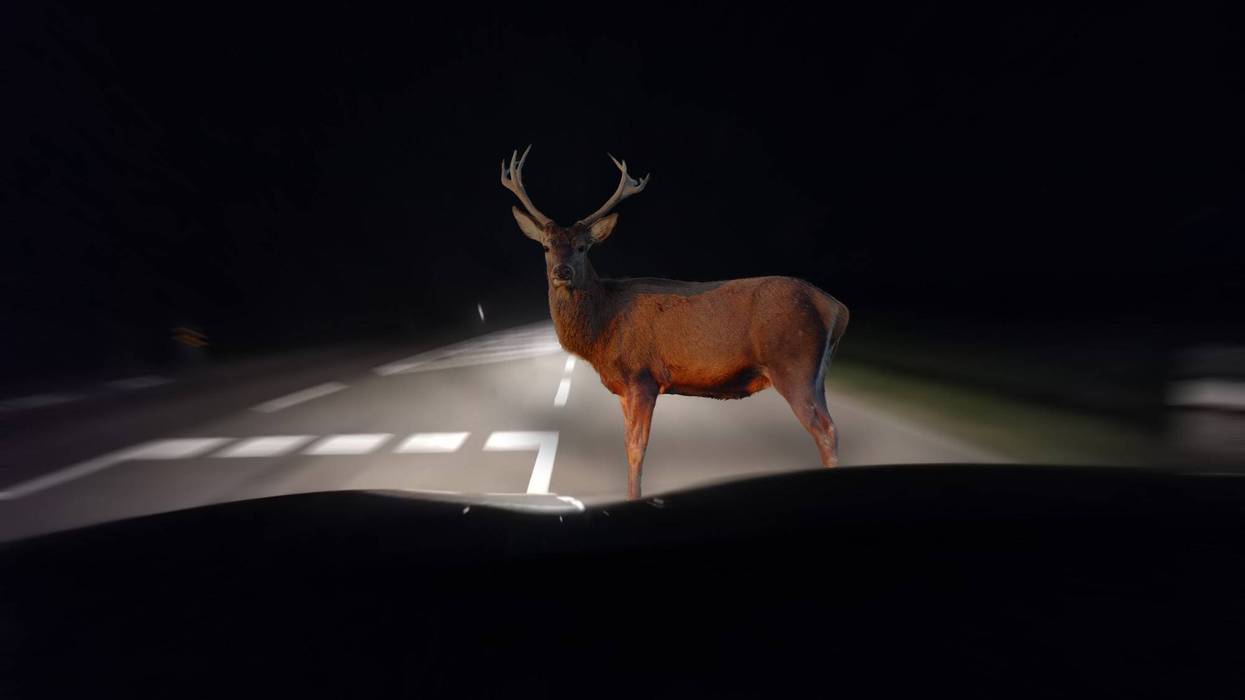
The fall months are when deer car collisions are most frequent to happen. "We had 1,519 in Western New York in 2025, but 20,475 when it comes to the whole state, and then in 2024 we had 19,462. So even from 2024 to 2025, we're up about 1,000, and obviously we're in 2026," says NYSP Trooper James O'Callaghan.
O'Callaghan says deer can be found where there's water and forest. "Even if it's a development that has a break with a little bit of forest or natural stuff being put in there, you're going to see obviously more deer. That's their natural habitat," explains O'Callaghan.
When it comes to collisions, O'Callaghan says a big difference too is the speed of the roadways. "If you're in North Tonawanda and it's 30, 35mph, but there's a lot of deer in North Tonawanda because there are pockets of forest, but it is a city, so you get the slower speed impacts. But really, anything over 45 mile an hour impact with a deer could total your car. The air bags go off. Your car is kind of done, even if it's a brand new car."
O'Callaghan says it's intuitive to swerve to avoid a deer, but he warns against it. "That's the worst thing you could do in in a moment like this. ABS brakes are in all cars, an electric brake system. It's designed so when you absolutely stomp on the brake, it has that, you know, it it it makes contact with the brake and then it lets off and then it makes contact and you get that that jerk feeling as you're stopping. That's so you don't lose control of your car. It takes longer to stop just by a little bit, but you won't you won't actually slide left or right. You just stop going straight," warns O'Callaghan.
NYSP advises drivers to not swerve
NYSP advises drivers to not swerve