

BUFFALO, N.Y. (WBEN) In Western New York, we've gone from crying uncle, from too much winter, to where's winter?
"We had the second snowiest November on record, then the Christmas blizzard," said Meteorologist Andy Parker on WBEN. "January was much warmer than normal, and we had a frigid February, but it only lasted about 48 hours."
As mid-February comes into focus, we're looking at another temperature rebound with more rain than snow.
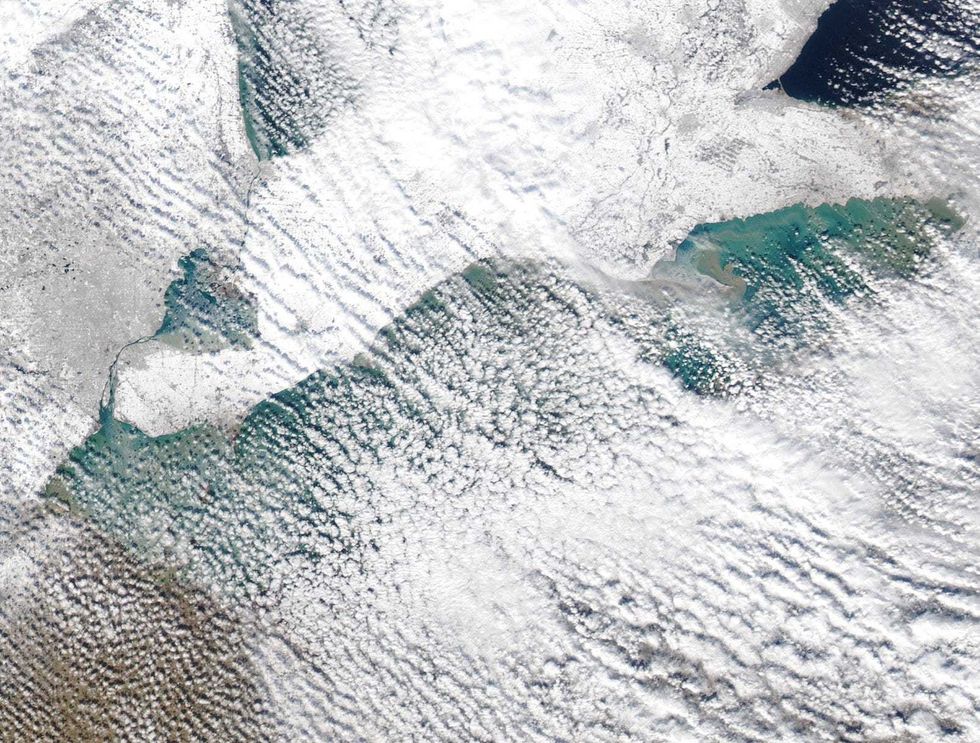 Lake Erie ice cover Feb 3, 2023NOAA
Lake Erie ice cover is way behind. "It's becoming more frequent where we don't see complete ice cover," said Parker "We were very low, at about 3% and then the last cold snap took us to about 40%, most of it down by Toledo, Ohio." But he says there's no sign of going back to the freezer anytime soon.
Once March comes, it brings more daylight and the sun is at a higher angle in the sky. He said the odds of seeing sub-zero numbers become less and less. And complete ice cover on the lake is not likely.
Ski areas are getting by this winter. But the traditional snow belt has been well below normal for snow totals. "It's very unusual," added Parker. "Fortunately, they have snow making capabilities and they have been able to utilize the periods of cold to build up their base.
It's been an unequal distribution of snow. "Buffalo and the Northtowns and northern end of Lake Erie has seen, by far, one of the snowiest winters in recent memory. In the Southern Tier, the winds have not shifted the lake snows into the traditional ski areas. They've only had 70 inches of snow for the entire season, while the city has been running at over 100 inches.
It is rarely that kind of a distribution. It flip flopped this year."
Could we be in for an early spring? "The only trend that I've noticed," said Parker, "in the last 6 or 7 years, six of seven have been warmer in February. But the month of March has been colder than normal. You get this thing called Sprinter, where you get spring and winter, or an extension of February that runs into March, and it feels like a 60 day month of the same type of
weather.
Looking ahead to April, Parker said 4 of the last 7 have been cooler than normal. The same for May, where 4 of the last 7 have been cooler than normal.