

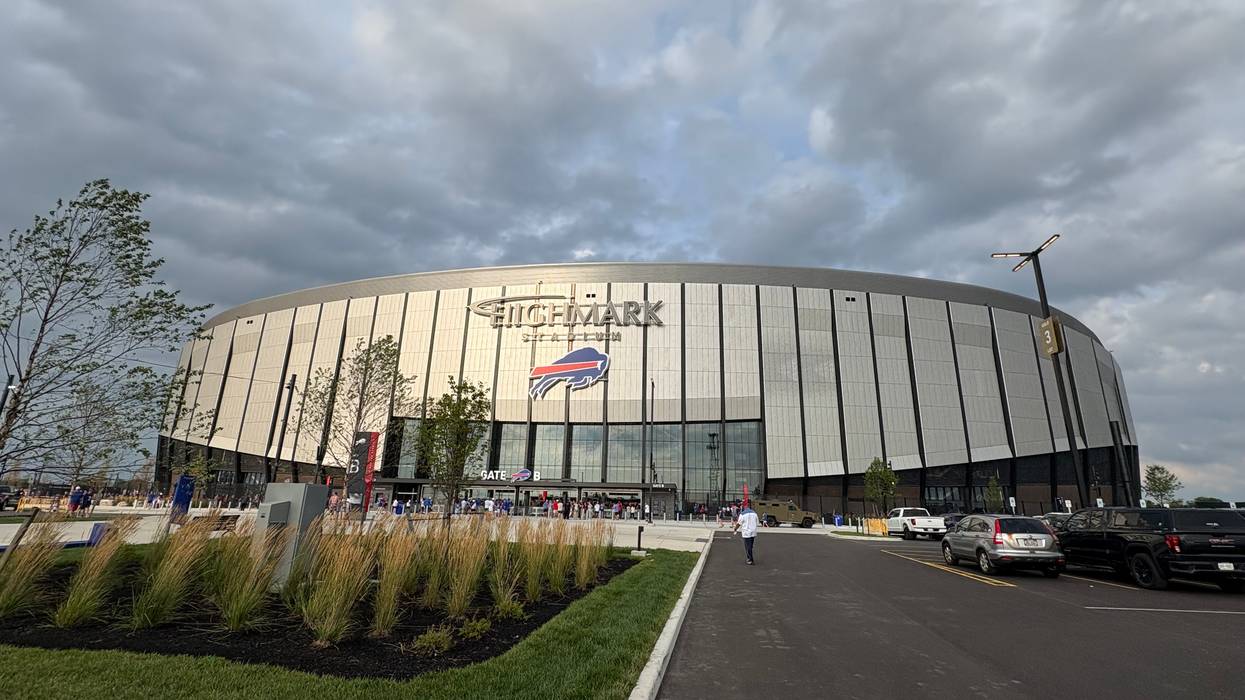

Orchard Park, N.Y. (WBEN) - As part of the agreement between the Buffalo Bills, Erie County and New York State to build the new Highmark Stadium along Abbott Road in Orchard Park back in 2023, fans are facing a 6% surcharge for purchases made at the facility for any game and other events taking place at the facility.
These surcharges will show up on your receipts at the new stadium if you happen to be paying for tickets, merchandise, food and beverage, parking and all other sales. The money will then be stored in a separate account reserved for any future capital improvement projects or renovations made to the stadium.
Erie County Comptroller Kevin Hardwick says prior to this agreement, in previous leases with the old stadium, the county spent millions of dollars every year on capital improvements. That meant if the Bills needed a new turf or a new scoreboard or other structural capital improvements, the county paid for them with revenue either from sales tax or from property tax.
"When the new agreement was reached with the Bills, the new lease to build the new stadium, the county is essentially - for almost all intents and purposes - out of the stadium business. The one part we have left is that we do levy this 6% tax, and it's a tax that the Buffalo Bills collect for us, they turn it over to us. And then every April 30, we take that money and we give it to Empire State Development, and the state uses that for capital improvements," explained Hardwick in an interview with WBEN.
While Hardwick can understand people's frustrations when they see their bill at the new stadium including this 6% surcharge, he feels it will be more beneficial for the region in the long run.
"Now it's just the people that are using the stadium that are paying for those improvements. Again, this is not really an Erie County tax. We're just kind of the middleman," Hardwick noted. "We take the money from the Bills, we give it to the state, and the state then makes the improvements. Again, a state corporation now owns the stadium that was transferred, just recently, and I think it works out better for Erie County taxpayers, especially those who never see the inside of the stadium."
While Hardwick wasn't part of negotiations with the 30-year lease for the new stadium, he would be surprised if this surcharge was a first for teams around the NFL.
"I'm sure it was patterned after something that already existed. Again, I think it's a novel way of paying for those improvements, which previously were paid for only by county taxpayers," Hardwick said.
Hardwick says those inside the new stadium will be paying the surcharge during events, not anyone that may be making a trip to the Bills Store across the street.
"There are people from out of the area who are going to be involved. So our Canadian friends come across, people from out of town come and they buy stuff. They're paying for those improvements too," he noted. "And as an Erie County taxpayer, property taxpayer myself, I want to thank them for that contribution because, again, every dollar that they spend on the stadium now is money that I don't have to pay for."
Hardwick adds he doesn't ever foresee an increase in the surcharge rate over the 30 years of the lease, and any change would have to come with the approval of, at least, the Erie County Legislature.
From an economic standpoint, professor Victor Matheson from College of the Holy Cross says it makes sense to raise money from the people who are already using the facility to come up with the funds for any future improvements for the stadium.
"Quite honestly, it's what an economist would actually advocate. The question is, who should pay for repairs on that?" said Matheson during an appearance on WBEN with Stefan Mychajliw. "Obviously, I think it should be the business owner themselves, but if you have a contract sign that says the city is on the hook for paying for repairs and maintenance at a particular location, collecting taxes on the people who use that location is one of the fairest ways to do that. What's unfair is it's the taxpayers, rather than the owners, expected to pay the maintenance on, basically, what's the factory for the Bills. But once that horse is out of the barn and it's going to be placed on the taxpayers, a lot of economists would say this satisfies the user pays principle.
"The subsidy doesn't end with the stadium opening. That's just the beginning."
"We take the money from the Bills, we give it to the state, and the state then makes the improvements" - Kevin Hardwick
"We take the money from the Bills, we give it to the state, and the state then makes the improvements" - Kevin Hardwick