

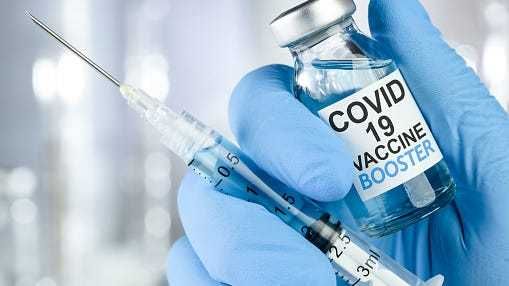
Buffalo, NY (WBEN) With a booster mandate for health care workers coming Monday, a former Buffalo hospital executive says it may not be a smart idea for all facets of the industry, especially with staffing issues in place.
Former Buffalo General Hospital President Larry Zielinski says what was good then, isn't necessarily useful now. "I think it's an example of a well intentioned policy that just is has no practical application," says Zielinski. "Early in the pandemic, we didn't know anything about COVID-19, and so we had what I would call these sledgehammer approaches that we're probably appropriate. At this time, though, we know so much more about the nature of this disease. We have to stop with the sledgehammers, and we can start using scalpels."
He says if the mandate takes effect Monday, he says it will take a deeper toll on local health care. "In a town like Buffalo, New York, where we have two major health systems and clogged emergency rooms, reducing an existing staffing crisis, putting this kind of pressure, I think, would be really ill advised and maybe disastrous," warns Zielinski.
Zielinski says the mandate would mean a massive amount of workers who would suddenly become ineligible. "We'd like everybody boosted in an ideal world, but it's not gonna happen. What you're risking is very long waits for service, in emergency rooms, inability to take care of, you know, sick patients properly in acute settings. And it's really ill advised, and I'm sure that a lot of people are talking to the governor about about that and hopefully, putting up a moratorium or a delay or reversing the policy," says Zielinski.
He says it's time to take a more surgical approach. "I don't mean surgical in the clinical sense, I mean, in a more precise way, that would, you know, encourage what the governor is trying to encourage, without having this, you know, pretty, I think, potentially disastrous impact on staffing," says Zielinski .
Zielinski says some settings require boosters, such as working with the elderly, but others shouldn't require it. "Let's talk about pediatric settings. We have this controversy. I don't want to get into more controversial areas, but we know that kids, by and large, are not going to be severely impacted, I want to qualify that I'm not a doctor, but in a setting where we know the population is not going to have a high incidence of danger of being affected, I think those are the settings we could go back and not take the sledgehammer approach."
Some hospitals in WNY have booster rates as low as 30 percent.


