

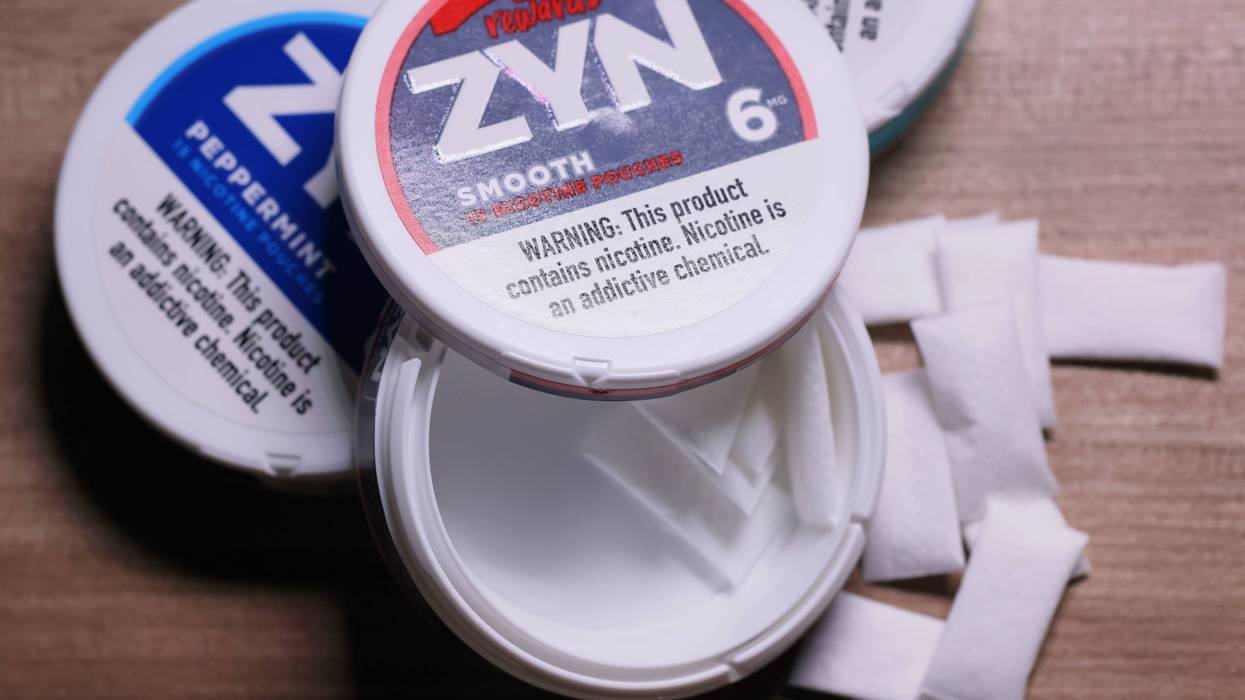

Buffalo, NY (WBEN) - Governor Hochul is considering a 75 percent wholesale tax hike on nicotine pouches. There is mixed reaction in Western New York.
Roswell Park's Dr. Andrew Hyland says products like nicotine pouches are addictive and have various health risks. "We see that in our hospital here, there are other products like nicotine pouches, which are lower exposure, for sure, but we also even some of our own research. We just had a National Symposium we presented last month, nicotine pouches are the second most common product used by kids," says Hyland, who's in favor of the tax hike.. "More young people are wearing nicotine patches than older adults, and addiction itself is a harm by itself, irrespective of physical, physical harm. So bottom line, I think things that increase the price of addictive products, especially to young people, will have public health benefit and something that we support here at Roswell."
Hyland says higher prices are one of the most effective deterrents to using products. "We see it here with inflation, that's happening. So when oil goes up, gas goes up, people drive less. All the same happens with consumer goods like nicotine pouches or other tobacco products. Young people are especially price sensitive, so when prices go up, their consumption will really go down. They have less disposable income, they have less money to spend," says Hyland.. He says such a tax will have a meaningful and measurable impact, resulting in fewer thousands of fewer kids getting addicted to these products statewide.
Former FDA regulator Dr. Brian Erkkila says such a wholesale tax increase props up the cigarette market and lowers the incentive for people to move for better alternative. "From a scientific perspective, when you look at a tax increase on something like nicotine pouches, you need to think about what the unintended consequences might be, so with a state that has over a million and a half people still smoking cigarettes, and almost 25,000 deaths a year, you need to think about where you want to put your priorities," says Errkkila "If you make something like a nicotine pouch with the FDA has said is appropriate for the protection of public health, has lower health risk than continued smoking. When you want to make that more expensive, you have to think about what that's going to do to people who are still smoking cigarettes. Are they going to be able to make that switch to something less harmful, like a nicotine pouch?"
He suggests a risk based taxation. "If you tax the most harmful products, in this case, cigarettes, at the highest rate, you tax something that the FDA has authorized as appropriate for the protection of public health, like a nicotine pouch at a much, much lower rate, then you can start to drive that behavior change and really, really see some public health benefits in the state," explains Erkkila.
Paul Zuber of the NYS Business Council says he has two concerns about the tax. "The first issue is that a lot of these nicotine pouches are used by consumers as a substitute to smoking, so I think that it's very clear that the burning of tobacco is what causes cancer. These products are used to take people off that that that, that innate desire to smoke, so there is a benefit to these pouches," says Zuber. "Secondly, I think the way the tax is structured, it actually incentivizes cheaper, knock off versions of these type of nicotine patches to end up hitting the market. What you're going to end up having with the way the thing is currently structured is probably an avalanche of these low end knockoff brands, of these pouches. You're going to see the black market grow."
Zuber is in favor of a unit tax, which is a per canister per unit he thinks would be a much better way to deal with this, rather than placing it at the same taxes as cigarettes. "We also think that eventually the state would gain more revenue off of this. So we think it's like the compromise, or the way to kind of make sure that everybody is has the ability to achieve their goals out of this policy." adds Zuber.
This proposal is being discussed in the state budget.
Critics say it won't help deal with those still smoking cigarettes
Critics say it won't help deal with those still smoking cigarettes