


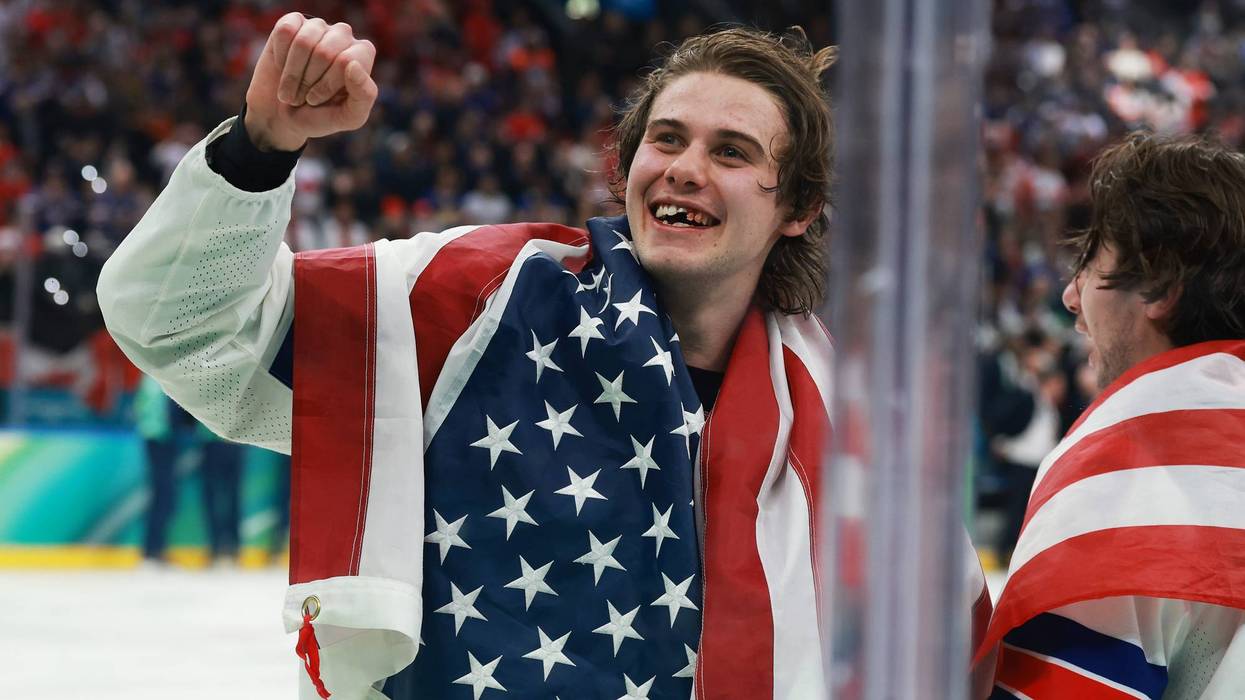

Buffalo, N.Y. (WBEN) - Jack Hughes' goal in overtime of the Gold Medal Game against Canada at the 2026 Winter Olympics in Milan, Italy may go down as one of the most iconic moments in the sport of hockey in recent years.
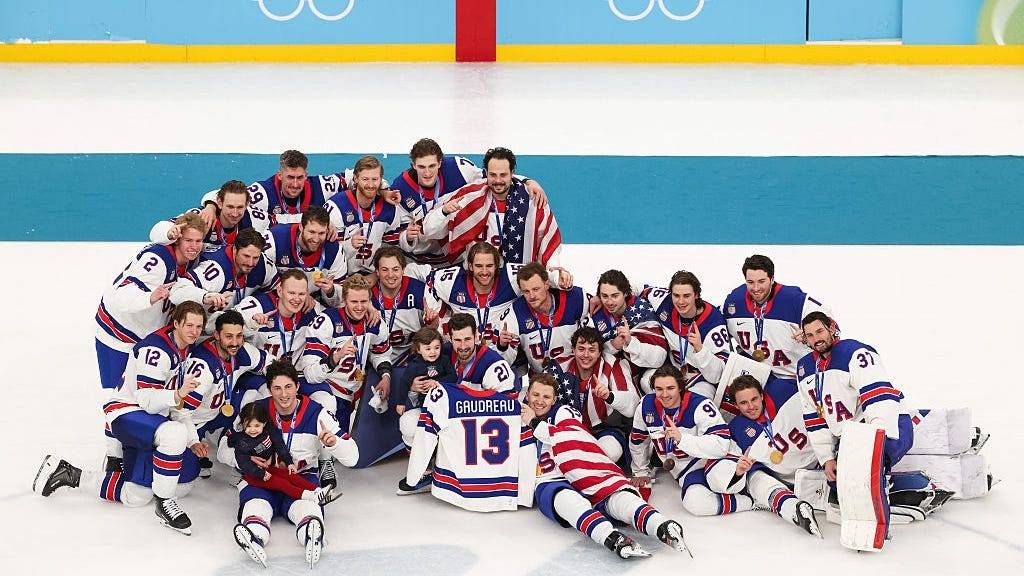
The New Jersey Devils forward was able to help the United States capture the nation's first gold medal at the Winter Olympics since the 1980 men's ice hockey team won gold in Lake Placid, N.Y.
However, in the waning moments of the third period with the game tied at 1-1, Hughes was on the receiving end of a high stick from Canada forward Sam Bennett that gave the Americans a four-minute power play chance, that they ended up being unsuccessful with.
In the process, though, it resulted in damage to Hughes' teeth that now seems insignificant, but rather is a lasting image of a moment that will never be forgotten in the lore of USA Hockey.
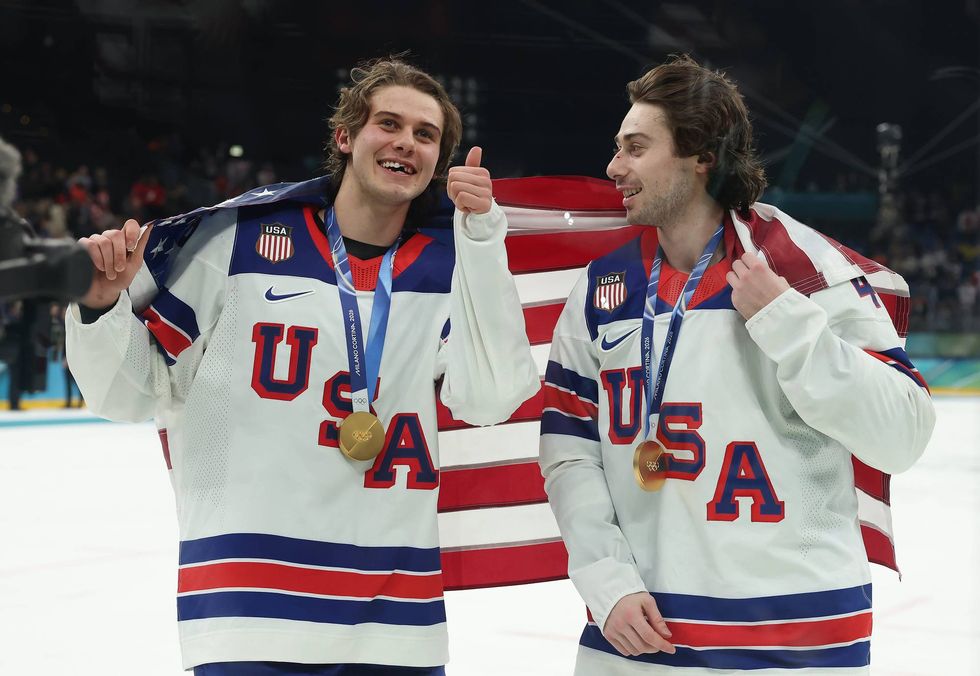 Milan, Italy - Brothers Jack (left) and Quinn (right) Hughes celebrate following a 2-1 overtime win in the Gold Medal Game against Canada on the final day of the Milano Cortina 2026 Winter Olympic Games on Sunday, Feb. 22, 2026.Elsa - Getty Images
For local dentist Dr. Ray Miller, who also serves as the team dentist of the Buffalo Sabres, he knows all too well with an injury like that, there's often a lot of pain associated.
"I've got to believe that adrenaline kicked in, and Jack Hughes was able to overcome that," said Miller in an interview with WBEN.
"If it was a situation where we were at the arena downtown, local anesthesia would be delivered, numb him up, and you're going back out, because you're there to play. Unless it was a situation that was threatening to his health, or possibility of further damage being done. But damage was done, so it's game on. When you're in the Olympic Gold Medal Game, your teeth are probably secondary on your thoughts."
While Miller acknowledges that players get injured all the time in hockey, with it being such a violent sport, he says teeth are more unique, and thus complicated.
"Chips are one thing, most players can get through that, but we've got situations where nerves can be exposed, it's very painful," Miller said. "Those are the types of things where patients say, 'I go outside and I breathe, and my tooth hurts.' Well, think about flying around on an ice rink and your tooth's gonna hurt. Those are issues, and we do worry. I couldn't really tell you about Jack Hughes' situation, but he could have actually moved the tooth, it could have been partially disconnected, meaning almost partially removed. It looked like it was just fractured, that he broke pieces, but it looks severe enough that I'm sure there was nerve involvement."
Miller is not new to chipped teeth, saying he deals with those on a weekly basis. But for traumatic cases, like Hughes' in Milan, that might be more on a monthly basis or a couple times a month.
"There's all sorts of things that happen that cause trauma to teeth. And teeth are funny. They can absorb the trauma, to some extent, but we have people that have injuries when they're a child and it doesn't impact them or the tooth doesn't die until they're an adult. Things happen," Miller explained. "Teeth have a cumulative effect, meaning, when you injure a tooth, that's one injury. Another injury comes, another injury comes, and sooner or later, a tooth just gives up. But when you break them, like Jack did, hopefully they weren't broken too far below the gum and then the tooth has to come out. If they're just broken in the part that's in your mouth, the part that you can see, and the nerve's exposed, that can be treated, taken care of."
So how does Hughes go about fixing that, seemingly, "golden" smile? Step 1 for Hughes, according to Miller, would be to get an assessment.
"We've got to get a radiograph. Just because the tooth is broken visibly, it could be broken in the root, which would mean we may not be able to save it and the tooth would have to come out. But if it's just broken in the part that's in your mouth, the part that you can see - the white part of the tooth - and there was a nerve exposed, we can get rid of the nerve, we can do a root canal," Miller explained. "And again, being a player, we might just restore it as, we'll call it, a long-term interim with some type of composite resin, a plastic filling material. And then later on, after he's done with his playing days, we can use some porcelain-type crowns or restore them to a more long-term fix. It varies on every situation."
With the realization that hockey players are likely going to be slamming their faces into elbows, boards, pucks, sticks, etc. in their playing career, Miller knows tooth damage can happen again. The good news, though, is once a player's career ends, or for anyone who doesn't play hockey and need a long-term fix, technology has dramatically increased the ability to replace teeth with implants.
"It used to be bridges, meaning you had to connect teeth to other teeth, and sometimes have to do some reduction to connect the teeth. So an implant is your best option, if you have the bone support to support that implant," Miller noted. "The biggest hurdle for, unfortunately, most folks is cost of treatment. Hopefully for an NHL hockey player, that's not an issue. But for an NHL hockey player, their issue is, 'I'm going to keep injuring this, so I better wait until my time has come where I can not have to worry about getting hit again.'"
Miller jokes that Hughes could have a gold tooth implanted in place, if he wanted.
"Somebody could make it for him as a temporary little joke, 'Look, I made a gold tooth out of my medal!' But it would normally be made out of something more porcelain or zirconium, different products that we have that look tooth-like," he said. "Obviously, the best thing we want to do is put a tooth in there that no one knows we put a tooth in there. That's the way we usually like to have our work recognized. But, hey, if Mr. Hughes came to see me today and he wanted a gold tooth, he'd get a gold tooth from me."
For any hockey player, young and old, Miller always recommends to wear a mouth guard in order to best protect themselves from potential teeth damage while playing.
"Some players don't wear them because it's just a little uncomfortable. We have players wearing them, and I'm sure if you watched the game, you saw the Tkachuk brothers (Matthew and Brady) sitting on the bench chewing on their mouth guards like rawhide or a chew toy. But they do wear them when they're in physical combat or physical activity on the ice," Miller said. "Again, it's because of what I do. I pay attention to that, I watch these guys when their mouth guards are sticking out of their mouth and they're going to hit somebody into the corner. It's better than nothing, I guess, the fact they have them."


