


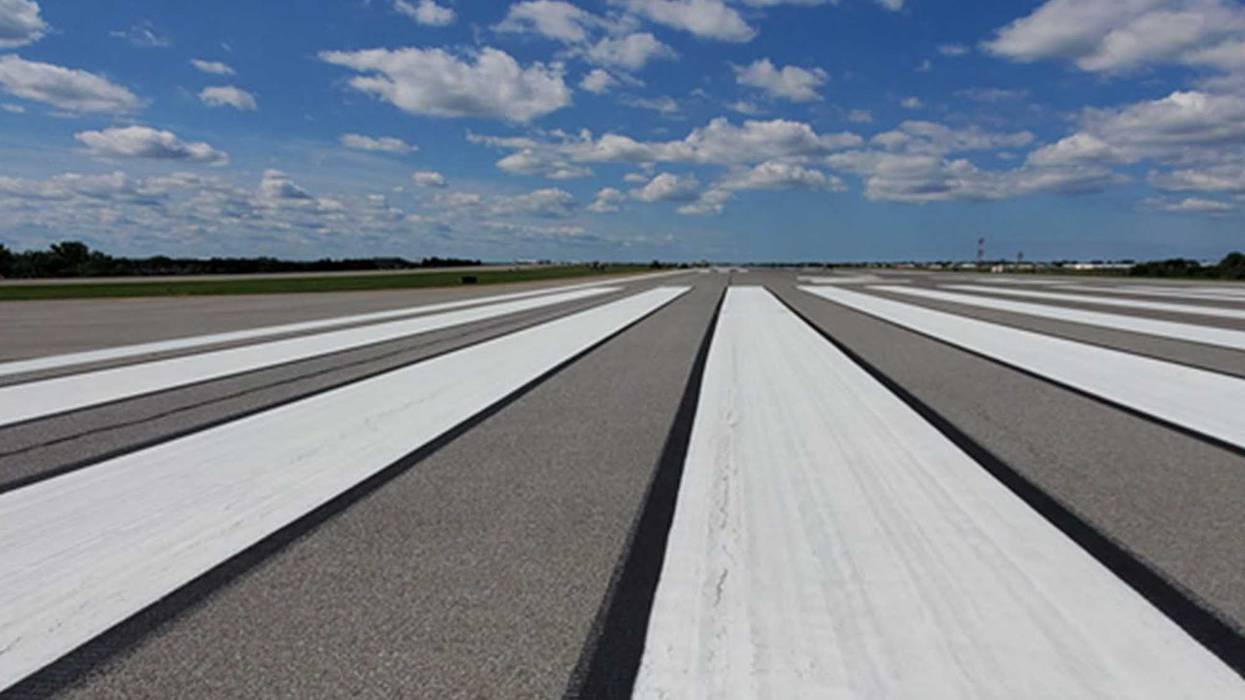

Buffalo, N.Y. (WBEN) - It's a project that's been in the works for some time at the Buffalo Niagara International Airport.
Folks with the NFTA and the Buffalo Niagara International Airport are preparing to commence work on the Runway 5-23 Rehabilitation Project, which will reconstruct the airport's main runway. Starting this upcoming Monday, May 8 through the summer, the runway will undergo preventative maintenance, a proactive action that is key to air travel's incredible safety record.
"I would say a majority of the area is a full-depth reconstruction, where we go in and we just tear the whole runway out and we have to put the centerline lights back in," said Russ Stark, Deputy Director of Aviation with the NFTA. "Then there's areas that we can just do, what's called, a 'mill and overlay,' where they just come in and peel off the asphalt, and we just relay that asphalt on those particular areas. So it's a combination of the full-depth reconstruction and a mill and overlay."
According to Stark, some of the construction work has already been underway at the airport, with some ancillary work taking place as of last year. The major work associated with the project is slated to get underway on Monday.
"Additionally, that work is going to rehabilitate some of our Taxiway A, or 'Alpha', and some of the other taxiways, we're going to do some tunnel repair work and the associated electrical work that goes along with that. Additionally, we're adding some safety features, such as runway guard lights - we call them 'wig-wags' in the industry here - so that it makes these intersections a little bit more visible to our pilots," Stark said.
Because Runway 5-23 is Buffalo's most used runway, it is set to be closed for air traffic for most of the summer Stark says they estimate Runway 5-23 will be closed for approximately 120 days, give or take a few days, with a terget date for re-opening on Tuesday, Sept. 5. He hopes work with the Runway 5-23 project will be completed ahead of schedule, but there's no promises on that.
"Once that Sept. 5 date rolls around, that does not necessarily mean that construction is completed. The runway will be re-opened after the end of that stage, but we have other work that's going to be going on after that major construction work," Stark said. "We have to groove the runway, we have to put markings back down, and then, of course, we have to do the final inspection for that stage of the work."
Stark says the last major effort to rehabilitate or reconstruct Runway 5-23 at the Buffalo Niagara International Airport came back in 1978. It is a project that has been quite overdue for the future of the airport.
"To assist these runways in keeping their safety for our airlines and keeping the maintenance up, our crews do maintenance and repairs, we have contractors come in and assist us with that to do the smaller repairs. But now is the time, based on our pavement maintenance management plan, that this runway needs to be rehabilitated and reconstructed so that we can reduce those maintenance costs, and improve the safety for our traveling public and the airlines," Stark said.
With the main runway at the Buffalo Niagara International Airport set to be closed over the course of roughly four months, some local residents in the region may notice planes using alternative flight paths more frequently. That means sound patterns will change, but the airport says it will all be temporary.
Stark says the airport and the NFTA have worked very hard to minimize any impact on travelers and residents around the airport.
"It's an exercise in communication. This project has been communicated for the better part of a year to the airlines," he said. "We don't anticipate, from our perspective anyway, any impact on the traveling public, because the airlines have had the opportunity to adjust their schedules. What our residents may see is because we have to close this runway, the traffic patterns, if you will - our primary runway is the 5-23 runway - now we're having to switch our traffic over to the 14-32. So our residents may see a lot more traffic in that particular pattern until this runway construction project is complete. We're hoping that our residents will have patience with us during this construction season."
As for other operations set to be impacted by the upcoming runway project, Stark says the taxiing of aircraft may see some extended times, but like the change of flight patterns to the airport, he points out it has been an exercise in communication.
"We had to communicate different taxi routes for the airlines, and, of course, the air traffic control, the tower has to be involved in that. They're heavily involved, as they are the ones that are going to be instructing the traffic to get to-and-from the gates to the runways and back," Stark explained. "Some of the aircraft may have some increased taxi times, not like being in JFK [John F. Kennedy International Airport] or DFW [Dallas/Fort Worth International Airport] taxi, but just a few minutes additional taxi time, as they have to re-route around the construction areas. That's really the impact that you're going to see on the traveling public."
Construction will take place mostly during the day with occasional overnight work, during times in which there are very few, and usually no schedule flights.