


Buffalo, N.Y. (WBEN) - It was an initiative that started to garner plenty of support last spring to try and help pollinators, such as bees, thrive when they come out of hibernation.
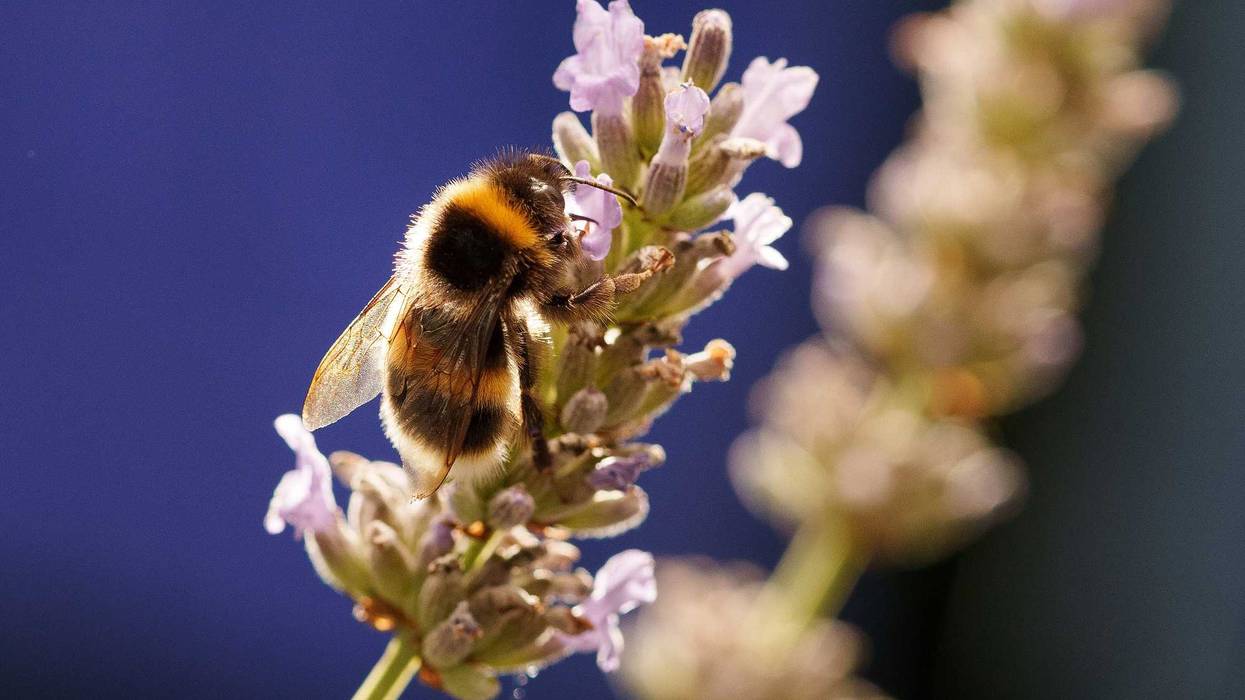
"No Mow May" is an initiative geared towards pushing the pause button on mowing ones lawn during the month of May, allowing flowers to bloom and help early season pollinators. The start of the growing season is a critical time for hungry, newly emerged native bees to an area, and floral resources may be hard to find especially in urban and suburban landscapes.
By allowing the grass to grow longer and letting flowers bloom, one's lawn can provide nectar and pollen to help bees and other pollinators flourish. Mowing less creates habitat, and can increase the abundance and diversity of bees and other pollinators.
[shortcode-inline-related expand="1" link="/wben/news/national/no-mow-may-crucial-for-bees-and-pollinators-during-spring" headline=""No Mow May" is crucial to help bees and pollinators in early spring" image="/media-library/image.jpg?id=63622119"]"With the emerging spring pollinators, they need grass that supports their forage. Forages takes the form of dandelions, buttercups, violets, clover, and other little weedy things that grow in the lawn," said Carol Jo Pope, member of the Orchard Park Garden Club. "The bees and butterflies come over - I notice the little bunny rabbits come out too, it looks like Disneyland sometimes on our lawn - they eat these things to survive to take them into the summer months when they start pollinating. The big issue is we're losing our pollinators who directly affect our food chain. Without these pollinators, either through our pesticides or not allowing our grass to grow for forage, that's the big problem right now.
"We're having trouble in this country with the food chain. Without these pollinators going around, pollinating the buds on fruit trees, the tassels on the corn or whatever, we're going to have trouble with our food chain pretty soon. I don't know how long, because I'm not a professional in that regard. All I know is we need to bring attention that we're losing our pollinators. 'No Mow May' is such an easy-peasy way to do this. It's incredible."
In Western New York, a number of municipalities have already supported the initiative, and have encouraged residents to let their lawns grow throughout the month of May. While they are not required to let lawns grow, residents in places like Hamburg and East Aurora have already taken part in a spring of "No Mow May" with no problems or no pushback.
In addition, the City of Buffalo recently approved in February the institution of "No Mow May" for residents across the area to let whatever yard space they have grow in an effort to help support pollinators this spring.
"I had a lot of residents from the district that spoke to me about it, that were supportive of it. The more information I was able to get about it, the more supportive I was. And my colleagues like Joel Feroleto were supportive, as well," said Joe Golombek, who represents the North District in the Buffalo Common Council. "It just seems like it would be a good thing to do to help the environment, especially during the month of May."
Golombek is among many that are hopeful the initiative will work out very well, and it's the first of many initiatives to better the environment.
Meanwhile, the Town of Orchard Park recently voted unanimously to approve the initiative among its residents, allowing them to take part, if they choose to, and not mow their lawns for the entirety of the month.
"We are very excited to move forward with this initiative," said Orchard Park Town Board member Conor Flynn. "What it does is it waives the usual penalty that would be associated for the failure to mow that lawn only for the month of May. What this will mean, hopefully, is it creates a better environment for bees and other pollinators to get off the ground after a long winter. They feed on some of the small flowers that will be associated with your lawn when it first starts growing. By not mowing for a little bit and allowing those those flowering plants to grow slightly, it gives those bees and other pollinating insects an opportunity to survive, what would otherwise be, a valley of death for them."
While the Town of Orchard Park is fully supportive of the "No Mow May" initiative, there has been some pushback from the Village of Orchard Park with regards to a full-blown push on the matter. Recently, the village board voted to approve a stipulation of allowing residents to grow a two feet-by-two feet section of their lawn without needing to mow it down.
"We worked with our Orchard Park Garden Club and came up with an option to do a section of the lawn - which is smaller, but we're in the village so most lawns are small - that would not be mowed," said Village of Orchard Park Mayor Jo Ann Litwin. "'No Mow May' initiatives in the other villages and towns and cities, they're not a must. It's only if the resident wants. We're just trying to look out for all our residents in the village, and make sure our village has the character and look that people have known and love."
While the resolution may seem suitable, Pope does not understand what the problem is with letting residents in the Village of Orchard Park grow their lawns for the entirety of May.
"We have been working on this issues since February, going to village meetings and town board meetings. The village, the mayor, somebody on her board told us the height of grass was 4-to-6 inches. Because I didn't do my homework correctly, I found out through Barbara O'Brien from The Buffalo News that, in fact, Orchard Park Village does not have a code determining the height of grass. Based on that knowledge, all of a sudden, I realized we were blindsided," Pope said. "To control the people in the village who might want to take part in 'No Mow May', the village board put up the stipulation of two feet-by-two feet. Needless to say, that made everybody laugh. The Garden Club is a group of creative people, and we'll deal with that size. But, at least, the people are able to grow their grass to any height they want, granted in the two-foot-by-two-foot space."
Despite the issues, Litwin does believe the "No Mow May" initiative will serve as a positive, and work as it is intended to for the environment all-across Western New York.
"I'm not an expert on bees and pollinators, but from what I hear, the pollinators need something to grow in," she said. "When I looked all this up, I found out that monarch butterflies and milkweed are a majority of the pollinators. I can remember growing up, we used to have a lot of that around here. We do not anymore. So we went out in the village, we bought milkweed, and we planted it around our Department of Public Works area. And we're declaring May, 'Monarch May' for monarch butterflies, because they're great for the environment and increase the pollination."
Litwin is also hopeful the "No Mow May" and "Monarch May" initiatives in the Village of Orchard Park will allow for the bee population to experience a bit of a boom this spring.
"From what I understand, our bee population is going down, but I'm not an expert on all that. But we're very in tune to our environment here," Litwin said. "We do flower baskets, and hopefully that will increase the pollinators in our village. I think it's great that people get involved."
As for Flynn, he, too, is understanding of the potential benefits "No Mow May" can have this spring in the Town of Orchard Park and elsewhere across Western New York.
"The science is pretty clear on this that if this is done on a broad basis, it can be beneficial to the community," Flynn said. "As I said at the start, there is no requirement that individuals not mow the lawns, residents of Orchard Park are free to mow their lawns. But I am hopeful that from a messaging aspect, it will get the message out there that we do need to protect these pollinators, we do need to protect these bees so that we can live in a more sustainable, biodiverse community."
What other benefits may the "No Mow May" initiative have across the region this spring?
"I think it signals for not only our community, but those who live outside our community that the Town of Orchard Park is focused on creating a sustainable economy, that we are focused on nature and biodiversity, and that this is a community that welcomes new ideas, and welcomes an increase in awareness for these types of programs," said Flynn.
As for Golombek, he sees plenty of benefits with the "No Mow May" initiative for the City of Buffalo.
"One of the things is I've been reading about the problem with bees throughout the country and the world, basically. I think this will be something that will help them in the area. It will help to keep us green, to keep Buffalo beautiful," Golombek said. "With the garbage being picked up, hopefully in the month of April, it always looks terrible after wintertime for that first month or so. But once the beauty of the flowers and the environment that we have in our neighborhood starts to come out, I think that will be a huge positive. I love when I'm walking through the neighborhood and I see gardens, tulip bulbs and things like that growing all over the place. I hope it encourages people, the same way that when somebody on the street fixes up their front of their house, all of a sudden you get two or three other neighbors that start doing the same thing. I'm hoping that it will be catchy, as well."
As for some potential concerns with a "No Mow May" in Western New York, Litwin has a couple for the Village of Orchard Park.
"I don't know if you've ever not cut your grass for the month of May, it's a very wet month generally, and the grass does grow excessively. I only know this because at one point, I was taking care of my parents lawn and the lawn mowing service didn't show up for the entire month of May. By the time [we got to taking care of it], it was almost hip-high with the grass. So knowing how it can grow in May, I was concerned that things could get a little dicey on cutting the lawn once we do go back to the mowing," she said. "Plus, we are always very concerned about ticks and fleas. Almost everyone in the village seems to have a dog and they're out walking them all the time, and we were concerned about rodents. That's why we went [to totes with] our garbage. We've done all these things to prevent all those things, so we wanted to make sure that whatever we did didn't increase any other problems."
While those concerns may have some credence, Pope feels those concerns are not suitable for a place like the Village of Orchard Park.
"As far as I'm concerned, I live right next to a common space, we've never seen a tick in Orchard Park, in my neighborhood that I know of," Pope said. "That tick business came from Williamsville's objection to 'No Mow May'. If they're worried about things like rats in Orchard Park, give me a break. They have one of the cleanest garbage pickups in the world. We don't have greasy spoon restaurants, in fact, we hardly have a restaurant in the village even. So that problem is moot to me."
As for Flynn and Golombek, they both do not see many problems, if any, to letting the grass grow for a full month to help with pollination this spring.
"I don't think 30 days of not mowing the lawn is going to create such a significant tick or Lyme Disease issue that it would put the community at risk," Flynn said. "I mean, the focus here is No. 1, getting those pollinators through that sort of valley of death, that I described earlier, and then mowing for the rest of the summer. That's an important component of this. You don't let it just run wild all summer and allow those undesirable tick populations to grow. You just help the pollinators get through the most difficult period, and then you move on with your life. Or mow, that's totally up to you."
"I know some people have some concerns about rodent infestation, and the reality is if there's not a food source - garbage laying out or something like that - you're really not going to get rodents," Golombek added. "Just because you have four or five, six inches of grass doesn't mean you're going to encourage a rodent problem. I see it as being, generally, an overall positive."