


Buffalo, N.Y. (WBEN) - Several school district across Western New York are readying a return to the classroom this week, but how may the commute for many look across several local roadways, especially Interstate 90 and Interstate 190, where construction has impacted traffic throughout the summer months?
Athena Hutchins, executive director for NITTEC (Niagara International Transportation Technology Coalition), says they notice an increase in traffic every fall when school goes back to session across the region.
"It really just means the travel time for drivers, it's going to take them a little longer to get to where they're going," said Hutchins in an interview with WBEN. "Usually it takes us a couple weeks until it levels out, but some of the roadways around the region, we see anywhere from a 9% up to almost 22% increase in travel time on some of those expressway networks throughout the region. So we just want to tell people to prepare to allow themselves a little extra time to get through some of those areas."
While several districts don't always utilize the expressway networks for bus routes, it is likely that drivers will see some delays in some of the more congested areas around the I-90 and I-190.
"It really just depends on where the routes are for the buses that they're going. So I can't really say one school district over another, a lot of them really stay to some of the local roads," Hutchins said. "And there is a lot of construction around the whole region, which we do have all that information available on our website, where people can see what roads - even all the local roads - where there's construction. So you can take a look at that in advance of even going back to school to make sure people know where the construction is."
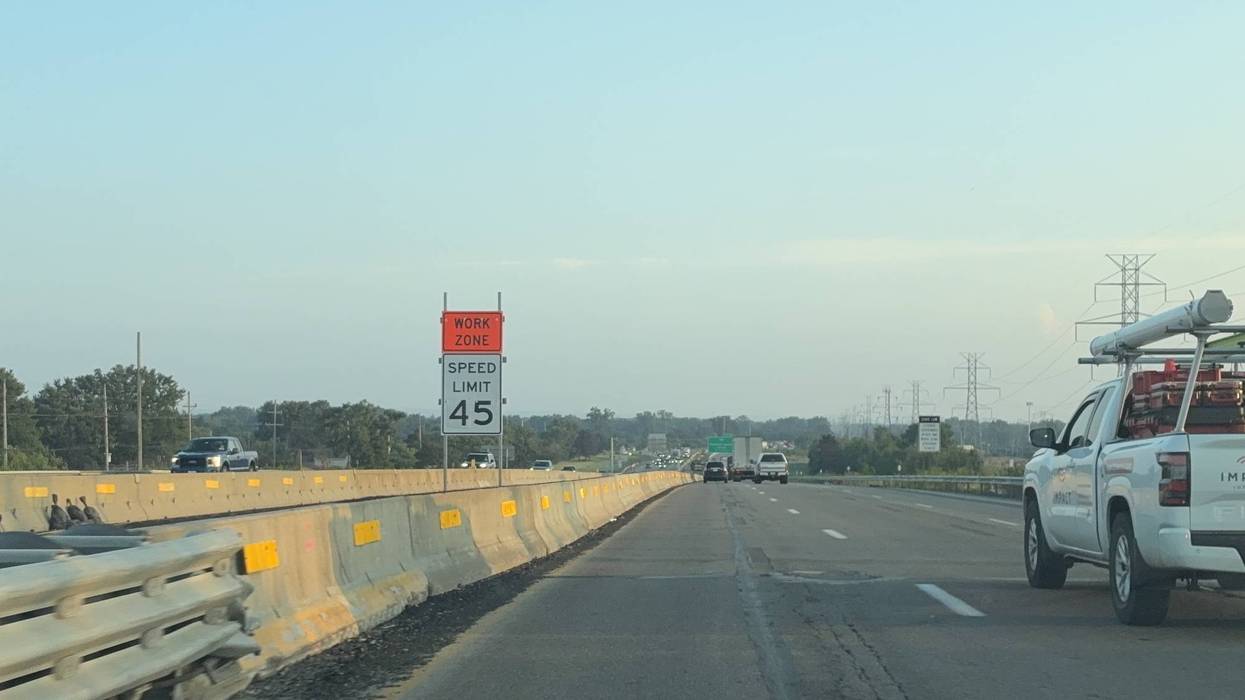
Initially, traffic in construction zones on both the I-90 and I-190 slowed traffic down quite a bit, but Hutchins says it was expected.
"When they went into effect, people needed to get used to them. So even like the 190, when they changed that, a little delays in the beginning, but I think everyone got used to it. So I just think the 90, in general, the volume of traffic that goes through that area of construction is a little bit higher than what's on the 190. But once people got used to it, it did seem to level out, especially on the 190," she noted.. But I do know they've been making some changes with some of those traffic patterns recently, so again, it's just a matter of getting used to it and making sure people are aware that they're going to be delayed."
Kelly Holland from the New York State Thruway Authority says both construction projects on the I-90 and I-190 are on schedule at this time. She's asking travelers to plan ahead, give yourself ample time to get to where you need to go, or even determine if you want to take a different route to-and-from where you're going.
"Just be mindful of the changes in geometry on both roadways. On the 190, we have traffic that's gone from three lanes to two lanes in both directions. And on the 90, traffic has remained at three lanes, but those lanes are more narrow and there's no shoulders. So if you haven't driven this route in a while and are getting back into the swing of things with back to school, you can definitely expect a change in your ride," Holland said with WBEN.
Hutchins also agrees to allow for extra time with your travels with school back in session.
"Make sure you're not rushing. There are reduced speed limits in some of those construction zones, so people need to make sure they're allowing enough time to get through those areas," she said. "I encourage everyone to look at the NITTEC website, NITTEC.org. That's where you can see all the highway cameras on there, plus you can see all the construction projects that are happening that might impact their route. So I just encourage people to take a look at that in advance, and just make sure you allow extra time as you're traveling."
Ryan Whalen from the State Department of Transportation reminds drivers to obey any work zone speed limits, especially with school back in session across the region. The State DOT will continue to ensure drivers are slowing down in work zones with the Automated Work Zone Speed Enforcement Program.
"It is meant to give you warnings. You will see the cones, you will see the work zone, and there's a requirement that there's a sign saying, 'Camera enforcement coming up.' So if you're paying attention - which I hope everybody is while they're driving - you should get good, fair warning about the cameras coming up and have a chance to slow down before you get there," Whalen said with WBEN.
"Every fall we notice when school does go back to session, there is an increase in traffic" - Athena Hutchins, NITTEC
"Every fall we notice when school does go back to session, there is an increase in traffic" - Athena Hutchins, NITTEC