



Williamsville, N.Y. (WBEN) - It has been a difficult year for a number of businesses in New York State due to the impact of global tariffs implemented by the Trump administration in Washington, D.C.
However, rising energy costs are now compounding the costs associated with tariffs, providing even more of a challenge for many across Western New York.
New York Gov. Kathy Hochul was in Williamsville on Monday to host a roundtable discussion with several business leaders about the impact of tariffs on business matters. From farmers to small manufacturers to importers of items like tea and wine, businesses have been feeling the negative impacts of tariffs.
"It's actually kind of heartbreaking to know these people work so hard to build a business and to hire people and to expand our local economy," said Hochul during her visit on Monday. "It's a point of great pride for us. And then no fault of their own, they're just surviving now, barely surviving. There have been layoffs, there have been companies that have gone out of business. People are not expanding opportunities or seizing opportunities, because they're just in this paralysis stage. And when you talk to a farmer who's supposed to think four years down the road on what they should be planting now, they don't know what to do. They don't know whether they're going to be around. They don't know whether they're going to be able to afford these tariffs."
Hochul says it's important to keep fighting for local businesses in Western New York to ensure their futures are secure for the long-term.
"The ripple effect is extraordinary. From tourism in Niagara Falls, to house building, to farms, to small businesses. We're just seeing it really come into full play here in Western York," Hochul said. "It's something we're trying to heal on our own, but until the federal government changes their attitude and their policies, I don't see any relief in sight."
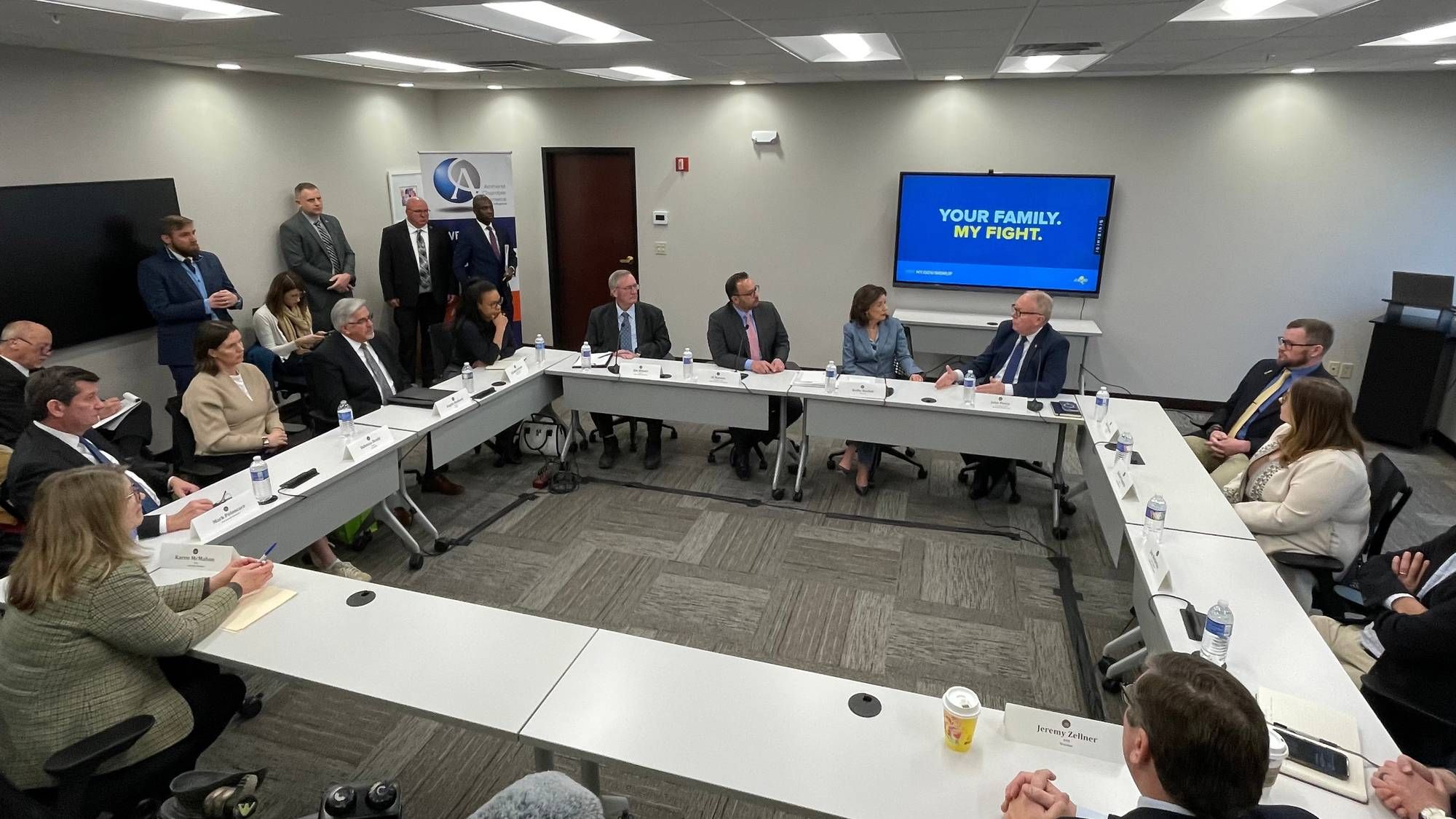
According to A.J. Baynes, president and CEO of the Amherst Chamber of Commerce, among the biggest concerns for businesses regarding tariffs is the constant uncertainty and the inability to properly plan ahead.
"To be able to sit here and say, 'Here's what the positive impacts are, here's what the negative impacts are and here's what we're here to discuss,' it was very important for [Gov. Hochul] to hear that from these businesses," Baynes said in an interview with WBEN.
"One day there's a tariff, one day there might not be. ... If they're going to be able to scale up with customers, does that require them in the need to hire more employees? Or, as we heard from one business today, unfortunately, they've laid off almost 10% of their workforce due to some of this. And their inability to pass this on, whether it was to the consumer or be able to absorb this."
One of the businesses impacted by tariffs over the last year is AirSep Corp., a business delivering innovative, non-cryogenic oxygen supply solutions as an alternative to cylinder or liquid supplies based out of Creekside Drive in Amherst.
Regional manager Angelo Barberic says the biggest impact of the tariffs has been the loss of sales, primarily in their Asian markets.
"Our distributors in those countries are also being charged heavily for importing goods from the USA, and, unfortunately, that amount wipes out any expected sales margin they would have. And therefore, causing them to, right now, stop purchasing AirSet products. They got spooked. Our sales in Asia this past year have literally dropped," explained Barberic with WBEN.
Just last week, the impact of the tariffs forced the company to lay off five employees, bringing their total workforce now down to 50 employees.
"Our annual sales is around $30 million, and 35% of it accounts for international business. So when we see a loss in sales, that could be anywhere from $700,000 to $1 million, that does affect our business. Everyone is just waiting to see these tariffs drop," Barberic noted.
To compound the impact of tariffs on businesses, a memo released last week by the New York State Energy Research & Development Authority (NYSERDA) warns that by 2031 - just five years from now - the average bill for gas and/or oil could increase by as much as $4,100.
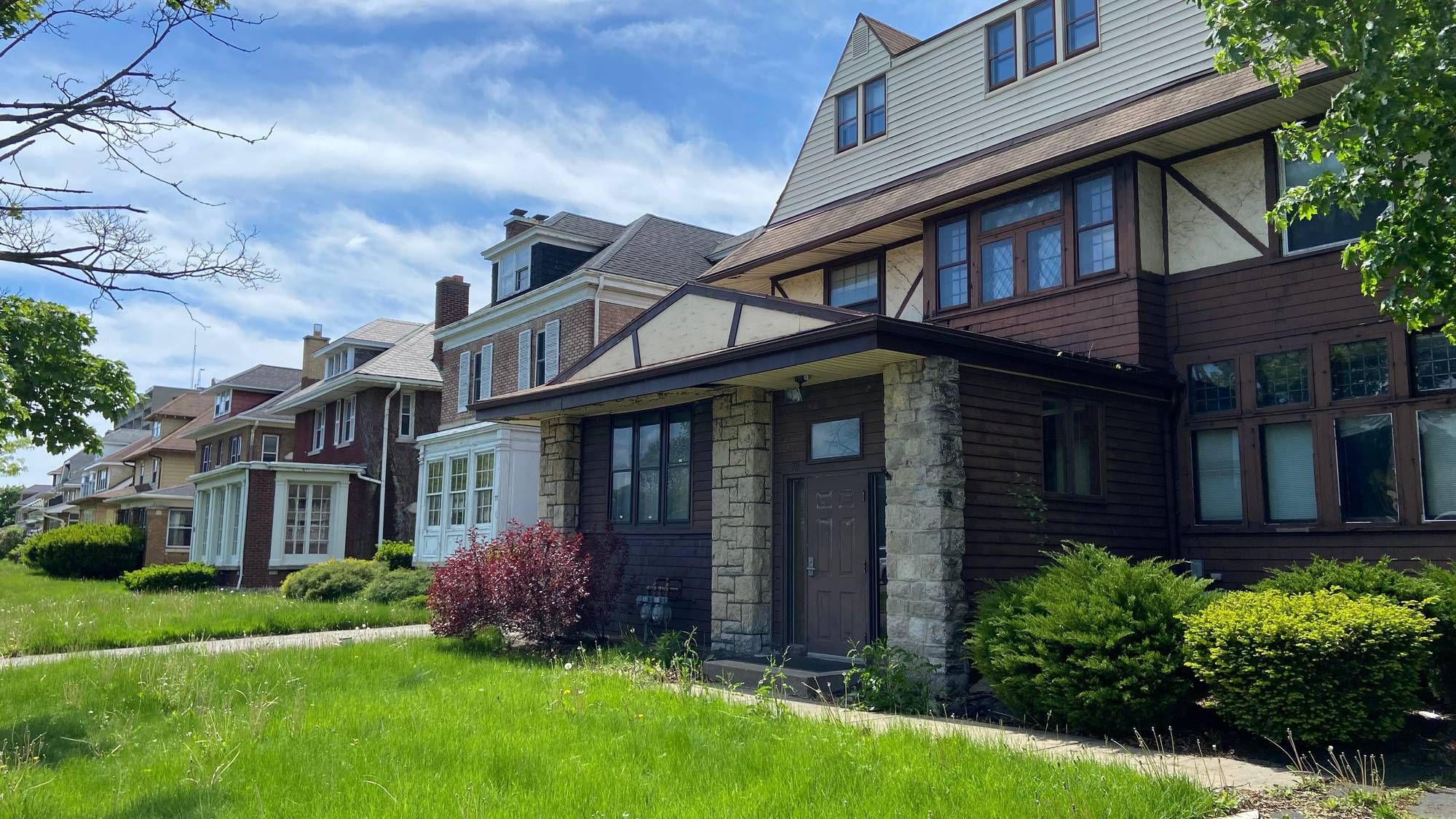
For Gov. Hochul, it's an effort to sound the alarm and let people know what is in store for homeowners and businesses alike.
"Back in 2019, there were very ambitious goals, important goals, worthy goals to do what we can in the State of New York to deal with the climate crisis, which we're feeling the effects of now. But there were so many unforeseen factors," Hochul explained. "A year later, the pandemic. Global supply chain disruptions for equipment that was supposed to help us transition to the clean energy economy. Inflation drove up the cost of everything, where projects we thought would be happening for renewables - wind and solar - became too expensive, so they were abandoned by people. And now the tariffs on everything, we have to import a lot of supplies for the renewable energy projects. A lot has happened."
Hochul also now points to the U.S. and Israeli conflict in Iran as another reason for an increase in the cost of energy.
"For businesses suffering from already high energy costs and tariffs, it's cataclysmic. The same for families," Hochul said. "That is why I am laser-focused and doing everything I can to drive down costs, and to try and get money returned to New Yorkers who have been overpaying."
Baynes understands very well the increase in energy costs, and what is projected by NYSERDA is a huge concerns with businesses he interacts with on a regular basis.
"That is something the Amherst Chamber of Commerce, we've actually said with the CLCPA and their recommendations that they put out, there were a lot of timelines that we did not feel made sense to business owners and to residents of the State of New York," Baynes said. "We asked for a pause, we asked for some secondary looks at this. I know some things were working their way through the courts. Everybody agrees we all need to be ecofriendly and green, but the reality is too there is a cost associated with it. And sometimes the technology does not match that. If we're working towards achieving those goals, that's OK if it takes us a little bit longer to get there. But to put hard timeline demands on people that could impact safety, that is a very big concern."
Reliability of the grid also continues to be a very big concern for Baynes and other business owners he interacts with continuously.
"The last thing we want are rolling blackouts. The last thing we want is the inability to have heat in our homes and in our businesses," he said. "A lot of this is part of planning that goes into different things for businesses, as they're looking at states of where they want to do business."
Like many business owners in Western New York, higher energy costs are being felt on businesses like AirSep, according to Barberic.
"We've got a large facility here on Creekside Drive, and obviously we require large feed air compressors to run our facility, consuming a fair amount of electricity," he noted. "I believe we also heat our facility with natural gas, so we're hit in both ways. At the end of the day, lower margins, higher energy bills are definitely compounding our overall operating costs here in Amherst."
So what are businesses more concerned with nowadays: Tariffs or higher energy costs? Barberic feels it depends on the type of business.
"Here in the U.S., we're fortunate where we're using a lot of U.S.-made components to build our oxygen plants. We're not heavily hit by tariffs, but our international business is hit by tariffs when we're exporting goods. And our customers are getting hit with these reciprocal tariffs. That's where our customers are now backing off and not purchasing as many oxygen plants as they normally would," Barberic explained. "We've seen a considerable drop in sales, so in that way, it's affected us."
Baynes agrees with Barberic, adding different businesses are going to have different challenges.
"If you're a manufacturer that uses a lot of energy, obviously energy costs are going to be something you're going to look at. You're going to look for a state that maybe has a more favorable energy plan for you. Also then the tariff cost, if you're investing and there's uncertainty of what it may take to bring your product to market, you may pause on that," Baynes said. "We heard that today with businesses around the table that said, 'We're doing a lot of sitting on our hands at this point, and we're not exactly sure if this makes sense for us to continue to invest and we're going to sit on the sidelines.' And we've seen that from time-to-time, definitely during the COVID pandemic. There was a lot of uncertainty of how businesses could open, re-open, and what ended up happening there was a lot of money - this was very well-documented with the financial institutions - sat on the sidelines. People were piling money, and they didn't know where to invest until the marketplace opened back up again."


