


As the Buffalo Bills prepare to host the New England Patriots in a pivotal AFC East clash on Monday night in Orchard Park, the end of the current lease agreement between the team and Erie County continues to inch closer.
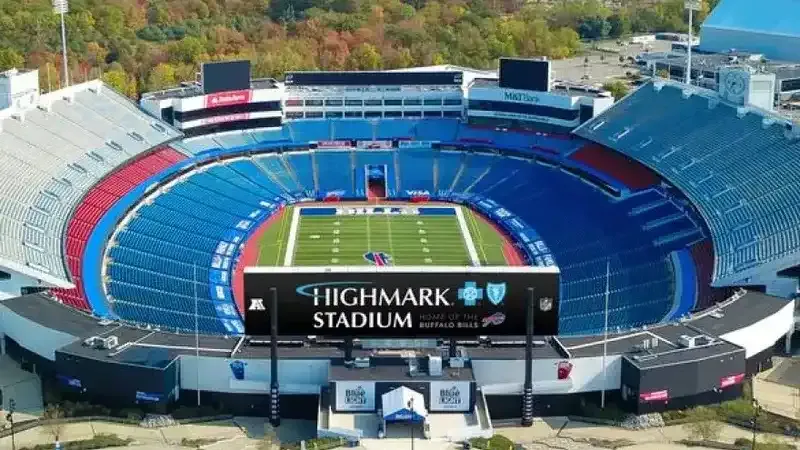
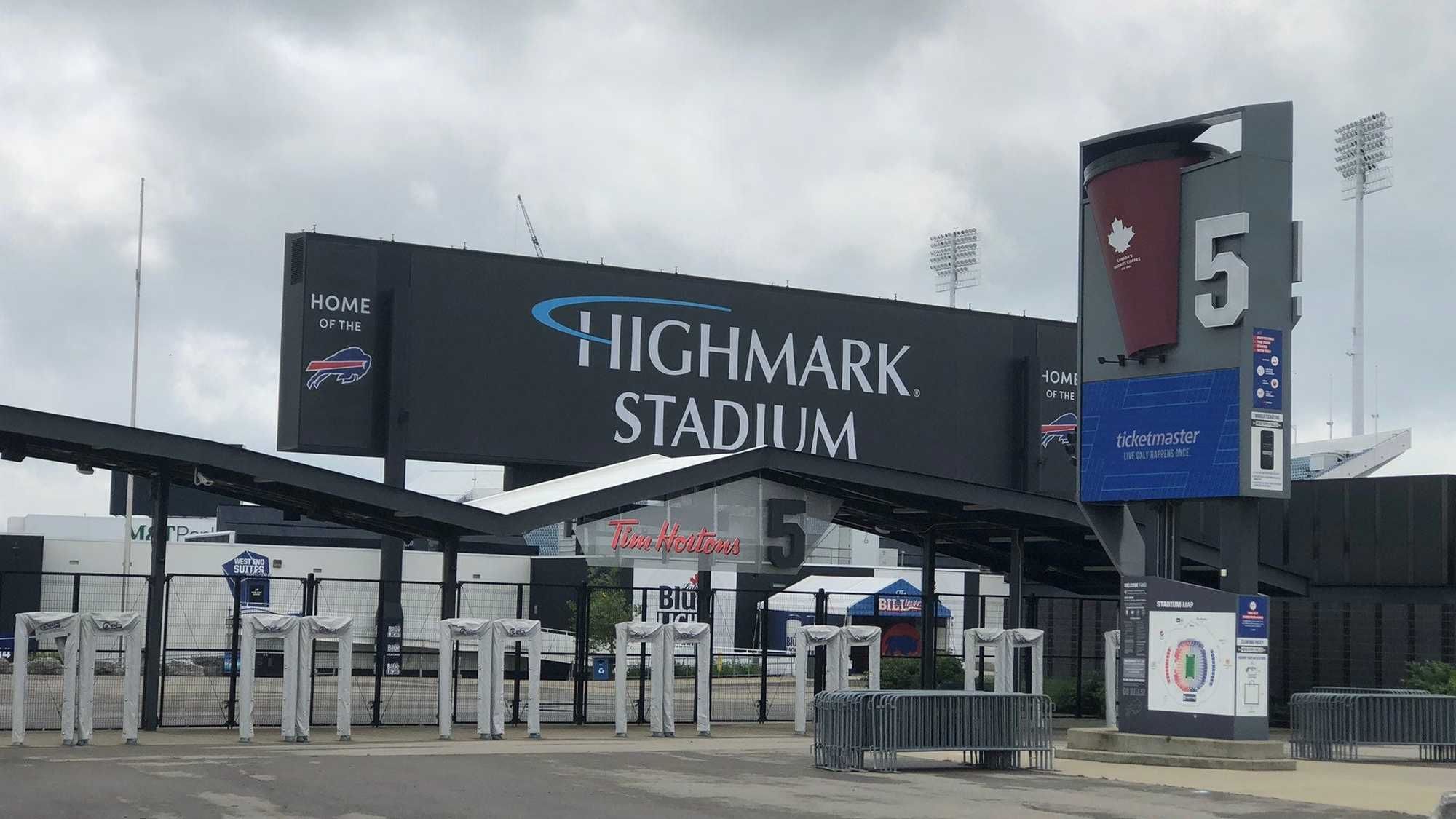
There are 12 remaining home games, including Monday, for the Bills to play at Highmark Stadium before an extension of the current lease agreement needs to be established in 2023. While the negotiations between the Bills, Erie County, New York State and the National Football League continue on a new stadium to be built at some point, no agreement has been made on any future plans.
Starting Monday, the Erie County Legislature will be hosting three virtual public hearings on a new Bills stadium, beginning at 6 p.m. EST on Monday, Tuesday and Wednesday. However, when speaking with legislature minority leader Joe Lorigo last week, he feels the hearings should be held after the legislature has been presented with any agreements.
When speaking back on Nov. 3 following the release of AECOM's stadium study for the Bills, Erie County Executive Mark Poloncarz said the goal for the county was to get a deal done by the end of the 2021 calendar year.
"When I say a deal done, I say the major terms," Poloncarz said. "We won't have every agreement set at that point, but we want to have a location down, as well as the cost sharing, issues associated with who's responsible for cost overruns and things like that. So now that we have this roadmap, it allows us to move forward."
On the state side of things, New York Gov. Kathy Hochul has remained on point when she says the overall objective is to keep the Bills in Buffalo for the long-term.
"[AECOM is] analyzing a number of factors. One is to rehabilitate the existing facility or new, and the cost associated with it. The other one is to keep it in Orchard Park or to go downtown," Hochul said back on Oct. 27 before the release of the Bills' stadium study. "The conversations are going very well. In terms of completion, this will be a budgetary issue and therefore will show up in the New York State budget as an item once I've had a chance to speak to the legislators and garner support for that. There will be plenty of time to get the job done so the Buffalo Bills know there is a commitment, a shared effort to finance this."
The Bills have made a point in the past to say they will not sign any lease extension with Erie Country unless there is an agreement on a new stadium in place. Ron Raccuia from Pegula Sports and Entertainment even told The Associated Press in late October if there's no new deal done by January, "you should really be concerned."
With the 2021 calendar now set on Dec. 6, how quickly can all parties come together to get something done by the end of the month?
"That would take some doing to finish up by 2021, but these dates always have some flexibility to them. I would assume your end date would have that flexibility as well," said Tom Chema - Chairman and founder of The Gateway Group* based in Cleveland, Ohio. "Certainly by the end of 2022, you ought to be able to get that done."
While talks could extend into 2022, it would certainly go against what Gov. Hochul was hoping for, in terms of incorporating the stadium as part of the New York State budget before the change of the calendar year.
Chema says it would be wise for a stadium agreement to get set in place as soon as possible in order to jump on getting the planning for a new stadium rolling along.
"Right now, there's an awful lot of money for infrastructure, and it would be great to be able to get commitments for some of those infrastructure dollars as quickly as possible," Chema said. "Generally speaking, people want to have, what I refer to as, 'shovel ready' and 'projects'. So having a project that is a go, say for example - you have a site and that site is under control and you can begin doing the design and pre-construction work as soon as possible - would be extremely useful. But these kind of projects are so large and complex that it hardly ever happens that way. What I just described is the ideal [situation], it's not the way these projects usually play out."
One of the major issues going forward that will only continue to escalate with each day that passes without an agreement is the costs of building a new stadium, as well as the upkeep of maintaining the health of Highmark Stadium.
"You've got two issues: One is the inflationary pricing for the new building, wherever it is located. Secondly, the maintenance cost of the old building," Chema explained. "The older the building gets, the more maintenance costs you have to keep it in a serviceable and safe condition. Let's be realistic. You're talking about spending probably millions of dollars trying to maintain the building, and it would be much better to be able to apply those dollars into a new facility."
With Monday night's game expected to see snow showers and wind likely impacting play on the field, many have talked about the potential of a new stadium in Western New York seeing a roof or dome added to make game conditions ideal on a daily basis.
Over the past few months, talk has been for a new Bills stadium to feature a partially covered stadium, with around 80% of the seats for fans being protected from precipitation. As Raccuia has said, fans don't mind the cold, but they don't want to be wet.
However, if plans for a roof are to be incorporated with the budget for a new Bills stadium, Chema says those costs could be quite sizeable.
"I think that is always a major issue in any community - whether to put a roof on it or not," Chema said. "You add roughly $350 million to the cost of your building if you're putting a real roof on it. Not just a sombrero, so to speak. If you're to do a real roof - between the additional costs of the structure itself, the heating and ventilation, air conditioning costs, both capital cost and the operating cost - you increase the cost of the building by a very substantial margin."
On top of the extra cost for a roof on a new stadium, Chema doesn't believe a stadium is a profitable add for the team or the community.
"I think the open air is better for the game, it is less expensive, way less of an investment for the community. And unfortunately, a stadium the size of a football stadium, you just do not have enough events each year to justify putting a roof on," Chema explained.
"Even if you had a roof and you say, 'Well, we'll get a Super Bowl if we get a roof.' Yeah, you may get a Super Bowl once every decade, every decade-and-a-half, [but] I don't think that justifies it. You say, 'Well, we'll be able to do more concerts.' But frankly, the last few years, there have only been two or three touring acts that are football stadium-size touring acts. So you're adding maybe two or three dates to the use of the building. I have a hard time with the cost benefit analysis of that."
As for the location of a potential new home for the Bills, Chema knows it would be more beneficial to see the stadium built in Downtown Buffalo than across from Highmark Stadium in Orchard Park.
"It is my understanding that the location is still very much in play, and I would think that putting this in downtown in relatively close proximity to [KeyBank Center] and [Sahlen Field] would be the best, from the point-of-view of economic development in the community," Chema said. "It would also be a great opportunity to put together all of your sports franchises and have a real sports district that would be of great value to the fans."
You can listen to the entirety of Chema's conversation below:
* - The Gateway Group is a professional services consulting firm that focuses on economic solutions and developing relationships. Its philosophy: develop collaborations between the public and private sectors in order to strengthen business, communities, and citizens. Its goal is to maximize the economic position of its clients.


