



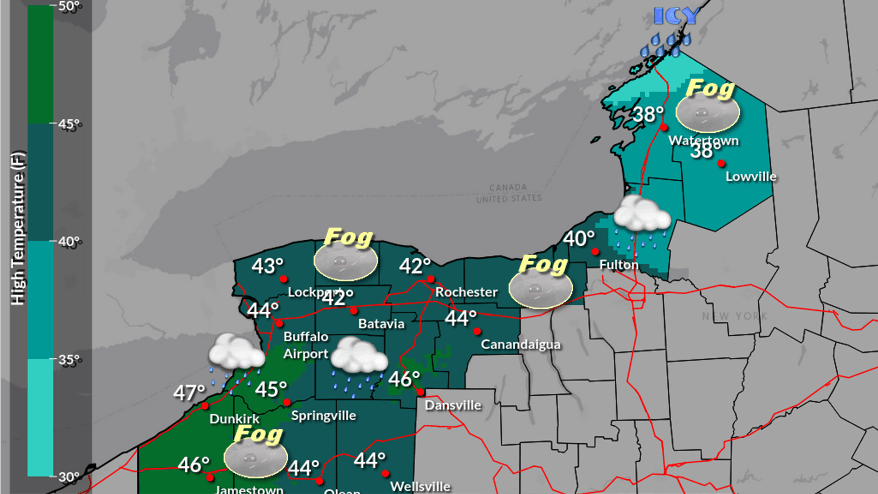
Buffalo, N.Y. (WBEN) - With the weather finally starting to warm up this week in Western New York following a series of snow storms this January, what are some things homeowners need to watch out for once all that snow and ice melt?
Domenic Cortese of Cortese Construction and host of the home Improvement Hour on WBEN, says there are two areas of concern you should always be checking before and after snow events: the roof and the basement.
"One would be the melting of the snow and ice that might be formed on your roof and the safety that you need to employ to deal with that. And then the second would be how to prevent water infiltration from being an issue in your basement as it relates to exterior drainage, and your sump pump system."
Cortese advises not to mess with the ice on your roof, just let it be.
"That could create a very serious safety issue with the possibility of ice falling or you falling by positioning yourself against something icy, so let the ice thaw on its own on the roof."
If you see flooding in other areas of the home or if you're losing heat, ice dams may be the culprit. Ice dams are ridges of ice that form at the edge of a roof that prevent melting snow from draining. As a result, water backs up behind the dam and can leak into a home and cause damage to walls, ceilings, insulation and other areas.
"Something to put on the to-do list for when we're not dealing with the ice dam being present will be to have your insulation levels checked to make sure you have adequate insulation," explains Cortese. "And equally important to the adequate insulation is adequate ventilation so that we can have breathability in our attics. Ideally, your attic should be as cold as the outside in the middle of winter, and that's difficult to achieve with heat loss present. So keeping your airflow in your attic is going to certainly help ice formation."
Now, about that basement.
"If you're going to have a problem with flooding in your basement, it's going to be related to pooling and puddling and the inability for the ground to drain this water away and possibly get into your basement as a result of that. So a reliable and dependable sump pump is crucial to dissuading water from being able to get into your basement. Paying attention to your perimeter drainage in your basement and exterior perimeter drainage is vital in times when we're not dealing with excessive water. Put this on your list of to do to check these kinds of things when it's dry, so that we can better deal with them when it's wet," says Cortese.
When it comes to snow, ice or water damage, what scenario would arise which would prompt you to call your insurance agent about a claim?
We posed this question to John Kary with Wolf Agency, an insurance agency based in Orchard Park.
"If water enters your home, we highly recommend you call your trusted insurance agent, as they are knowledgeable about different claims situations. This is why it's recommended you have an independent insurance agent."
Are there situations where a client calls regarding snow, ice or water damage, which are not usually covered by most insurance policies?
"Yes, flood to start. Meaning if surface water seeps into your home, the homeowner policy excludes flood coverage. Some coverage is available on a separate flood policy. In order for a flood policy to respond to a claim, the water damage must affect one or more of your neighbors' properties. For example, surface water from the street seeps into your home and one or more of your neighbors' homes.
Water backup in your basement is not usually an automatic coverage – it's an additional option with choices for coverage limits, which vary by insurance company. For example, limits of $5,000, $10,000, $25,000 may be available. Also, water-back up coverage is not available for all policy forms – like landlord or dwelling fire."
How does a homeowner make a claim for snow, ice or water damage?
"We recommend you take pictures of the damage and call your agent to discuss. They may recommend you get one estimate to determine how it compares to your homeowner property deductible – if the damage is less then the deductible, a claim would not be submitted. The standard property deductible has increased to $1,000 with higher deductibles available for cost savings. If the claims is to be submitted, the agent can then report it to the insurance company on your behalf. Some companies require the homeowner report it directly to the insurance company so the recorded statement can be done. In this case, we still recommend you call your agent to discuss the claim first before calling your insurance company."


