



HONOLULU (AP) — A Hawaii anesthesiologist who was accused of trying to murder his wife on a scenic cliffside hike with ocean views last year has been convicted of the lesser charge of attempted manslaughter.
A Honolulu jury returned the verdict against Gerhardt Konig, 47, on Wednesday after a day of deliberations. He was convicted of attempted manslaughter based on extreme mental or emotional disturbance, which carries up to 20 years in prison. Sentencing was set for Aug. 13.
Thomas Otake, his attorney, said he planned to appeal. Nevertheless, Otake said the defense respected the jury's verdict.
“We are thankful that they did not convict him of attempted murder, which would have been life in prison,” Otake said. “We look forward to an appeal related to some of the judge's rulings throughout the case.”
___
EDITOR’S NOTE: This story includes discussion of domestic violence. If you or someone you know needs help, please call the national domestic violence hotline: 1-800-799-7233 in the U.S.
___
Distraught over her relationship with a coworker, Konig planned to kill his wife, Arielle Konig, during a weekend trip to Honolulu for her birthday in March 2025, prosecutors said. They said he tried to push her off a cliff and stab her with a syringe, and when that didn't work, he struck her with a rock. The attack was interrupted by two hikers who heard her cries for help.
The defendant testified that it was his wife who first hit him with a rock, and he hit her back in self-defense.
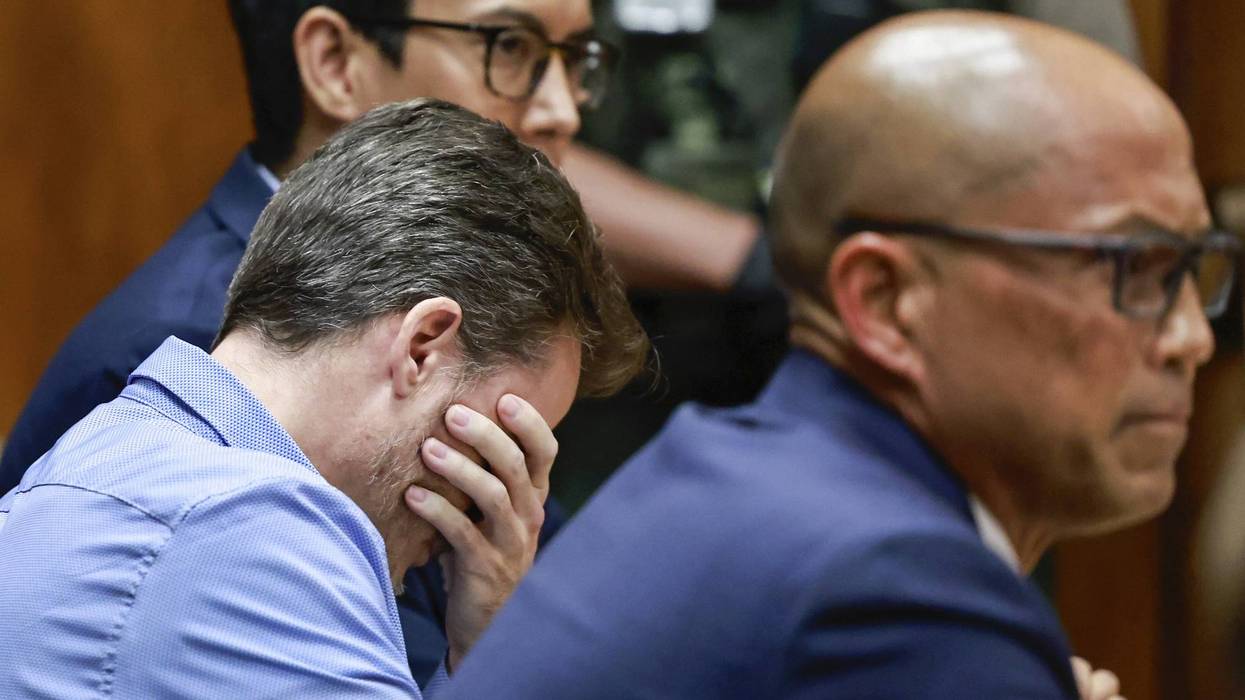
Konig stood as the jury’s foreperson announced the verdict, then closed his eyes and lowered his face. His parents declined to comment to reporters afterward. Arielle Konig was not in court.
Jurors explain conviction on lesser charge
Jury foreperson Makalapua Atkins said deliberations focused on what transpired on the trail. She said jurors examined the testimony of those who were at the scene to see where they matched up and where there were inconsistencies.
“At the end of the day when it comes down to it, she was hit in the head. And a head injury can be serious. And that’s a very deadly part of the body," Atkins told reporters after the verdict was read.
Jurors believed the relationship Arielle Konig had with a coworker was sufficient to cause “an emotional disturbance” and this affected their verdict, she said.
Under Hawaii law, if jurors believe a defendant committed attempted murder but was under the influence of an extreme mental or emotional disturbance at the time, they must reduce the charge to attempted manslaughter if they believe there was a reasonable explanation for the disturbance.
The defense's arguments
During closing arguments, the doctor’s lawyer repeatedly sought to cast doubt on Arielle Konig’s account.
If Gerhardt Konig had wanted to kill his wife and had access to a syringe in a remote area, attorney Thomas Otake suggested to jurors during closing arguments, wouldn’t he have drugged her and then thrown her from the cliff, rather than having started a scuffle before attempting to fill the syringe as he was wrestling with her?
“You would use the syringe first,” Otake said. “It makes no sense.”
The trial started last month, nearly a year after Gerhardt and Arielle Konig went on a hike on the Pali Puka trail in Honolulu that ended with her bloodied and screaming that he had tried to kill her.
Their two young sons stayed home on Maui while the Konigs were on the trip.
The Pali Puka trail has long been closed by the state of Hawaii due to its danger but social media sites feature it. People trespass on state land to take in its views and snap photos. Arielle Konig described it as having “narrow ridge sections with steep drop-offs on both sides.”
Gerhardt and Arielle Konig testify
The trial, with testimony livestreamed by Court TV, has aired the couple’s marital problems leading up to the hike, along with their versions of what happened on the trail.
Gerhardt Konig testified that his wife was having an affair, which he confirmed by unlocking her phone while she slept. The relationship, which Arielle Konig characterized as an “emotional affair” involving flirty messages with a coworker, came up during the hike.
Arielle Konig testified that her husband grabbed her and moved her toward the cliff’s edge, but she threw herself on the ground in an attempt to hold on. He straddled her and had a syringe in his hand, she said, but she batted it away. She bit his forearm and squeezed his testicles in an attempt to get him off her, she said.
Her husband denied pushing her toward the edge and testified that she hit him with a rock on the side of his face. He wrestled the rock away and hit her with it twice in self-defense, he said.
Gerhardt Konig also denied having any syringes on the mountain or trying to stab his wife. His defense attorney said no syringe was found at the scene because he never had one.
Otake said Gerhardt Konig was not someone who would try to commit murder, but someone who was struggling with infidelity and trying to do his best. Otake quoted from a heart-shaped birthday card Gerhardt Konig had written to his wife, calling her “the heart of our family” and saying, “The kids and I hit the jackpot with you.”
Gerhardt Konig testified that as he watched his wife crawl away, he believed his marriage and career were over, and he decided to jump to his death. But first, he called his adult son from a previous marriage. The son told authorities that his father said he “tried to kill your stepmom” — a confession Gerhardt Konig denied having made.
Konig testified that he called his son to say good-bye.
During that call, the defendant made no reference to having struck his wife in self-defense, deputy prosecutor Joel Garner said.
He spent about eight hours hiding on the mountain before deciding to come down, and even then, he tried to flee when confronted by police, Garner said.
His wife has since filed for divorce.
___
Associated Press writer Audrey McAvoy contributed to this report.