

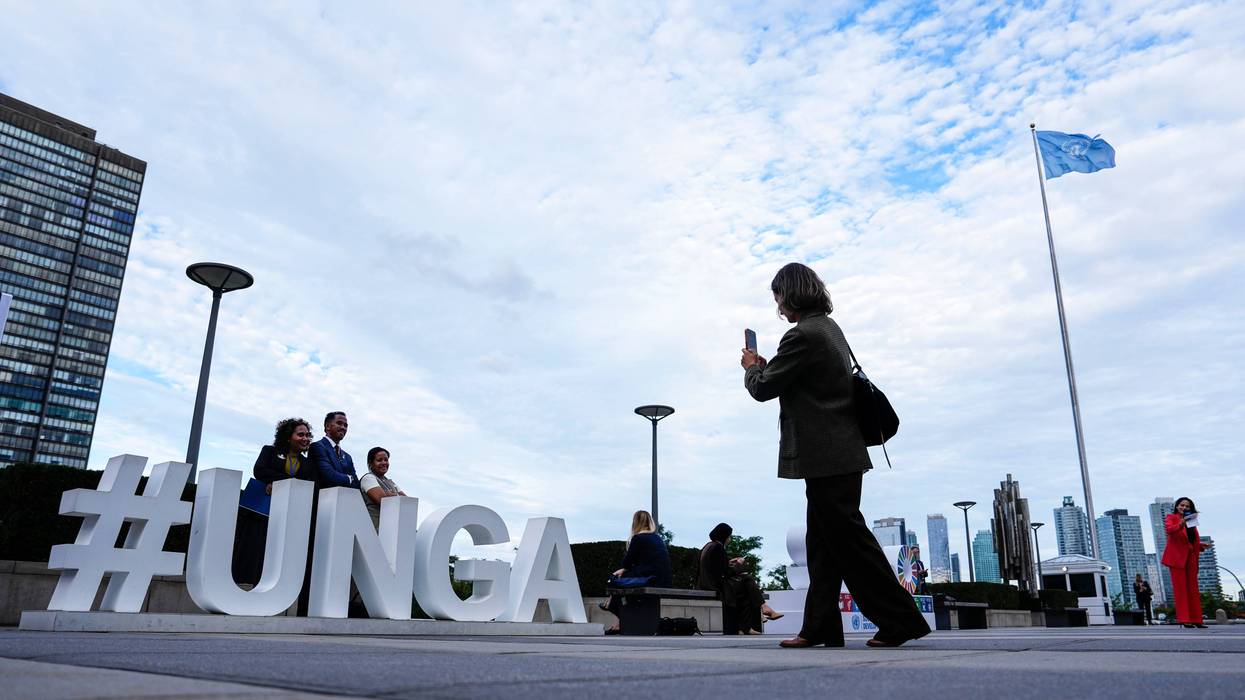

Leaders from across the Middle East are gathering this week for the United Nations General Assembly in New York at a time when three years of wars across the region show no signs of letting up.
The wars between the U.S. and Iran, the latest fighting in Yemen and the ongoing Israeli military operations in Gaza and Lebanon are all expected to be high on the agenda. President Donald Trump, who has struggled to find an endgame to the Iran war after more than six months, is set to meet with Gulf Arab leaders but is not expected to meet with Israel's prime minister.
Here is the latest news from the Middle East on Tuesday. Full coverage is available here.
Iran's president says Iranians wary of more talks
Iranian President Masoud Pezeshkian struck a defiant note as he boarded a plane from Tehran to New York for the General Assembly, accusing the U.S. of doing “everything they can to block every possible route in order to force our nation and our people to surrender, because they were unable to do that through military means.” Pezeshkian added that Iran is wary of another round of talks, having twice been attacked by the U.S. and Israel during active negotiations.
Gulf States call on Iran to halt attacks
A regional body of Arab Gulf states on Tuesday called for Iran and its allied groups to cease their attacks on Arab Gulf states and allow free transit through two crucial maritime checkpoints, according to a statement from the Gulf Cooperation Council.
Jasem Mohamed AlBudaiwi, head of the Gulf Cooperation Council, said disrupting traffic through the Strait of Hormuz and the Bab el-Mandeb Strait has rattled oil markets and supply chains across the world, which has “triggered worldwide fallout.”
Iran has said it attacked U.S. bases in the region as part of its response to the U.S.-Israeli strikes on the Islamic Republic.
AlBudaiwi made the comments in a meeting with Swiss officials on the sidelines of the U.N. General Assembly. Trump is expected to meet the Gulf Cooperation Council on Tuesday in New York.
Netanyahu is not expected to meet with Trump while in New York
Israeli Prime Minister Benjamin Netanyahu, who launched the Iran war along with the U.S. on Feb. 28, is also heading to New York for a brief trip, but is not expected to meet with Trump.
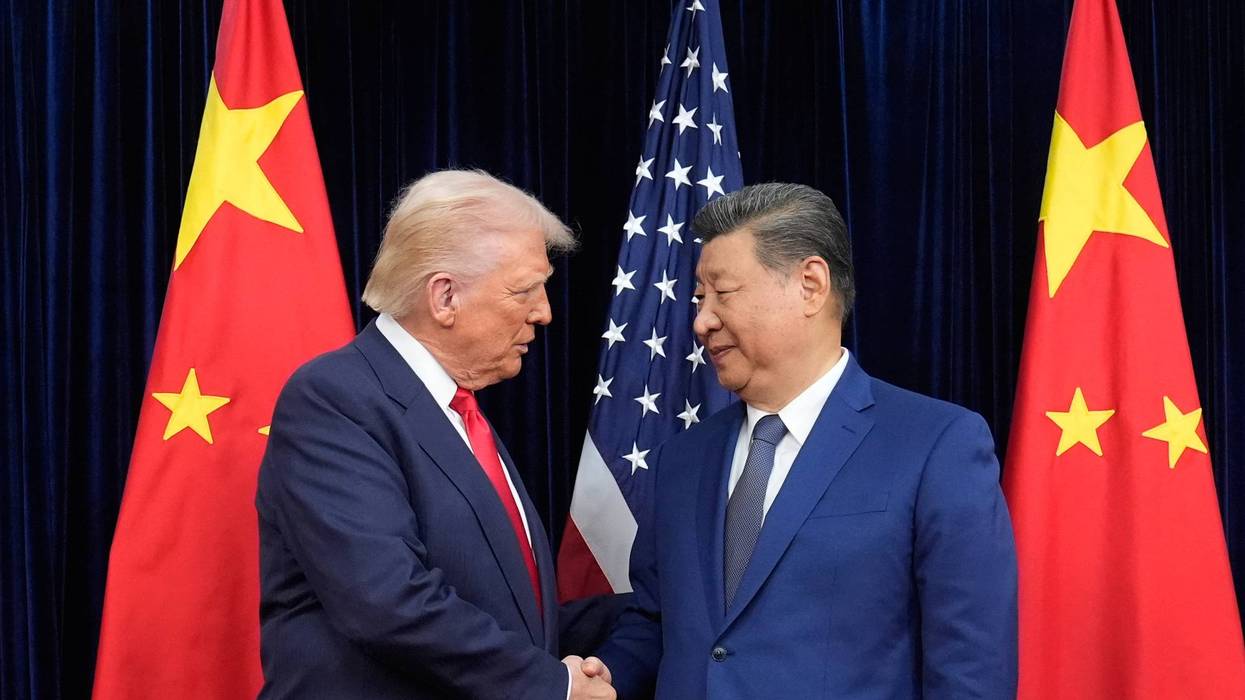
Netanyahu will be in New York for less than 24 hours, during which time Trump is scheduled to be in Washington for a meeting with Chinese leader Xi Jinping.
Netanyahu is up for reelection at the end of October. In the past, he has boasted of his close ties with Trump, but that relationship appears to be deteriorating as the war drags on. A meeting with Trump could have bolstered Netanyahu’s image ahead of the elections. Netanyahu’s speech at the U.N. on Thursday is expected to garner protests, both inside and outside of the U.N.
New York mayor Zohran Mamdani reiterated calls in media interviews for the federal government to arrest Netanyahu while he is visiting New York. An arrest is unlikely since the U.S. and Israel are not members of the International Criminal Court and Trump has put sanctions on court staffers in a campaign to dismantle it.
7 killed in strikes in Yemen port city controlled by Houthis
The Houthi-run Health Ministry in Yemen said at least seven people, including two children and a woman, were killed in airstrikes Tuesday in the port city of Mokha, which the Iranian-backed Houthis captured earlier this month. The strikes came hours after the internationally recognized government accused the Houthis of attacking an open public market in the province of Lahj, close to the epicenter of fighting on the western coast.
Fighting between the Houthis and Saudi-backed forces has reignited Yemen's civil war and led to attacks on Saudi Arabia.
The foreign ministers of Canada, France, Germany, Italy, Japan, the U.K. and the U.S. called on Iran to stop supporting the Houthis.
“Their reprehensible actions constitute a dangerous pattern of escalation that risks further exacerbating the conflict, undermining international trade and creating global economic instability,” the ministers said ahead of the UNGA.
US and Iraq discuss efforts to disarm Iraqi militias
Iraqi Prime Minister Ali al-Zaidi and U.S. Secretary of State Marco Rubio discussed Baghdad’s efforts to disarm the country’s network of militias on the sidelines of the General Assembly.
Al-Zaidi’s office said Tuesday that he had “reiterated the government’s determination to fulfill its sovereign responsibilities and move forward with measures to ensure that all arms remain under state authority.”
The U.S. State Department said that Rubio and al-Zaidi had “agreed on the importance of Iraq dismantling terrorist militias, preventing attacks from Iraqi territory, and fully exercising its sovereignty.”
Al-Zaidi initially set Sept. 30 as the deadline for non-state groups to disarm, but has since pushed the deadline after some of the country’s most powerful Iran-backed militias announced they have no plans to give up their arms.
___
This report will be updated throughout the day as new developments emerge.