

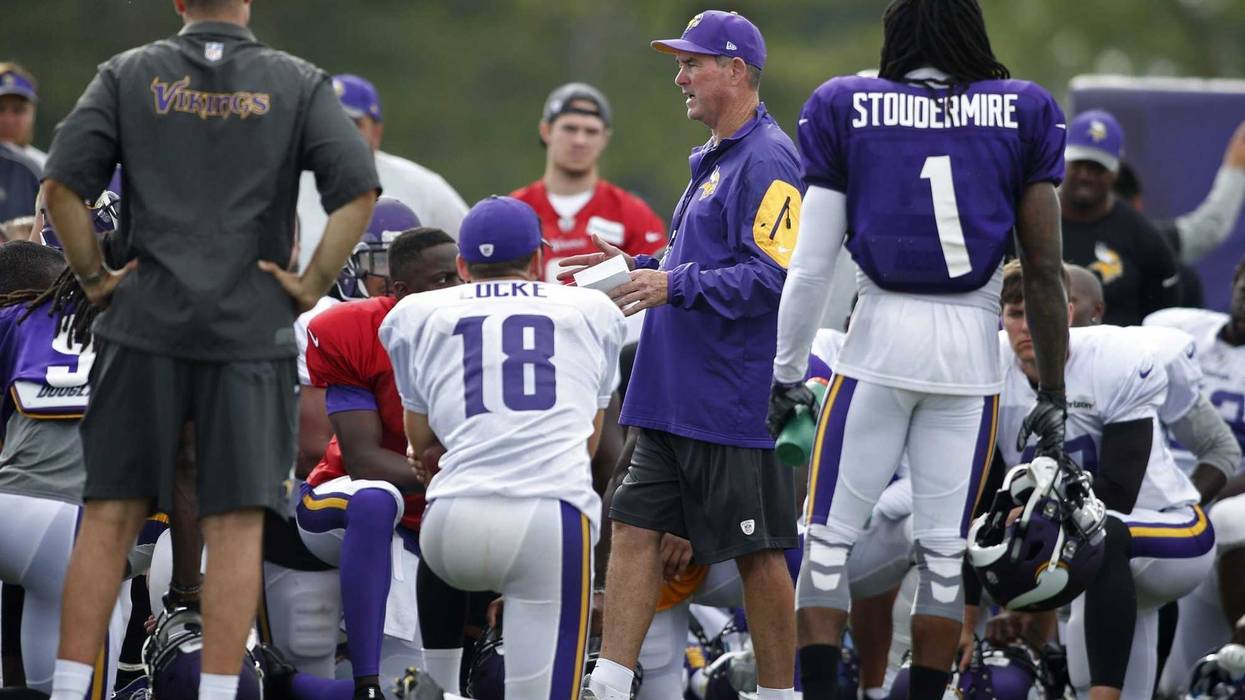

This weekend's rookie minicamp is like Christmas morning for Vikings coaches. They get to unwrap their shiny new presents in the form of the 12 player draft class plus the 10 undrafted rookies who were signed. Mike Zimmer and his staff will begin teaching them the intricacies of the team's offensive and defensive schemes in the hope of gaining major contributions in the season ahead.
First round pick Garrett Bradbury, the center from North Carolina State, will lead this group that is impressive on paper. Doesn't mean that will translate into great NFL careers for these players but the potential is there for several impact players to come from this draft class beginning with Bradbury who should be a first year starter and second-round tight end Irv Smith Jr. from Alabama who should get a lot of playtime.
I've always said that it's absurd for media analysts to grade a team's draft right after it takes place. It realistically takes at least two years to give a true evaluation of a draft class and sometimes longer. We didn't really know what the Chiefs had in quarterback Patrick Mahomes when he sat behind Alex Smith in his rookie season of 2017 but now he's the best pick of his draft class after an MVP season in 2018.
There are so many examples of great players coming from every round of the draft and even undrafted free agents such as Vikings Hall of Famer John Randle (who I signed for $5,000 in 1990) and Vikings Pro Bowl receiver Adam Thielen who went from a rookie tryout to making the team and eventually becoming one of the top receivers in the league.
In my 20 plus years of participating in the draft as a GM or team president, I've seen plenty of draft picks get panned by analysts and fans only to wind up as Pro Bowlers. And vice versa--picks that were praised and turned into duds. There have been first round QB busts such as Ryan Leaf and Heath Shuler and third round success stories like Joe Montana and Russell Wilson. That's the inexact science of any pro sports league draft with the NFL Draft the most highly publicized and scrutinized.
So I view these Vikings draftees with cautious optimism on the basis of General Manager Rick Spielman seeming to do a fine job of hitting key needs especially on offense, starting with selecting three offensive linemen in the team's area of greatest weakness last season. The intelligent and athletic Bradbury appears to be a perfect fit for the Vikings new zone blocking scheme and fourth rounder Dru Samia played in a similar offense at Oklahoma (where he didn't allow a sack in 14 starts last season) and he could push for a starting guard spot. Sixth round tackle Oli Udoh from Elon is a talented big man (6'6", 323 pounds) who looks to be a project with big upside for new offensive line coach Rick Dennison.
I love the Smith pick as he brings a different dimension to the tight end group and should be a great fit for offensive coordinator Kevin Stefanski and offensive advisor Gary Kubiak who want to incorporate a lot of two tight end packages into the Vikings offense. Smith comes from the tremendous Alabama program where he won a national title in 2017 and set a school record for tight ends with seven TD receptions last season. He and returning starter Kyle Rudolph (who may be facing a contract restructure to give the team some cap relief) should be a terrific duo for Kirk Cousins to throw to and Smith is a good blocker who will help the running game.
Third round pick Alexander Mattison rushed for 1,415 yards and 17 TDs for Boise State last fall and he is a needed backup for Dalvin Cook after the free agency departure of Latavius Murray.
I thought Spielman's trades in the later rounds to acquire more picks were smart as he wound up with 12 picks after having eight picks entering the draft. It's great to have more times at bat to try and hit some home runs.
The rest of the Vikings draft class offers plenty of interesting prospects on both sides of the ball and for special teams. Fifth round linebacker Cameron Smith was a team captain with over 100 tackles last season at USC and should provide solid depth and special teams help as should sixth round safety Marcus Epps, a big playmaker at Wyoming.
Vikings defensive line coach Andre Patterson is one of the best in the business and I think he'll quickly develop sixth round defensive tackle Armon Watts from Arkansas into a productive player at both defensive tackle spots.
Spielman emphasized the importance of adding seventh round corner Kris Boyd from Texas as a depth player and the two wide receivers taken in the seventh round--Oregon's Dillon Mitchell and Colorado State's Olabisi Johnson will bring size and speed to compete for roster spots and perhaps the third receiver position at some point.
The team's final selection in the seventh round, long snapper Austin Cutting from Air Force, could bring the team some salary cap savings if he can beat out veteran snapper Kevin McDermott.
Lots to like but as I said, let's see how it all plays out before we get too excited.
Around the NFL Draft Observations:
1. I thought it was interesting that Green Bay went defense with both of their first round picks--defensive end Rashan Gary and safety Darnell Savage. That couldn't have thrilled Aaron Rodgers as the team continued their pattern of not taking an offensive skill player in the first round over the past 14 years (going back to the drafting of Rodgers himself). It seemed logical that the Packers would pick a wide receiver early to pair with Davante Adams. Are they not taking full advantage of Rodgers' prime years by not giving him the weapons he had before the departures of top receivers Jordy Nelson and Randall Cobb?
2. The rich get richer in the case of the Super Bowl champion Patriots. We'll see how these players develop but Coach Bill Belichick was able to get one of the draft's best receivers in K'Neal Harry (Arizona State) at the end of the first round. Then the Pats made additional picks to fortify their team including a fine running back in Alabama's Damien Harris in the third round and a potential QB of the future to back up Tom Brady in Auburn's Jarrett Stidham (fourth round). They also added talent to their defense.
3. Biggest surprise of the draft--Giants taking Duke's Daniel Jones at No. 6 overall when Dwayne Haskins of Ohio State (taken by Washington at No. 15) was projected by most analysts to go before Jones. Giants GM Dave Gettleman also took Jones over top edge rusher Josh Allen who went one pick later to Jacksonville. Even though I thought the Giants could have gotten Jones with their second pick in the first round at No. 17, I understand that if a team has identified a player such as Jones as their quarterback of the future, then they should take him and not risk losing him.
The Giants and Gettleman have been blasted by media and Big Blue fans and Gettleman has fueled the fire with his overly defensive statements about the pick ("I know what good quarterbacks look like and in three years, we'll see how crazy I am"). So Jones had better turn into a franchise QB or it will likely cost Gettleman his job in the long run.