

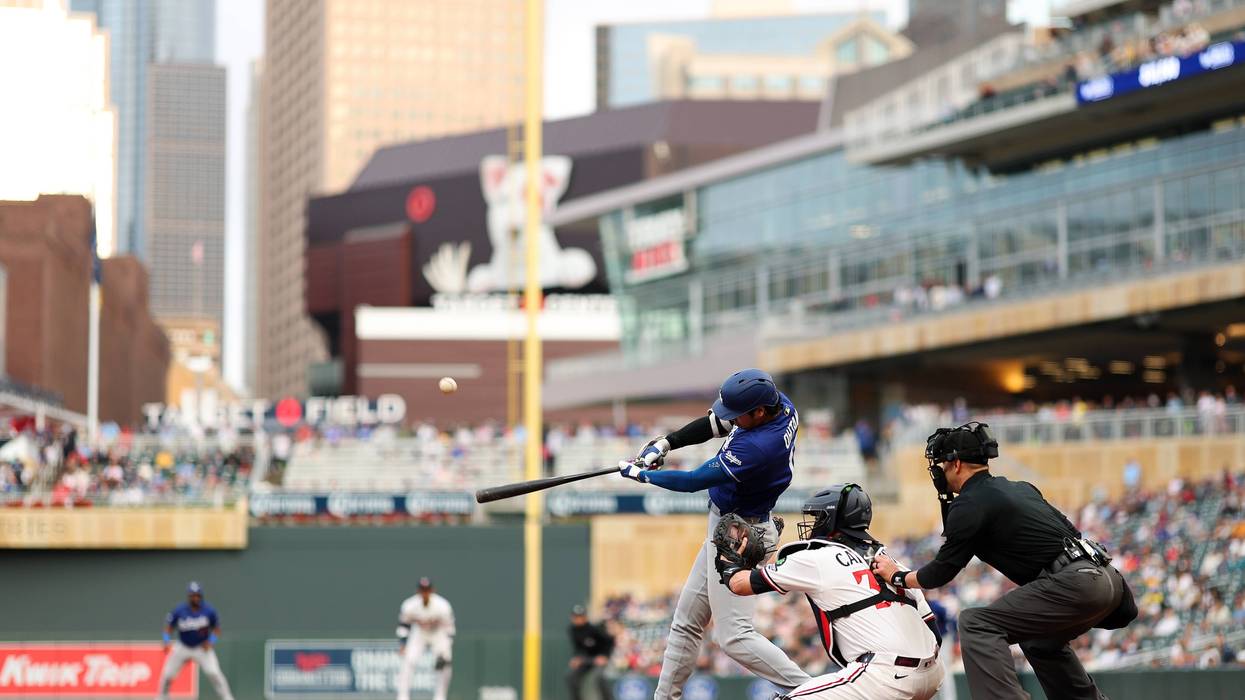
Major League Baseball proposed to shorten the regular season to 154 games from 162 games starting in 2029 and to expand the Division Series to best-of-seven in bargaining with players on Thursday.
Owners also proposed to allow higher-seeded teams in the first two rounds of the postseason to pick their opponents beginning next year and to make Monday a day off for most teams starting in 2029 except for those in one or two nationally broadcast games.
Cutting regular-season games would reduce the opportunity for players to set season and career records.
“Returning to a 154-game schedule would allow us to introduce a weekly off day, which is good for player health, while also creating a new national broadcast window to showcase our most exciting teams and players," MLB spokesman Glen Caplin said in a statement.
"A shorter regular season unlocks making October even better for our fans — with fewer weekday afternoon games, a longer Division Series and more opportunities to see the game’s best pitchers on the biggest stage. And allowing the top seeds to select their opponents in the first two rounds would create compelling storylines, intensify existing rivalries and create new ones.”
MLB said player salaries would not be adjusted to reflect fewer games and bonus provision thresholds — like those that pay players for games played — would be adjusted to reflect the shortened schedule.
The National and American Leagues adopted 154-game schedules in 1904 that had every team in each eight-team circuit playing all opponents 22 times.
The AL switched to a 162-game schedule when it expanded to 10 teams for 1961 and the National League followed suit the next year.
The LCS started in 1969 and were best-of-five through 1984, then expanded to best-of-seven.
Division Series have been best-of-five since their inception for annual use in 1995. Wild card games started with the expansion of the playoffs from eight to 10 teams in 2012 and became best-of-three Wild Card Series when the postseason increased to 12 clubs in 2022.
The proposal comes as players and owners are working to negotiate a new collective bargaining agreement. The current agreement expires Dec. 1.
Management is expected to impose a lockout that would stop trades and free-agent signings, then potentially threaten the start of spring training workouts on Feb. 9 and opening day on March 24, if owners keep their salary cap proposal on the bargaining table.
When management last proposed a cap, it sparked a 7 1/2-month strike in 1994 and ’95 that led to the first cancellation of the World Series in 90 years. MLB says a cap is needed to alleviate economic disparity, highlighting that no low-revenue team has won the title since the 2015 Kansas City Royals.
“The salary cap and floor proposal levels the playing field, allowing us greater flexibility to address longstanding player priorities while sharing baseball revenue with the players 50/50,” MLB spokesman Glen Caplin said.
Owners would also gain more financial certainty with a cap, which likely would spark an increase in franchise values.
Players point out teams with low payrolls, Milwaukee and Tampa Bay, had the best regular-season records in their leagues this season.
“Despite MLB claiming they need a salary cap because small-market teams supposedly have no hope, we see Milwaukee with the best record in baseball for the second straight year and Tampa with the best record in the AL,” union head Bruce Meyer said. “Milwaukee, of course, is 30th out of 30 in our market-size rankings.”
Ironically, three teams left in the 2026 playoffs - Tampa, the Chicago White Sox, and Cleveland - own the three lowest payrolls in the American League.
While this would be MLB’s 10th work stoppage, the sport hasn’t lost any regular-season games since the 1994-95 strike. Baseball players say they will never accept a cap similar to those that have been in the NFL since 1994, the NBA since 1984-85 and the NHL since 2005-06. Nine of the 10 biggest sports contracts by total value in North America belong to MLB players.