
The Twin Cities has seen an increase in gun violence tied to Somali youth gang members. That includes a shooting at the Eden Prairie homecoming football game last Friday, and calls for more action at a gun violence community meeting in Edina following incidents there in recent months.
There's been yet another shooting, this time in Bloomington overnight Monday with just a minor injury, but signs point to more gang activity. Bloomington Police Chief Booker Hodges along with Hennepin County Sheriff Dawanna Witt and the police chiefs of both Edina and Eden Prairie are speaking Tuesday afternoon to share more information about that case, which has not yet been officially connected to gang activity.
Ramsey County Sheriff Bob Fletcher has been outspoken in saying it's an issue local law enforcement needs to get a handle on, and is pushing for a stronger metro-wide strategy to curb the violence.
Following Monday night's Edina public safety meeting, Fletcher tells Vineeta Sawkar on the WCCO Morning News that tackling the gang activity will require a shift away from discussion, and towards more aggressive law enforcement action, and that is a message now coming from numerous police chiefs around the Twin Cities.
Somali-American gangs operate differently
Fletcher says it's time for a "real" crackdown and says Ramsey County already uses specialized Somali gang investigators. But a broader metro-wide response has become necessary because smaller suburbs simply cannot handle it alone.
"A regional approach is the only ways to address mobile gangs like this," Fletcher adds. "Small agencies, small suburbs cannot do it on their own. It's costly, but there's already a lot of money in play to address drugs and other problems. We need to re-task some of that money."
Hodges also says tracking these gangs is different from the Somali-American gangs are operating differently than most people think of gang activity, traditionally.
"I'll give you an example. A lot of these folks have legal permits to carry weapons, right? The reason they're able to get these permits is because, by and large, the Somali-American gangs aren't dealing in drugs," Hodges explains. "You're doing warrants, and you're not dealing with gangsters in the sense that we think. You're dealing with guns and money. These folks are buying these guns legally and they're having permits to carry. So for them, their beefs all stem from social media issues, right? Like, you call me a punk and then now I gotta come shoot you. That's different than what we've dealt with the African American, Latino-American gangs, Italian gangs."
Fletcher, who has held meetings with the local Somali community, says the majority of Somali residents also want authorities to arrest those driving this uptick in violence. In a video released on his YouTube channel Monday, Fletcher noted his relationship with Somali youth is strong and he's hearing from them that more needs to be done.
"They want us to keep the bad actors in line," he said. "They don't like the fact that, well, besides it hurts the reputation of them in general, they don't like to have to worry about looking over their shoulder. So constantly we're getting feedback from young Somali kids. Yes, please do something about these 300 kids that are causing us the problems."
Hodges, like Fletcher, believes this is a problem that needs to be addressed by the community as a whole.
"You have been given a glorious opportunity to be born in what I believe is the best country in the world," he says. "Take advantage of it by living a good life, man. Instead of going out here trying to shoot each other for no damn reason."
Law enforcement has had difficulty charging and prosecuting gang members
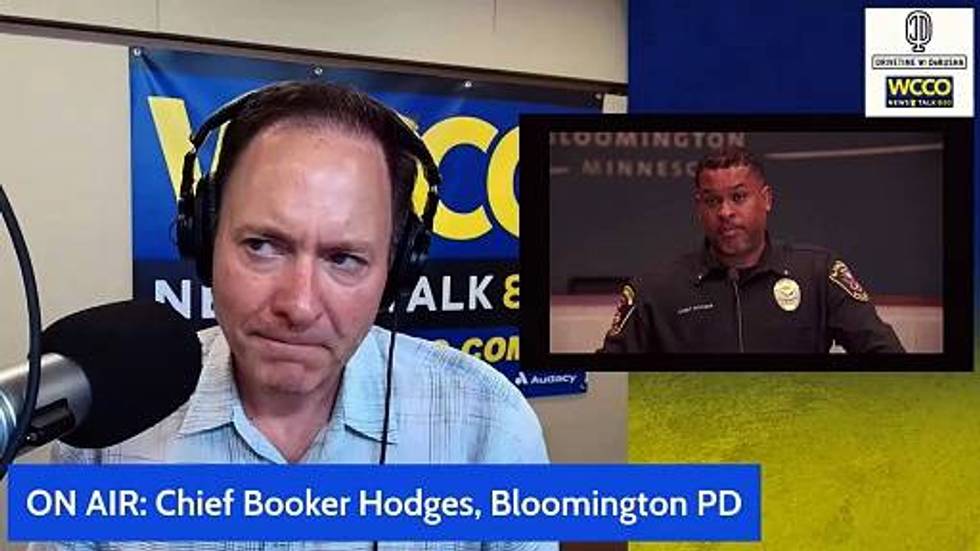
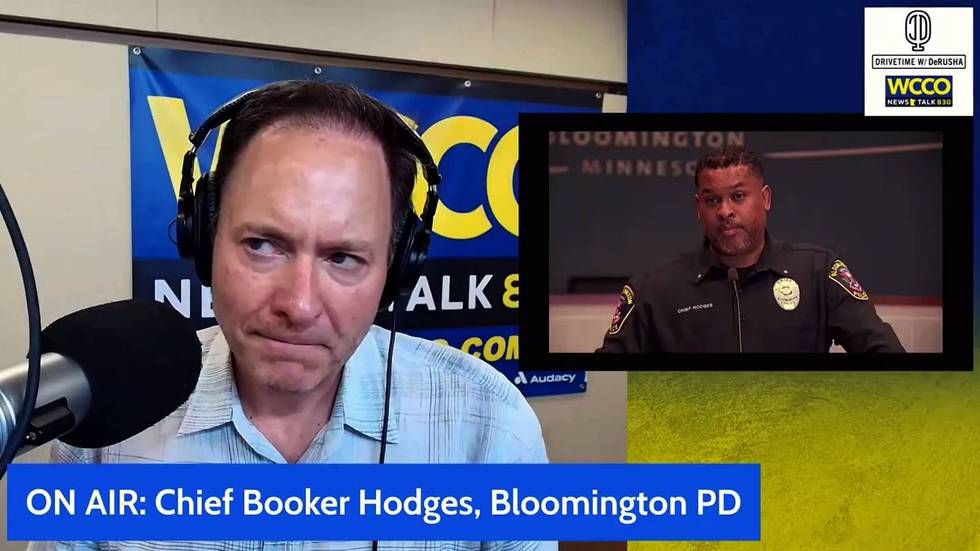
Fletcher alluded to this, and Hodges went more in-depth into the fact that law enforcement is getting handicapped due to policy changes in the Hennepin County Attorney's Office, and County Attorney Mary Moriarty's decision not to pursue crimes that stem from misdemeanor traffic stops.
In September 2025, Moriarty announced her office would discontinue prosecuting cases that stem from "pretext" or low-level traffic stops. The Attorney's Office says stops for things like headlight issues, or broken tail lights target Black drivers disproportionately, and don't result in enough serious criminal charges.
"Non-public-safety traffic stops do not protect public safety, and they actively harm our community, particularly our Black and Brown community members," Moriarty said. "Speeding, distracted driving, driving under the influence, and blowing through stop signs threatens public safety and kills Minnesotans. We will continue to prosecute felony cases resulting from dangerous driving behavior."
But Hodges says good arrests tied to gun charges are getting dismissed, and keeping these gang members on the street.
"There's this notion of some people don't like petty misdemeanor traffic stops for an out tail light or whatnot," Hodges told WCCO's Jason DeRusha. "So those people that are getting stopped in those instances with an out tail light or out license plate light, if we're finding that they're illegally possessing weapons or whatnot, we're getting those charges declined. Because there's a position that if you're stopping people for those reasons, and they will call it non-public safety stops, I don't know where you find that in statute, but nonetheless, they will call it non-public safety stops. And they're using that to dismiss a lot of these cases."
Hodges says they can't keep allowing people to get in and out of jail, and when they make "good cases," there needs to be consequences and repercussions.
Fletcher says charges coming from the federal level might be the way to tackle the gang activities, something that has been successful previously.
"I know from talking to dozens of these gang members, they are scared to death of the FBI charging them with RICO," Fletcher explained.
Former United States Attorneys for Minnesota, Andrew Luger and Joseph Thompson, successfully used RICO statutes to target local gang members in recent years, greatly reducing violence in and around Minneapolis resulting from drug activity, territorial wars, and more.
RICO, or Racketeering Influenced and Corrupt Organizations, treats violent street gangs as organized criminal enterprises rather than prosecuting members only for isolated crimes. It was created at the federal level decades ago to take down mafia-affiliated criminal organizations.
Incidents are tied to a very small group of people
Fletcher has reiterated several times that it's just a small group causing the vast majority of issues, and that shouldn't be forgotten.
"There's only 300 kids that are causing a problem out of 110,000 Somali persons in Minnesota," Fletcher explains. "So, it's a relatively, well not relatively, a very small number. But Somali gangs are an issue."
Fletcher, Minnesota Attorney General Keith Ellison and Ramsey County Attorney John Choi raised the alarm about gang activity earlier this summer, including leading up to the Minnesota State Fair where they secured court injunctions to prevent two rival gangs from attending this year's fair after a "big fight" was promised on social media.
Fletcher said he believes that at least 50 individuals involved in the violence need to be arrested immediately, with at least 25 of them already being targeted federally under RICO statutes.
Fletcher says Minnesota Bureau of Criminal Apprehension Superintendent Drew Evans is planning convening regional agencies later this week to organize a coordinated response to the up-tick in crime.
"We have many members of the Somali American community that come to work, go to work every day," Hodges adds. "Entrepreneurs, people really try to make a living for themselves. Over a vast majority, right? And I just wanna repeat, we've had trouble with African American gangs, Latino gangs. So this isn't about a race thing."
Ramsey County Attorney Bob Fletcher and Bloomington Police Chief Booker Hodges both say these gangs operate "differently"
Ramsey County Attorney Bob Fletcher and Bloomington Police Chief Booker Hodges both say these gangs operate "differently"