


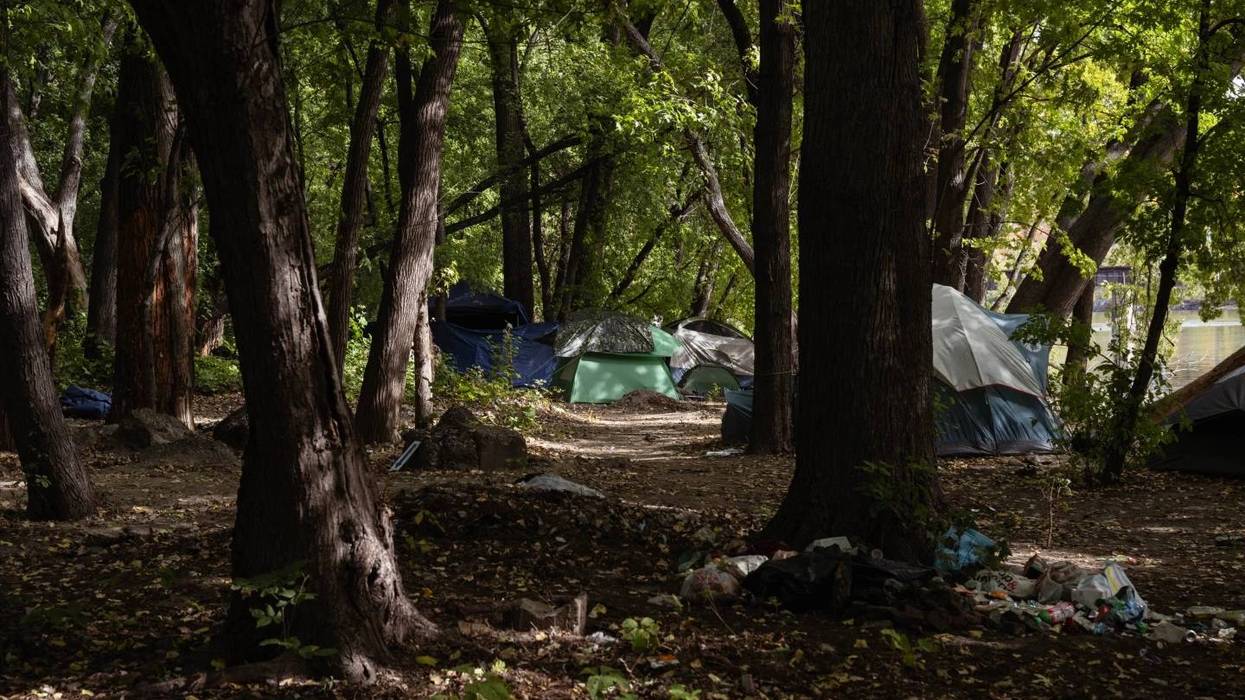
Conditions are worsening at a large homeless encampment in St Paul. More than 300 people are reportedly living on land which the Minnesota Pollution Control Agency says is contaminated.
Last week, the St. Paul City Council voted to implement a 60-day pause for outreach before clearing camps and plans to open both temporary and permanent shelter sites for those living there.
St. Paul Mayor Kaohly her recently said that they will continue the clear out camps, but would not give a time frame for that to happen.
But St. Paul City Council President Rebecca Noecker says time is of the essence, showing a disconnect between the mayor and the City Council.
"The 60 days, we need to get all of this done in 60 days or sooner. And that all of this needs to be done before a closure would happen so where exactly she falls on that, I'm not entirely sure. But that was the council's vision," says Noecker.
Mayor Her adds that her plans include rolling closures, with times not being announced to avoid what happened when they closed Pigs Eye camp earlier this year.
"Well, because the last time we gave a time, it really shook people up," Her explains about the Pigs Eye closure.
The city's plans to get those in Pigs Eye to shelters did not pan out, with nearly all of them just moving on to other encampments. At the time of that closure, the city was working to close other camps before winter.
The mayor also says she has concerns about the council's resolution which includes an $11 million investment.
"Well, I think that that's why I've been very careful about really understanding the cost, and when someone else who isn't managing the budget the way I do makes a proposal of where money should be coming from, that becomes challenging," Her said this week.
The council's resolution means they have about two months to work with people living there, in an effort to find them shelter, and they plan to do it without a complete clearing. Her isn't necessarily on board with that.
"We're going to do a rolling and closure of the encampments and that will happen through the end of this year," she explained. "So we have never changed or wavered on that position. We've made commitments to residents in order to do that and we continue to move forward with that plan."
The large homeless encampment is located off Shepard Road at Randolph Avenue. Noecker says she has been to the camp, and called the conditions difficult.
"I've met folks down there in wheelchairs," she says. "I mean, the porta-potties are up at the top of the hill, I was down there with a Ramsey County public health worker who was kind of celebrating that he'd been able to find a bedpan for someone in a wheelchair at the bottom of the hill. And it's like, you know, this man needs so much more."
The Minnesota Pollution Control Agency has posted no trespassing signs, warning of a stew of toxins in the soil, including lead, arsenic and mercury. There's also no real answer to who owns that land, with at least portions of it belonging to the city, but other parts owned by Xcel Energy and Union Pacific Railroad.
The MPCA has tracked the toxins for years, according to a new report from the Associated Press, and has labeled the area that is now home to the encampment as a state superfund site. That means it is eligible for state-funded cleanup, but while the agency has included cleanup funds in its budget requests, they’ve been turned down by state lawmakers in favor of higher-priority projects.
The site was never intended for people to live there, despite the fact that it has become a home for people who say they have no place else to go. Meanwhile, for the homeless individuals who live there, the health impacts mount.
Mayor Kaohly Her concerned about City Council's resolution which includes an $11 million investment
Mayor Kaohly Her concerned about City Council's resolution which includes an $11 million investment