


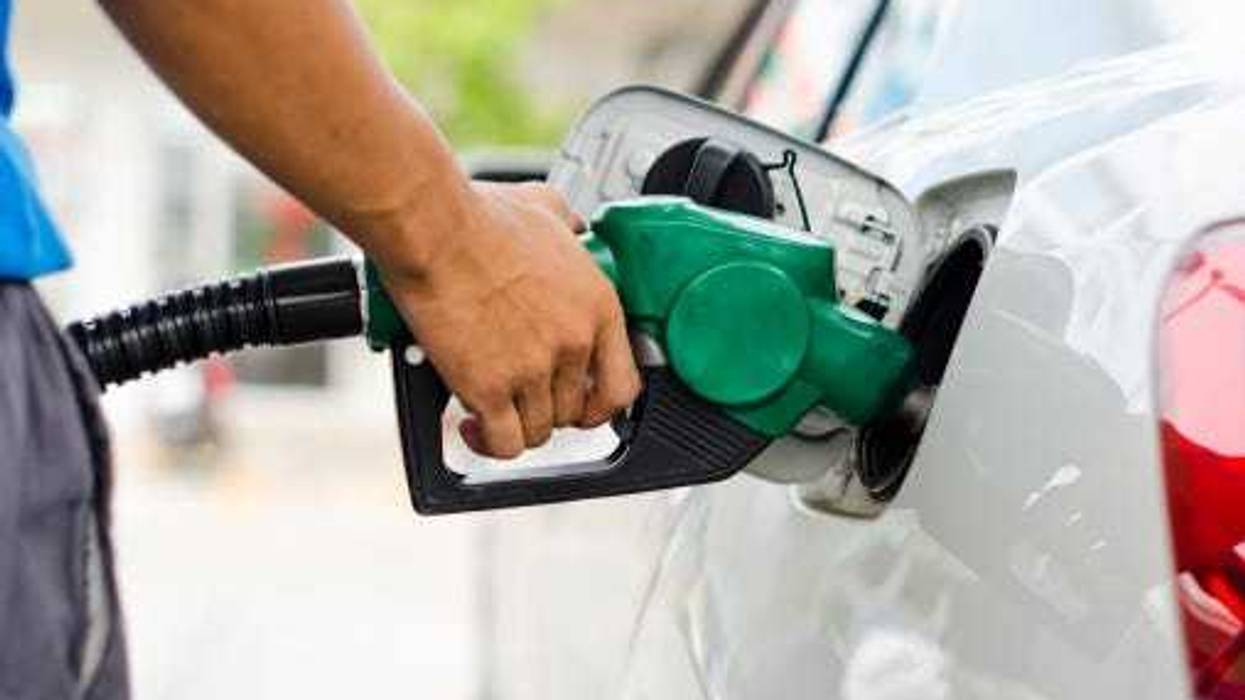
Experts are warning that the price of gasoline will keep going up as the U.S. Navy block major ships going into or out of the Strait of Hormuz.
Patrick De Haan is Head of Petroleum Analysis for Gasbuddy.com, and he says the uncertainty is frustrating.
"Well, I mean, even the president I think himself said it best when now he says approaching the midterms that he's prepared for prices to remain this way," De Haan told WCCO's Chad Hartman. "But it might actually get a lot worse."
In other words, don't look for any relief at the gas pump anytime soon. And much of the uncertainty now comes as the U.S Navy blocks ships on the Strait of Hormuz, further cutting off supplies.
"At the end of the day, I mean, every day that goes by, every 24 hours, we're talking about almost a million barrels of oil that aren't flowing to the market," De Haan says. "Every hour this continues, and that's starting to add up."
De Haan says oil markets react negatively to uncertainty, and they still don’t know what the actual strategy is with Iran. He said until there’s clarity, oil and gas prices will keep swinging on that uncertainty, not fundamentals.
In Minnesota the average price of gas is $3.79, as of Tuesday morning, but that is on the low end nationally. The average across the U.S. is now over $4 a gallon.
And while President Donald Trump continues to tout U.S. oil production, saying that we don't need the Strait open, and countries should look to the U.S. to purchase oil, De Haan says that is not the way the global supply chain or markets work.
"A president that obviously knows 'drill baby drill', you know, oil is a fungible commodity," De Haan explains. "It can be shipped anywhere, and that's what's happening now, is U.S. oil companies are certainly, they're happy. They're able to sell oil on the global market at a much higher price than they could 6 weeks ago. But for the president to color that as terrific for the U.S. economy, it's actually quite detrimental when you look at the price of diesel being 20 cents a gallon away from an all-time record high."
Already, the effects are being seen in other industries. Airlines are drastically increasing airfares, and every major U.S. ariline has increased baggage fees to help offset the cost of fuel prices.
"Companies like UPS, FedEx, DHL, when huge trucking companies are raising rates," adds De Haan. "The payout, it is nothing for Americans. We continue to spend roughly $400 million more on gasoline every day, and there's going to be a major economic cost associated with that."
Gas prices push the drive to find bargains
Apps such as Gas Buddy make finding the cheapest gas easier than ever.
Nationwide, gasoline prices have risen by well over $1 since the Iran war began Feb. 28, reaching an average of $4.15 a gallon, according to AAA.
Prices have been higher, topping $5 during the summer of 2022, but economists believe they will continue heading up and contribute to inflation in the weeks of ahead as geopolitical tension persists.
Deals are to be found, though, at many of the almost 500 tribally owned convenience stores with gas stations across the U.S. including 23 of them in Minnesota.
Fifty-five are in California. At the Chukchansi Crossing Fuel Station & Travel Center between Fresno and Yosemite National Park, the $5.09 gas was 60 cents less than nearby stations.
New Mexico resident Jamie Cross usually finds savings on the Mescalero Apache Reservation, where gas was as low as $3.79 this week.
“I hope we don’t go any higher,” Cross said Thursday.
In eastern New York state, on Cattauragus Indian Territory between Buffalo and Erie, Pennsylvania, the cheapest gas was about $3.65 at more than half a dozen stations — 50 cents less than in towns nearby.
Tribal lands find a fuel tax escape
So how do tribes do it? Two words: Tax exemptions.
Generally tribes must pay the federal fuel tax of 18.4 cents per gallon for gasoline and 24.3 cents per gallon for diesel, and pass that cost along to drivers. State fuel taxes are a different matter.
For well over a century, U.S. courts have found that states don't have authority to collect taxes from Native Americans on their land, said Dan Lewerenz, a University of North Dakota assistant law professor who specializes in Native American law.
“The Supreme Court consistently held to this view and it’s one of the most enduring principles in federal Indian law,” Lewerenz said.
Federally recognized Native American tribes are in 35 states with state gasoline taxes ranging from 9 cents per gallon in Alaska to 71 cents in California.
From there, things get complicated based on where the fuel is taxed — at fuel terminals, say, or when distributors buy or sell fuel — and depending on various agreements between states and tribes.
Court rulings come into play. In 2005, the U.S. Supreme Court ruled that off-reservation distributors in Kansas may charge state tax on sales to tribes for on-reservation fuel sales. But in 2019, the Supreme Court held that an 1855 treaty between the U.S. and the Yakama Nation that ensured the free travel of tribal members on roads with their goods prohibited state fuel taxes on tribal lands in Washington state.
“This is a little bit different than the principle that Indians aren’t taxed within Indian Country because this particular treaty reserved certain off-reservation rights for the Indians as well,” Lewerenz said.
"Every day that goes by, we're talking about almost a million barrels of oil that aren't flowing to the market"
"Every day that goes by, we're talking about almost a million barrels of oil that aren't flowing to the market"


