

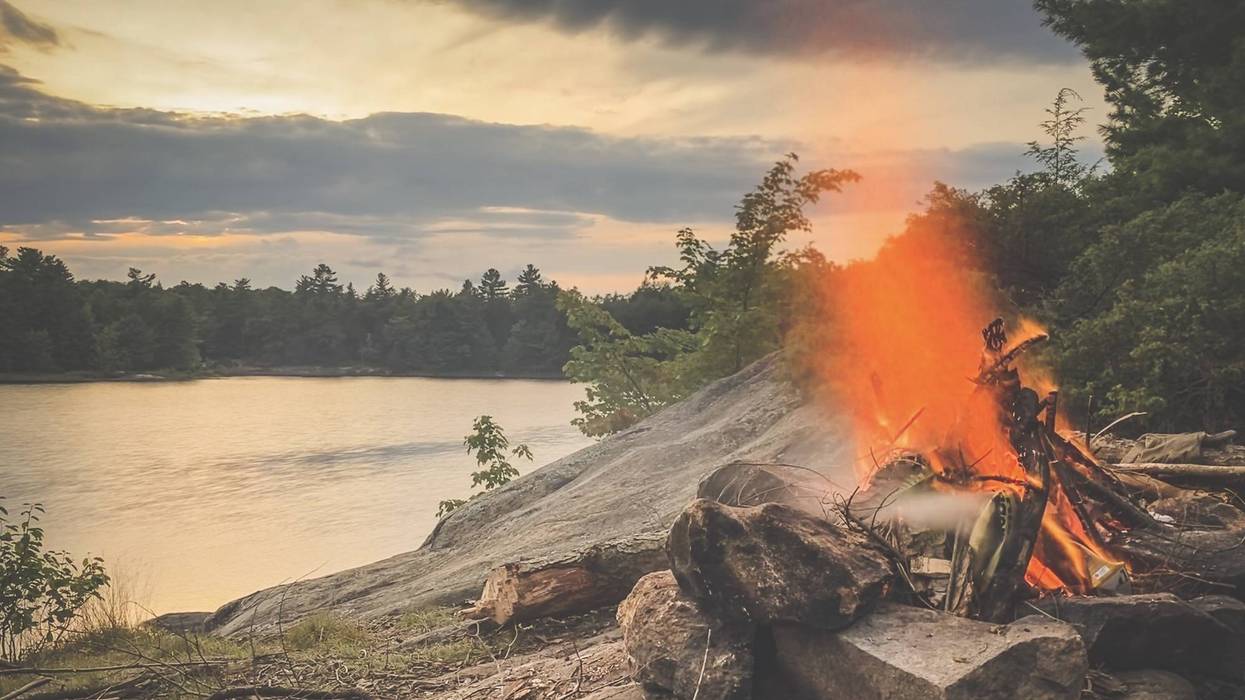
Campfires and recreational fires are once again being allowed in some areas of northeastern Minnesota after recent rains have reduced wildfire risks.
The Minnesota DNR removed the class four burning restrictions at midnight in Cook, Koochiching, Lake, and northern St. Louis counties, as well as the entirety of the George Washington State Forest and Scenic State Park. That also includes portions in Itasca County.
Class three burning restrictions remain in place for Cook, Lake, and northern St. Louis counties on non-Tribal lands in the designated areas.
Minnesota DNR Wildfire prevention specialist Karen Harrison says removing class four restrictions will allow for campfires and recreational fires on private land, resorts and staffed campgrounds.
That means campfires are not allowed for dispersed, remote, backpacking, or backcountry camping, whether there is a designated fire ring or not.
"Also looking at the current and predicted weather that might be partly precipitation, but also humidity levels and temperature," explains Harrison. "And then also looking at fuels on the ground and what their moisture content is. So there's a variety of different factors that go into burning restrictions."
Meanwhile, the U.S. Forest Service says improving wildfire conditions will allow for Trails End Campground in Cook County to reopen for the first time since closing on July 15.
Improving conditions comes as good news for outfitters who've lost out on one of their busiest times for business. Ginny Nelson manages Spirit Of The Wilderness Outfitters in Ely and talked with WCCO Radio's Jason DeRusha.
"With the fires, we kind of were at a complete halt," says Nelson. "And then now, we're just starting to rent a few canoes out to people doing day trips. And it's kind of hard to get back in that groove. We feel like it's spring again."
Overnight access to more than 40 Boundary Waters entry points reopen on Thursday in Lake and Cook Counties.
Nelson added that safety remains the number one priority for anyone in the area.
"We don't want to go through what we did on the 13th trying to extract people from the Boundary Waters that were a little bit too close to a fire that we didn't even think was a problem," Nelson explains. "So safety has to be number one for sure."
The U.S. Forest Service noted recent precipitation has helped suppress fires which have consumed more than 64,000 acres on the U.S. side of the border. There are also numerous fires on the Canadian side.
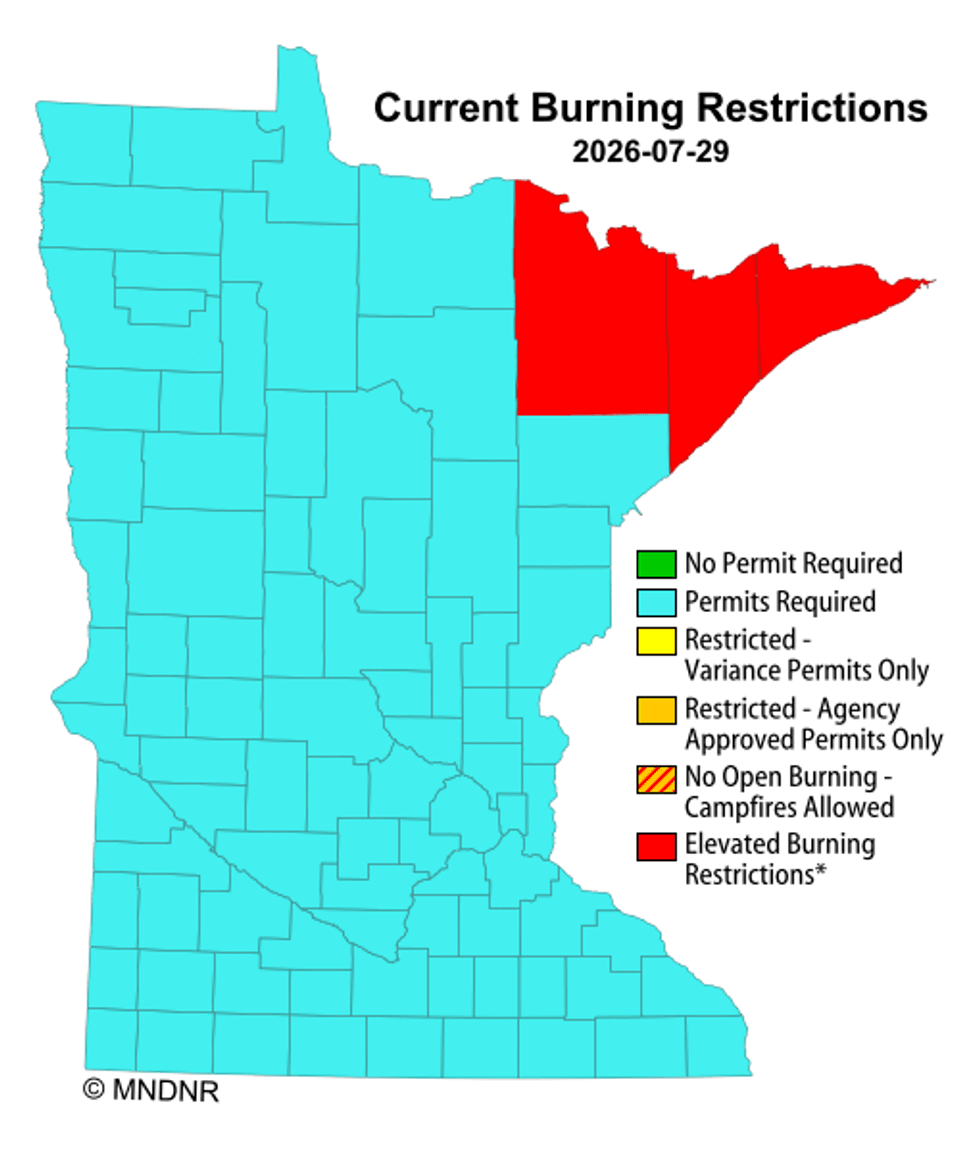
The new fire restriction map for Minnesota.
(Minnesota Department of Natural Resources)