


When immigration enforcement feels more visible, through raids, detentions, workplace visits, or heavy community talk, children often sense danger before they understand what’s happening. This stress can affect kids who are undocumented, kids in mixed-status families, and kids who simply live in a community where enforcement feels close. The nervous system first reads the environment. Words come later.
A simple way to state this is: uncertainty changes behavior. Families may avoid parks, school events, clinics, or public spaces. Parents may feel pressured to make fast decisions with incomplete information. Children notice shifts in routine, tone, and body language, and many interpret them as indicating that “something bad is about to happen.”
What Kids May Show in the Short Term?
In the short term, stress often manifests as bodily symptoms and behavioral changes. Some children become more clingy, ask repeated questions, or resist separation from caregivers. Others become unusually quiet. Sleep can be disrupted by nightmares, bedtime battles, or waking up more often. Appetite can change. Some kids report stomachaches or headaches, especially before school or when routines change.
At school, a child may appear distracted, irritable, or “checked out.” This doesn’t always mean a child is defiant or unmotivated. It can be the brain doing what brains do under threat: scanning for safety instead of focusing on math or reading.
What Can Happen Over Time
Long-term stress looks different. When fear becomes a daily background noise, some children develop ongoing anxiety or hypervigilance. Always watching, always waiting. Some begin to expect loss, which can show up as sadness, withdrawal, or numbness. Others become quick to anger because their system is already overloaded.
Parents feel this, too. When adults are carrying chronic fear, it’s harder to stay patient, consistent, and emotionally available. That doesn’t reflect a lack of love. It reflects strain. Children can still do well when supported, but they need adults who can offer steadiness, especially when the outside world feels unstable.
The Goal: Keep Kids Calm Now, And Steady Long Term
Calm doesn’t mean pretending nothing is happening. Calm means helping a child’s nervous system stay regulated even when life feels uncertain. In the short term, the focus is on lowering panic and restoring routine. In the long term, the focus is on building resilience: a child learns, “Fear can rise, and I can come back down.”
The best protection is not perfect answers. It is predictable care, honest reassurance, and a plan that adults hold so children don’t have to.
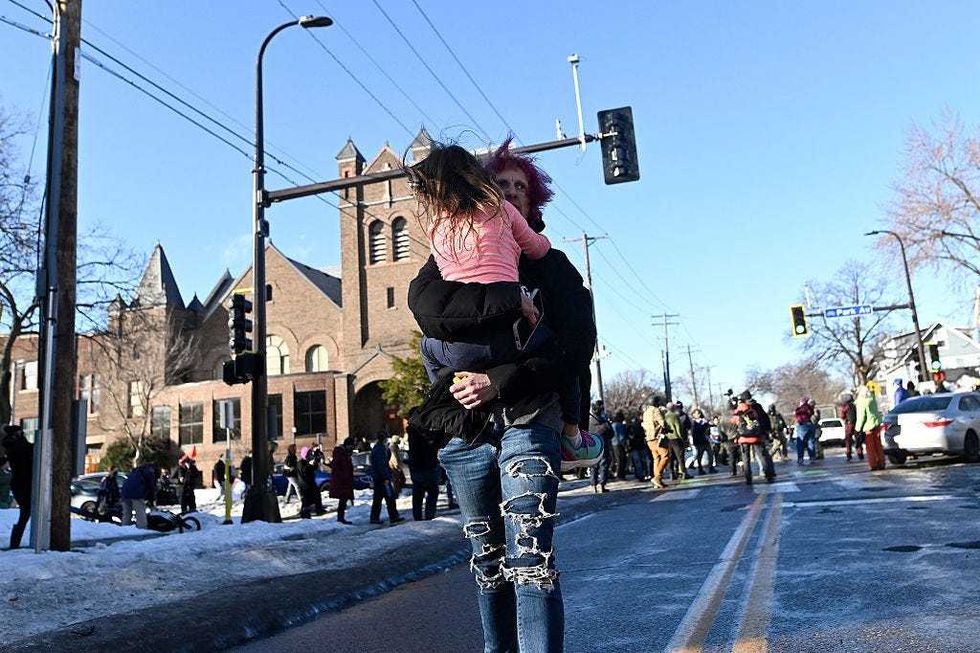 A person carries a child away from the scene where ICE agents were confronted by protestors after they arrested people from a residence on January 13, 2026 in Minneapolis, Minnesota.(Photo by Stephen Maturen/Getty Images)
How To Talk With Children About ICE Without Escalating Fear
Start by asking what they already know. Kids often pick up fragments from school, social media, older siblings, or overheard adult conversations. A simple opener works: “What have you heard?” Then, “What do you think it means?” This gives you a clear picture of what they’re carrying, and whether they’re filling gaps with worst-case assumptions.
Next, use age-appropriate truth. Younger children need fewer details and more reassurance. You can say something like: “Some people are worried about immigration rules. That can feel scary. My job is to take care of you and keep our plan. Your job is to be a kid.” Older children and teens can handle more context, but they still need you to filter and pace the conversation. Aim for clarity about what you know, what you don’t know, and what your family is doing to stay safe.
Avoid graphic details and constant updates. Repeated exposure to alarming videos, rumor chains, and adult “what if” conversations keeps the nervous system activated. Protect sleep and mealtimes. If news must be checked, keep it to a brief window and keep it away from children.
Reassure without making promises you can’t guarantee. “Nothing will happen” can backfire if circumstances change. Instead, use grounded reassurance: “You are loved. You’re not alone. Adults are working on plans. If you feel scared, you can always tell me.”
What Parents Can Do at Home to Protect Wellbeing
Stability is medicine. Keep routines as consistent as possible, wake time, meals, school attendance, homework rhythm, and bedtime. When routines have to change, give simple notice: “Tomorrow will be different. Here’s what will stay the same.” Predictability helps the brain feel safe.
Create a family plan that does not transfer adult fear to children. Planning is for the adults; children only need the parts that help them feel confident. The message to a child should be: “There are safe adults and clear steps.” That may include identifying trusted people, updating emergency contacts at school, and ensuring older children know who to call if they can’t reach you.
Build a small “circle of safe adults” around the child. Help them name a few people they can go to at school and in the community. This is important because fear narrows a child’s world. Safe relationships expand it again.
Limit stress exposure where you can. If social media is spiking anxiety, take a break together. If adult conversations are constant, move them out of earshot. If children are hearing rumors at school, proactively check in each day with a short, calm question: “Anything worrying you today?” Then listen more than you lecture.
Give Kids a Script for Scary Moments
Children calm more quickly when they know what to do. Offer a simple plan they can remember. For younger kids: “If you feel scared, find your teacher and say, ‘I need help. I’m worried.” For older kids: “If you can’t reach me, call this person next.” Pair that with a body tool: slow breathing, grounding, or a hand-on-chest “reset.” Practicing once when calm makes it easier to use when anxious.
When It May Be Time to Get Extra Support
Additional support is appropriate if fear begins to take over daily life. Watch for sleep problems that persist, frequent stomachaches or headaches without a medical cause, sudden school refusal, panic symptoms, big behavior changes, or ongoing sadness and withdrawal. A pediatrician, school counselor, therapist, or trusted community support can help a child. Additionally, a parent can develop sustained coping strategies.
A Steady Message You Can Say Today
If you need words that are simple and calming, try this:
“I can’t control everything outside our home. But I can control how we care for each other. You are safe with me right now. We will take this one day at a time. If you feel scared, tell me, and we’ll handle it together.”
That kind of reassurance supports the short-term goal, calm today, and the long-term goal: a child who learns that fear doesn’t get the final say.
This is a guest article from Brandon Jones: He is the former executive director of the Minnesota Association for Children’s Mental Health. He has a consulting and therapy background in addressing Adverse Childhood Experiences (ACEs), Historical and Intergenerational trauma, Social/Emotional Intelligence (EQ), Leadership, and Intercultural Development Inventory (IDI). Brandon holds a B.A. in Sociology from the University of Minnesota, a master's in Community Psychology from Metropolitan State University, and a master's in Psychotherapy (MFT) from Adler Graduate School. He lives by the motto of “Live life with Purpose on Purpose.”