

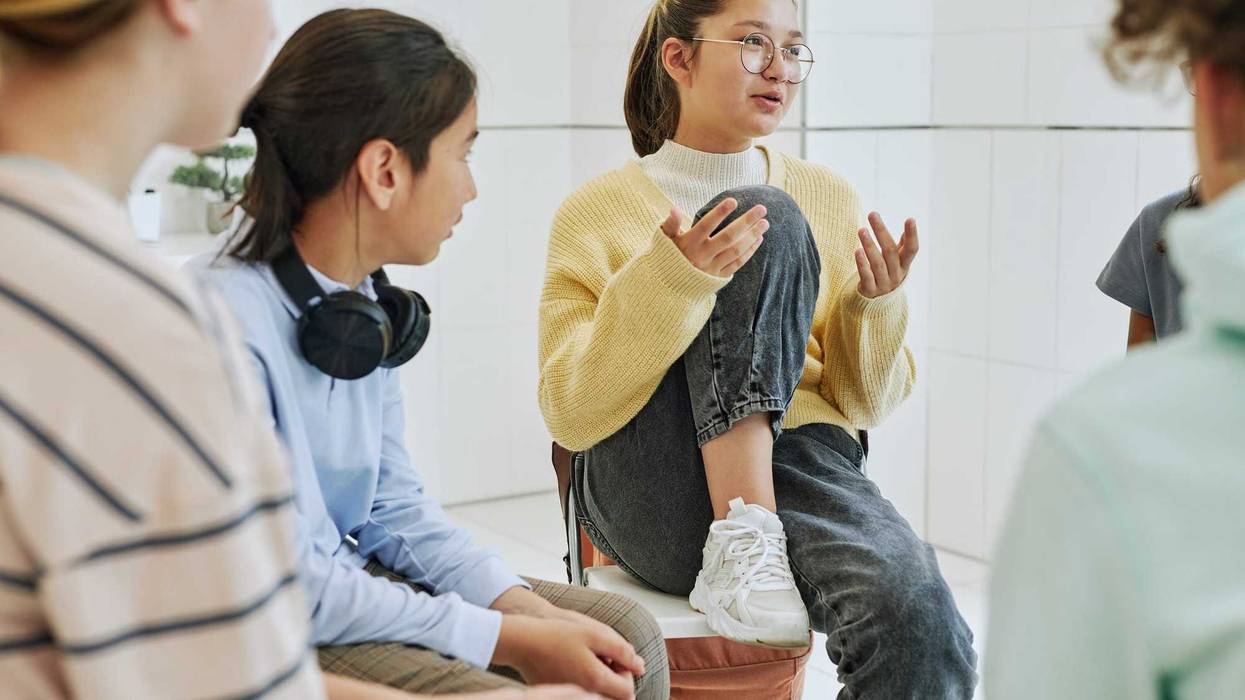

Many Minnesota teens with mental health concerns can access therapy and other resources at a place that’s very familiar to them—their own schools.
The school linked behavioral health program through the Minnesota Department of Human Services (DHS) was created to bring additional mental health supports and increased services for youth.
“School linked support brings in community partners to work directly in our schools with our students, delivering therapy services during the school day. We work with existing student support personnel staff within schools,” said Kristin Lofgren, a school based behavioral health consultant with DHS.
“The intent is to reduce barriers, bring services to where kids are. With school programs, kids aren’t missing school days, parents aren’t missing work getting to and from therapy appointments, there are no barriers to transportation. There’s quicker access,” she said.
Brandon Jones, a psychotherapist and Executive Director of the Minnesota Association for Children's Mental Health, called school linked care “a gateway” for connecting students with mental health services and can be the first step towards family therapy and other interventions.
“This works because school is a familiar place,” said Jones, who’s hosts the “It’s Not Your Fault” teen mental health podcast. “That’s true even for kids who say they do not like school. They know people there, it’s comfortable for them. They are used to that environment and they understand the expectation of engagement within the school setting.”
Studies show positive outcomes for students who are engaged in mental health treatment services at school during the school day.
“Numbers show that they are six times more likely to complete treatment. That’s a pretty significant number that shows that when we bring services to where kids are, it makes a difference for them and their treatment successes,” Lofgren said.
Lofgren wants students to know that they can reach out and connect with school resources even when they are not experiencing a mental health or personal crisis.
“We say, maybe you’re just not feeling like yourself. When you’ve identified that you’re struggling, maybe even with the normal zigs and zags. We want teens to know, you can get ahold of us and find us at school,” she said.
Teens who feel stuck, stressed, overwhelmed and in need of someone to listen and validate them can find a connection though the Mental Health Warmline.
Students (and adults) can text, chat and talk by phone even after school hours; the Mental Health Warmline is answered from 9 am to 9 pm.
“If a teen is struggling, unsure about reaching out, the Mental Health Warmline is a great option for them,” said Jones. “It’s a great tool for getting help immediately but it’s underutilized. We want more people to know about it.”
The Minnesota Mental Health Warmline phone number is 651-288-0400. Text number: text “support” to 85511. To chat online go to: mentalhealthmn.org.
School linked mental health professionals want Minnesota teens that “We are here from you,” as Lofgren put it.
“There’s hope and there’s help, that’s the most important message for our teens. We want them to reach out, whether it’s to be connected to the Warm ine, school linked behavioral health, or a trusted adult or a peer,” she said. “There’s a lot of resources. Our goal is to make sure you know about them.”
For more on school linked behavioral health, click here.