

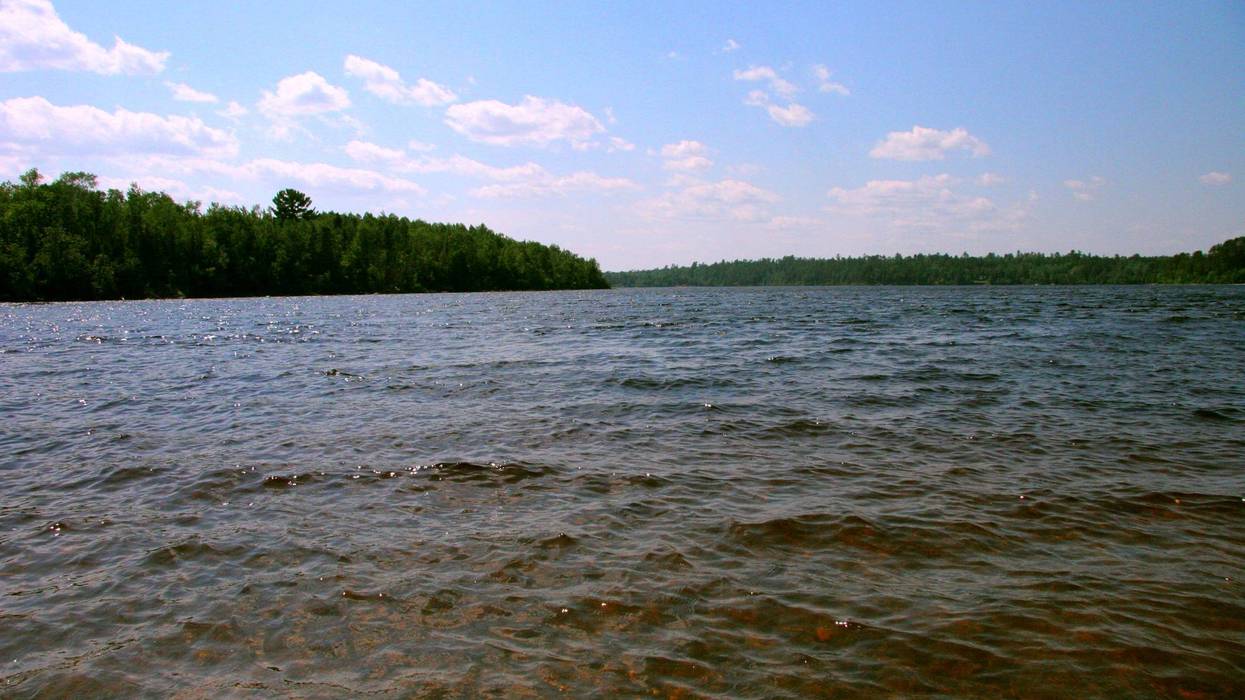
The U.S. Senate could vote any time on a bill to end a 20-year moratorium on mining in the Boundary Waters Canoe Area Wilderness. There's no date scheduled for a vote, but it is expected the Senate will move on the bill already passed by the U.S. House.
The issue of mining in Minnesota is a hot-button issue with strong opinions on both sides, and one of the issues facing lawmakers in the state.
Republican State Representative Spencer Igo (Wabana Township) told WCCO Radio's Blois Olson on the Sunday Take that the economic situation on the Iron Range is difficult right now.
"We had massive layoffs on the Iron Range in the late spring last year," Igo explains.
And, he says the layoffs have a big impact on the community.
"The story is, when you have a layoff at a mine, it isn't just those who lost their jobs are hurt. It's the schools, it's the small businesses, it's the spin-off industry," Igo adds.
He says they need to diversify to survive, including looking at investing more on copper-nickel mining to keep people employed and thriving. He says that mining is the backbone of the community but there is a great divide between the metro and outstate, saying people in urban areas have unfounded fear around the mining process.
"There won't be, and there never will be mining, inside the boundary waters," says Igo, who adds copper mining, or mining other minerals, is critical to economic independence for the U.S.
The mine would be approximately 9 miles southeast of Ely and 11 miles northeast of Babbitt, Minnesota. The underground project is situated on Superior National Forest land within the Rainy River watershed, near Birch Lake and the South Kawishiwi River.
"You know, Minnesota's on a very aggressive path to hit 2040, but we're doing it on the backs of making sure that China continues to send us the components to build the solar, the wind, and everything else that goes along with it," Igo explained. "If we want to make sure to keep costs down and provide infinite opportunity and jobs for Minnesota, we need to invest in those critical resources here."
Opponents of the mine include both U.S. Senators Tina Smith (D) and Amy Klobuchar (D), who both say they will vote no on the proposed end of the ban.
"You won’t find cleaner waters than the Boundary Waters," Sen. Smith said recently during a protest of the mine at the state capitol. "Think endless streams of water filled with bass, walleye, trout and northern pike – total wilderness, only accessible via canoe. Why would we let a Chilean mining company pollute these public lands, take our minerals and ship them off to China?"
Smith is referring to Twin Metals Minnesota LLC, a subsidiary of Chile-based Antofagasta Minerals, who submitted a plan with the U.S. Department of the Interior in 2019 proposing to mine copper, nickel, cobalt and other precious metals in the forest.
Environmental groups say pollution from the mine, even if it isn't directly in the Boundary Waters, would flow directly into the BWCA Wilderness, into national parks, and untouched natural areas downstream. The site is about 2–3 miles from the Boundary Waters Canoe Area Wilderness.