

In January, Congressional Republicans moved closer to lifting a 20-year ban on mining near Minnesota’s Boundary Waters Canoe Area Wilderness, pushing a resolution to end the moratorium through the House despite environmentalists’ warnings that it could devastate a premier destination for campers, kayakers and canoeists.
Minnesota U.S. Senator Tina Smith (D) on Tuesday took to the floor to deliver a speech imploring her colleagues to oppose the bill, which could allow a copper-nickel sulfide mine in the watershed of the BWCA.
Smith says there are ways to be pro-mining, but this mine in particular would hurt Minnesota, and the United States as a whole.
"So, what we're doing here with this mine is we're creating a pathway, a pipeline for this foreign company to build a mine, almost certainly polluting the Boundary Waters, to take the copper, to send it to China, where they then have a sweetheart deal for smelting, and then sell it back out on the open market," Smith said.
Advocates argue opening the Boundary Waters for mining would provide a needed economic boost, and that the landscape would not be damaged thanks to stringent regulations put in place in Minnesota.
The push to end the ban comes as a Chilean mining company considers opening a copper mine in the Superior National Forest on the edge of the wilderness area that conservationists say could contaminate the watershed.
“Minnesota’s Boundary Waters is one of our nation’s most iconic wilderness areas,” Jackie Feinberg, the Sierra Club’s national lands conservation campaign manager, said in a statement. “This push by the Trump administration and their Congressional allies to allow toxic mining in the Boundary Waters watershed puts this fragile ecosystem at risk, and is a clear giveaway to corporate polluters.”
Smith says it's also about who benefits from this mine, which she argues is mostly a foreign-based company.
"So I would encourage my Republican colleagues as you consider this, to take a look at who's benefiting from this mine," she said. "And it certainly is not going to be Minnesotans who this land belongs to, along with the rest of this country. No, the real winners of this deal are the Chilean billionaires who will further line their pockets with profits from this mine."
In a statement posted to social media, Rep. Pete Stauber responded to Smith's speech:
"Twin Cities liberal Tina Smith is directly threatening our way of life by supporting this illegal mining ban! Her actions threaten jobs and economic growth in our part of the state and she continues to show how out of touch she is with northeastern Minnesota," Stauber wrote.
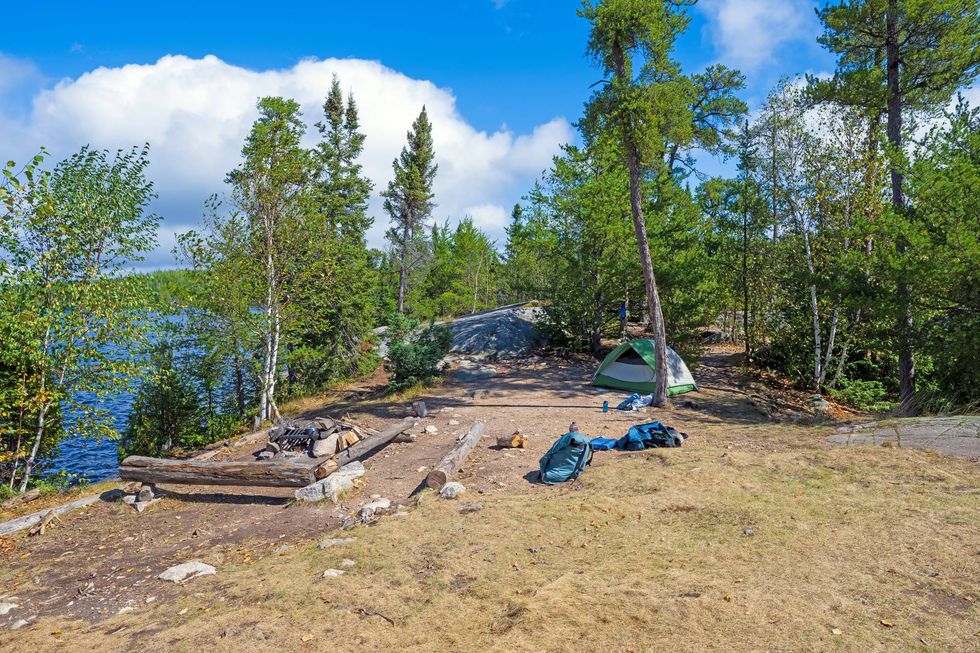
A remote campsite in the Boundary Waters on Alpine Lake in Minnesota, one of the last true wilderness areas in the Continental U.S.
(Getty Images / Wildnerdpix)
A beloved destination for outdoor enthusiasts
Boundary Waters is a vast swath of remote woods, lakes and swamps in the Superior National Forest in far northeastern Minnesota, stretching for about 150 miles (about 240 kilometers) along the border with Canada.
It remains largely untouched by humans; logging is prohibited, planes must stay above 4,000 feet (1,220 meters) as they fly over it, except in emergencies, and motorized boats are limited to certain areas.
The promise of serenity has drawn campers, hikers, kayakers and canoeists for decades. The U.S. Forest Service issued about 776,000 visitor permits between 2020 and 2024, according to agency data.
The Biden administration banned mining
Part of the Superior National Forest is situated on the Duluth Complex, a rock formation that contains deposits of copper, nickel, lead, zinc, iron, silver and gold, according to the Forest Service.
Twin Metals Minnesota LLC, a subsidiary of Chile-based Antofagasta Minerals, submitted a plan with the U.S. Department of the Interior in 2019 proposing to mine copper, nickel, cobalt and other precious metals in the forest.
President Joe Biden’s administration blocked the project in 2023, imposing a 20-year moratorium on mining on about 400 square miles (103,600 hectares) in the forest, saying that was necessary to protect the watershed and canoe wilderness.