


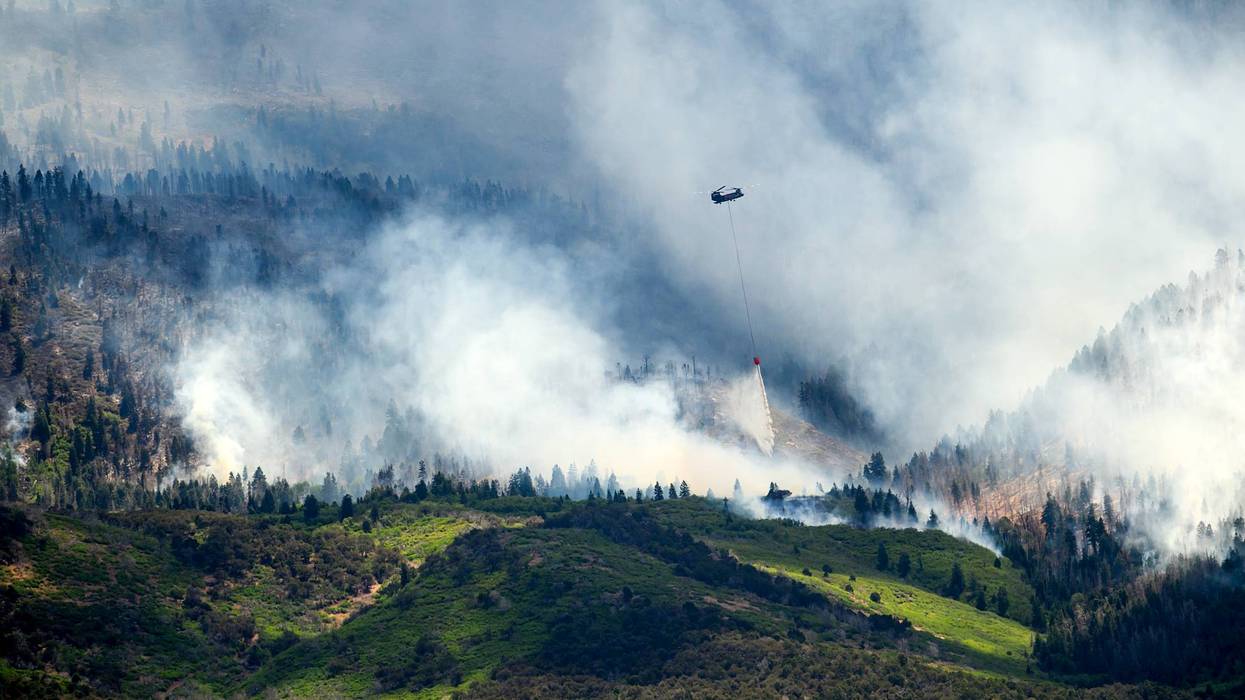

MARYSVALE, Utah (AP) — The largest wildfire in the United States marched through canyons and over mountainsides Saturday, blackening an already parched landscape in Utah as residents on the flanks of the blaze watched smoke billowing when the winds picked up.
The Cottonwood Fire, burning in rugged terrain in southwest Utah, severely damaged the Eagle Point ski resort and destroyed summer cabins in sparsely populated Beaver County. Authorities conducted damage assessments but did not yet have estimates of how many homes burned.
Gov. Spencer Cox, in a social media post, asked for prayers for firefighters and “the rains we desperately need.”
“It’s as bleak as it’s ever been ... and yet there were several miraculous stops and saves,” Cox said, referring to the work of the hundreds of firefighters assigned to the blaze.
They were among the crews that have poured into Utah as more wildfires in the arid state gained steam thanks to consecutive days of what forecasters called critical fire weather, or dangerously low humidity levels, warm temperatures and gusty winds.
There was little relief from the strong winds Saturday, but crews fighting the Cottonwood Fire were treated to higher humidity levels than the single digits that were expected, said Alyssa Mason, a spokesperson assigned to the blaze.
“That was good news for us today,” Mason said.
Utah is coming off a record-low snowpack and the warmest winter on record, which has elevated fire danger. Much of the West is grappling with similar conditions, according to the National Interagency Fire Center.
From Alaska to Florida, crews worked to corral dozens of fires, including three dozen that were classified as large and uncontained.
Nationally, nearly 3 million acres (1.2 million hectares) have burned since the start of the year, pushing the U.S. ahead of the 10-year average.
Firefighters grapple with more wind
Helicopters took to the skies hoping to put a dent in the Cottonwood Fire before afternoon winds kicked up again and grounded them. Air support also was grounded the previous afternoon as conditions deteriorated.
The fire ballooned to more than 144 square miles (373 square kilometers), and roughly 1,300 residents in the towns of Marysvale, Junction and Circleville remained on notice that they should be prepared to leave if conditions worsened.
Cox declared an emergency, and the state has restricted fireworks citing one of the most severe wildfire seasons in recent history and saying the blazes were stretching wildland firefighting capabilities.
“These fires are starting closer to homes and communities,” State Forester Jamie Barnes said. “One human-caused fire is one too many.”
The cause of the Cottonwood Fire has not been determined, but officials said the majority of those sparked so far this year have been human-caused. Forecasters also noted that lightning strikes around the West have resulted in fires.
Elsewhere in Utah, evacuations were in place for several small communities southwest of Salt Lake City, including Eureka, with a population under 1,000, and the Vernon Reservoir area. Highways running through the area were closed.
Two wildfires in that area — the Iron and the Cherry — covered a combined 112 square miles (290 square kilometers), fire officials said.
Visitors undeterred by wildfires
The towering column of smoke from the Cottonwood Fire was visible Friday from miles away, even from Bryce Canyon National Park to the south and Colorado to the east. It was hazy Saturday as the smoke drifted to the northeast, leaving air quality unaffected in places like Bryce and other popular vacation spots to the south.
Bob Miller of Yucaipa, California, who was staying at an RV park in Marysvale, was prepared to evacuate if needed. The evenings especially have been smoky, Miller said, but he and his family have still been able to enjoy the area, where they have vacationed for almost two decades.
“It’s still gorgeous,” Miller said.
“Fires happen around here. When you come every year, you kind of get used to that,” he added.
“After you’ve been through burned areas a few times, you look at it and you understand what nature can do.”
Red flag warnings issued around the West
The warnings stretched from California to Arizona to New Mexico, where firefighters battled several blazes amid windy conditions. That included a new one reported south of Grand Canyon National Park.
Authorities said the flames were moving away from Grand Canyon Village and the nearby community of Tusayan. The area was without power as the utility serving the area initiated a safety shut-off earlier in hopes of lessening the wildfire risk.
Park visitors could still purchase park passes at entrance stations as long as backup power systems remained operational, but officials said people should come prepared. That meant downloading maps before arriving and ensuring that phones and other devices are fully charged.
Power shut-offs have become more common in the West as wildfire risk has expanded. It is usually a last resort after utility forecasters weigh factors like sustained wind and gust speeds, available fuels and topography.
With extreme fire conditions persisting in Utah, Rocky Mountain Power also shut off power lines serving Beaver County and other areas.
___
Montoya Bryan reported from Albuquerque, New Mexico. Associated Press writers Jamie Stengle in Dallas; Julie Carr Smyth in Columbus, Ohio; and Ed White in Detroit contributed.


