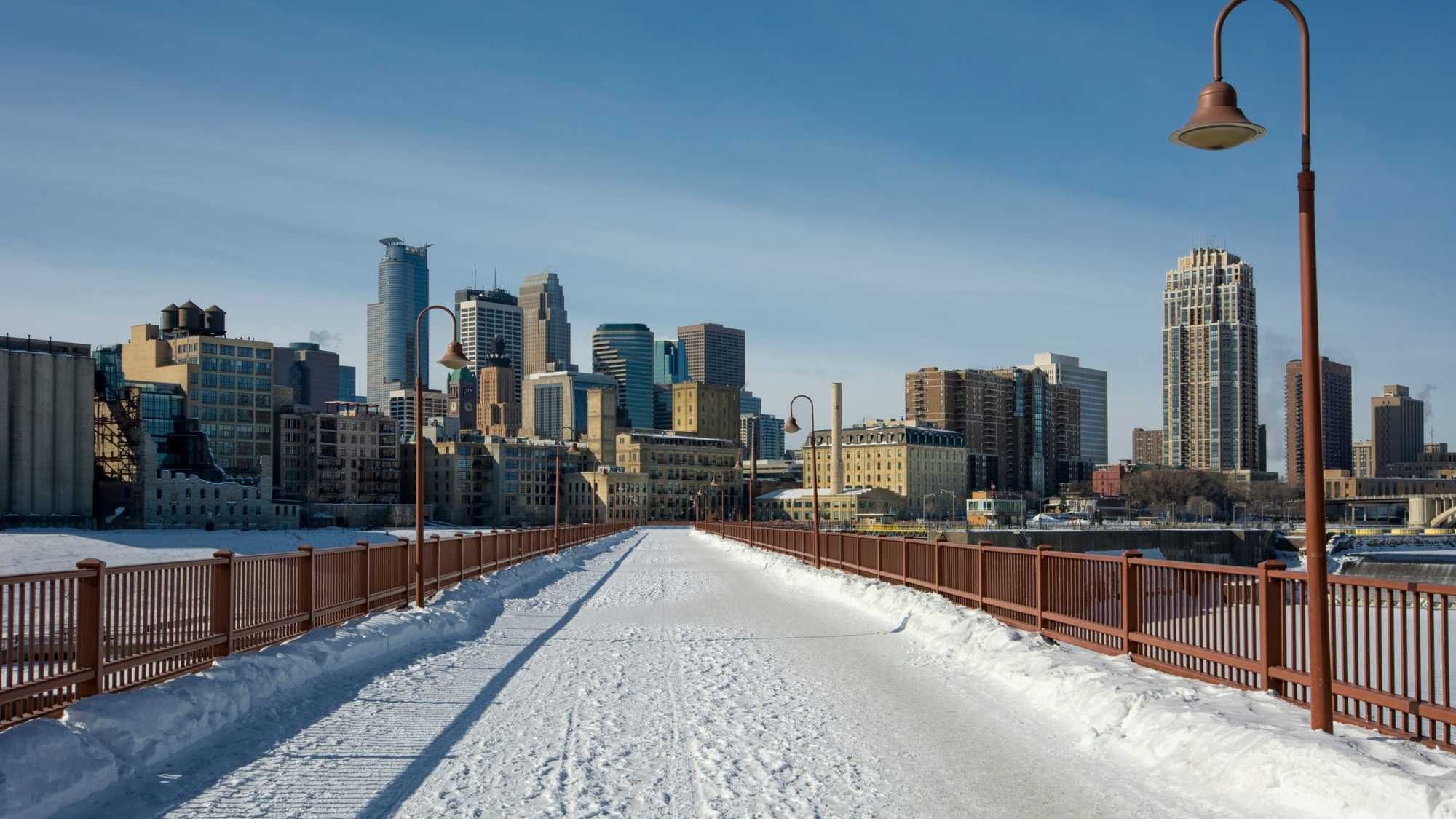


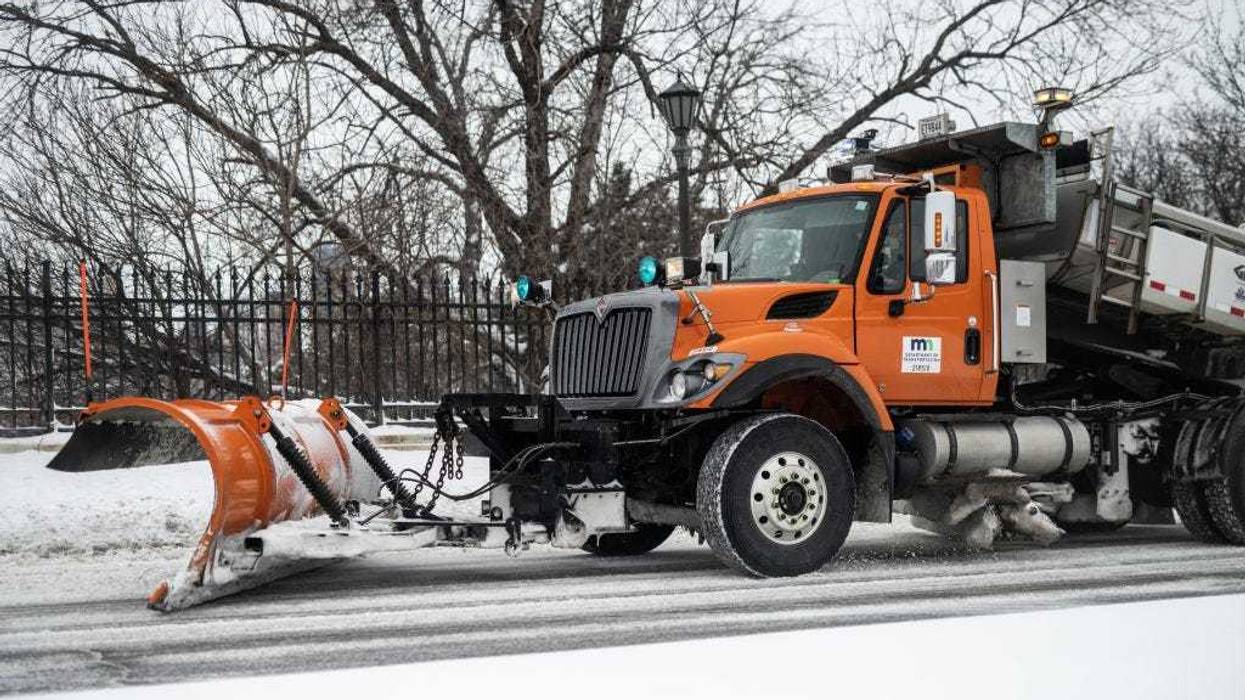

After our late-February snow storm, this week started with a wet snow, sleet mess on Monday night, Tuesday morning in the Twin Cities. And a lot more snow to the north.
Now, we get a little break with warmish temps and nothing significant weather-wise the rest of the week.
WCCO Chief Meteorologist Paul Douglas says it’s time to exhale although there’s a chance for more wet snow on Sunday.
“Nothing dramatic shaping up, although there could be a couple of inches of slush here Sunday afternoon, Sunday night,” says Douglas. “No epic snow storms and no polar punches. It is going to cool off a little bit. I see some highs in the 20s above zero by mid-March. But I think, I hope, we've seen our last sub-zero. I don't think we'll see any more time below zero.”
We could be up near 40 degrees Friday and Saturday, which will be our mildest day before it cools off a little bit next week.
FYI, by the end of March, our average high is near 50 degrees. Hang on tight.
You’re almost there.
Forecast
Thursday: More sunshine with a high of 31.
Friday: Pleasant with plenty of sunshine. High 39, low 20.
Saturday: A little cloudy, but dry. High 38, low 22.
Sunday: Light rain-snow mix. High 40, low 21.
Monday: Some leftover flurries? High 35, low 32.
Snowy Winters
There’s been about 72 inches of snowfall so far. This is already the snowiest winter since 2018-19, when 77.1 inches fell by May 1.
Where does this rank overall?
If we get to 78.4 inches or more, this will be a top ten winter. 85 inches gets us to top five territory in the metro. The latest 30-year average for March is 8.2 inches, so doing the math on that, puts us easily in the top ten. A very snowy March and April starts to get historical.
Remember when March was our snowiest month? Not anymore.
“We are seeing heavier snows in February, but less March snow than we did a generation ago,” says Douglas.
By the way, Minnesota's record snowiest winter is 1983-84 when 98.6 inches fell (phew). The famous Halloween Blizzard of 1991 brought 84.1 inches. The 2010 "Dome Collapse" winter brought 86.6 inches.
The Twin Cities have only topped 90 inches twice since records were kept (1981-82 is the other one). Only five winters have topped 80 inches. So we are definitely closing in on some rare air.
The good news is all the water stacked up on our lawns and fields will help what was a fairly serious drought across Central Minnesota last summer.
Technology to Keep Highways Clear of Snow
As a nation, we spend $4 billion a year removing snow and ice. 116,000 Americans are injured on snow and ice and over 1,000 people die. Is there a better way?
Douglas explains that in an article he read in the American Chemical Society (light reading), they propose a way of using chemical additives to roadways that keep them clear of snow and ice.
“I always thought, naively, wouldn't it be cool if they could put up solar panels along I35 and I94, and use free energy and run coils under the highway to keep the roads wet? Unless it gets really, really cold,” Douglas said. “The more I thought about that, the more I thought it might be a bad idea. What happens if it's cloudy for a week, then you need big batteries.
You need a way to store that energy on the days the sun doesn't shine.”
But according to the American Chemical Society, a group of scientists have worked on additives, adding special chemicals to asphalt.
Researchers prepared sodium acetate salt, combined it with silicon dioxide, sodium bicarbonate, and blast furnace slag waste products from power plant operations to produce powder. Then they coat the particles in the powder with a polymer solution forming tiny microcaps and replaced some of the mineral filler in the asphalt mixture with the microcaps.
In initial experiments a section of pavement made with this new additive lowered the freezing point of water to minus six degrees. They then tried this on a few ramps, and it kept the roads wet down to minus six by mixing these special chemicals with asphalt.
“So it's nowhere near prime time,” says Douglas. “I'm sure more studies have to be done, but how cool would that be if you could come up with a highway surface that naturally melts snow and ice? Hopefully in our lifetime something like that will happen.”
For now, we’ll have to continue to keep it slow Minnesota.