
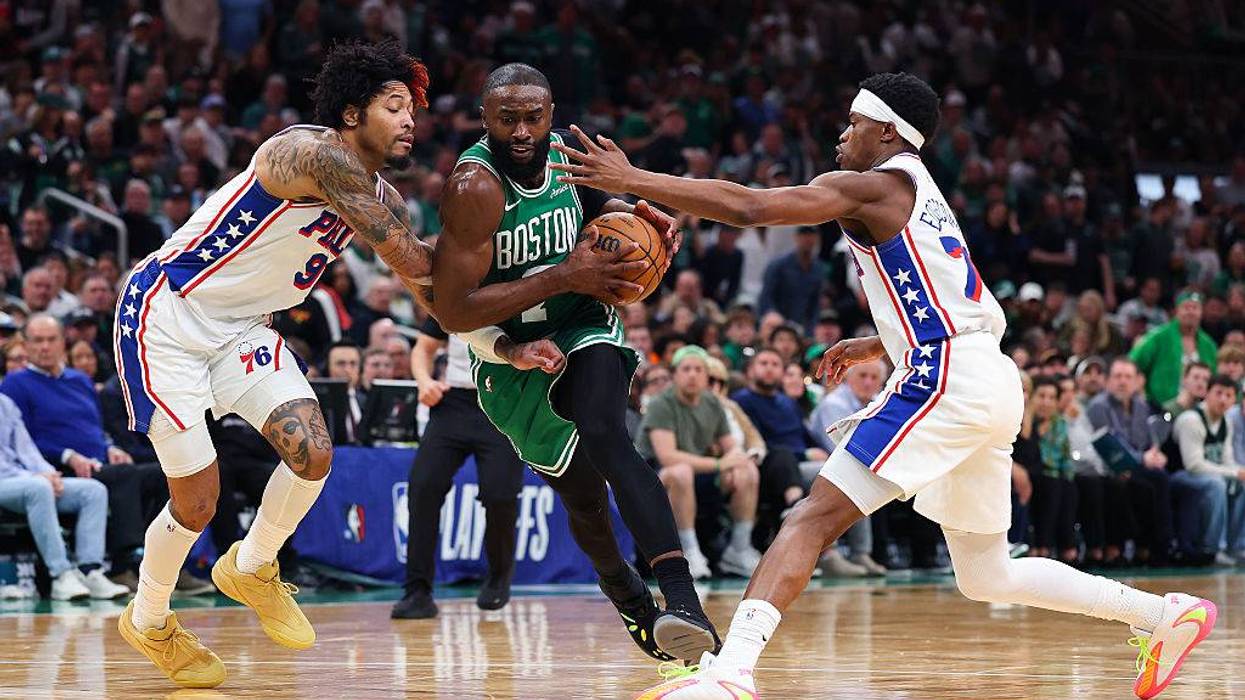

The way the Celtics brass explained the blockbuster trade of Supermax player Jaylen Brown earlier this weekend predicts a sea change in the way NBA teams will pay and play superstars in this era, and it calls for a course correction.
President of basketball operations Brad Stevens explained moving Brown wasn’t about team dynamics or analytics, but the heft of carrying two Supermax players for multiple seasons in today’s collective bargaining agreement.
“The path looked a little bit more challenging to me,” Stevens said. “I might be wrong. I'm not going to stand up there and be defensive about that. But the path looked a little bit more challenging with 70% of our cap and such a high percent of our usage tied into two players.”
It’s clear Boston sees themselves as the canary in the coal mind under the punishing new tax structure, and soon plenty of other teams – from Denver to Oklahoma City – will have to consider how to explain stomachache-inducing trades to their fanbases.
The new CBA was ratified in 2023, and the second apron first took effect in 2024 – right after the Celtics won the NBA championship. It added another layer of both financial and basketball penalties on top of the luxury tax and the first apron. The second apron carries a slew of slaps on the wrist, basketball-wise: a team cannot access the midlevel exception in free agency or absorbing contracts, can’t trade first round pick seven years out, can’t use trade exceptions from previous years, can’t use cash in trades, and – perhaps most punitively – first round picks get kicked to the back of the first round if a team stays in the apron for three of five years.
This last point is particularly important for Boston’s front office, because they were in the second apron when they ran back their championship team for the 2024-25 season.
Stevens may have looked at the setup around Brown and Jayson Tatum and decided Boston wouldn’t have been able to match New York’s depth of role players around two Supermax contracts, or he may be hoping to be able to deal a rental-version of Paul George to another team caught in similar tax constraints looking to deal a superstar next season or summer – much like the Celtics just did with Brown. The cold difference must be that said player would be closer to a year-in, year-out top-10 player than Brown was judged to be by the rest of the league, (at least determined by his seemingly limited market).
At the end of the day, this rough stuff on fans who spend a decade watching a kid pledge to “go to war” for his adopted city and win a championship. Boston loved and embraced Brown, who gave untold amounts of himself back to the community off the court.
The NBA should seriously consider what these constraints do to teams who draft, develop, and wish to retain their talent. Would it be so crazy to amend the CBA to alleviate some tax penalties if said Supermax contract rewards a healthy relationship between a player and a franchise? It wouldn’t be the first time the league has fixed this kind of blind spot, as evidenced by the Bird Rights rules. The league established the qualifying veteran free agent exception back in 1983 to preserve the relationship between the Celtics and another champ: Larry Bird.
That move forever changed the NBA’s salary cap from hard to soft, but it also kicked off one of the greatest eras of the league. And at the end of the day, that’s what the league is all about: the fans’ connection to the players and teams.