


Sure, there is a wait-and-see element to this.
What are the secondary moves to come? Can they flip Paul George? What do the draft picks ultimately become?
Those are fair questions. But they don’t change the reality of what the Celtics did on Wednesday.
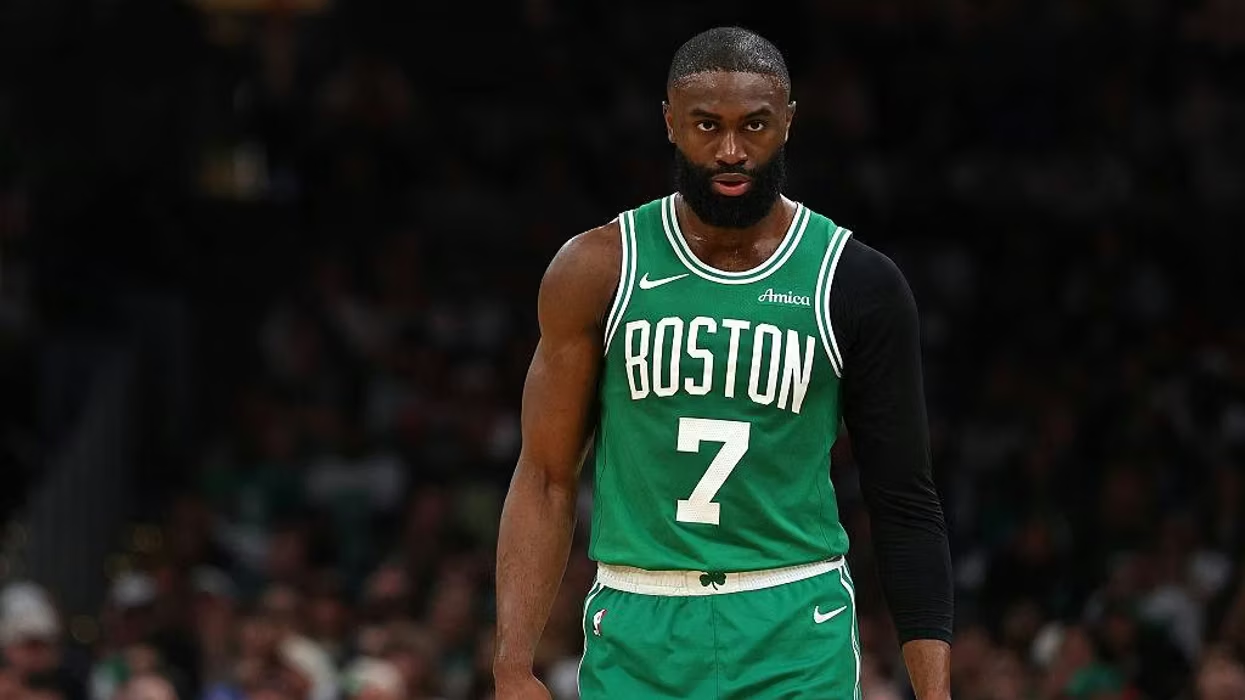
On its face, the Jaylen Brown trade is one of the worst deals in franchise history.
The Celtics got worse. They got older, trading the 29-year-old Brown for the 36-year-old George. They created virtually no financial flexibility, saving less than $3 million this season. And, they made a division rival significantly better by pairing an All-NBA talent with Tyrese Maxey, Joel Embiid, and V.J. Edgecombe, while giving the 76ers an escape hatch from a contract many around the league viewed as one of the NBA’s worst.
Not long ago, the conversation surrounding George’s contract (owed $54.1 million this season and $56.6 million next) wasn’t about what teams would give up to acquire it. It was about what Philadelphia would have to attach just to move it. Many believed that meant at least one first-round pick.
Instead, the Sixers landed Jaylen Brown, fresh off a season where he averaged career highs of 28.7 points, 6.9 rebounds, and 5.1 assists, earning Second Team All-NBA honors and finishing Sixth in MVP voting.
That’s what makes this trade so difficult to comprehend.
Brown wasn’t entering free agency. He wasn’t coming off a disastrous season. He wasn’t demanding a trade.
He was still in his prime. Still one of the league’s best two-way wings. Still under contract. Still part of a duo that had accomplished more than any pairing in basketball over the last several years.
When Brown and Jayson Tatum were healthy, the Celtics always had a chance.
No team won more regular-season games (477) or playoff games (77) during their time together. They reached five Eastern Conference Finals, more than any team in that span. They are the only team in the 2020s to win a championship and make another Finals.
So what changed?
What made the Celtics decide this partnership had run its course? What made them believe an aging George was worth breaking it up? Since being traded from Oklahoma City to the Clippers, George has appeared in more than 60 games just once. He played only 78 games over two seasons in Philadelphia.
From a basketball standpoint, the deal makes little sense.
There are no obvious short-term benefits, and the long-term return isn’t nearly strong enough to justify breaking up one of the most successful duos of the modern NBA era.
Moving Brown for Giannis Antetokounmpo is one thing.
The resume speaks for itself. Before last season, Antetokounmpo had earned First Team All-NBA honors and finished in the top four of MVP voting in seven consecutive seasons. He is one of only three players in NBA history to win MVP, Finals MVP, and Defensive Player of the Year, joining Michael Jordan and Hakeem Olajuwon.
That is a win-now move that would’ve brought instant championship expectations to Boston.
The same can’t be said about Paul George, two first-round picks, and a pair of second-rounders.
The only thing George does better than Brown is shoot the three. Everything else — availability, scoring, defense, and playmaking — leans in Brown’s favor.
Maybe there was more happening behind closed doors than anyone outside the organization knew. Maybe the relationship between Brown and the Celtics had simply reached a point of no return after years of ups and downs following Boston’s pursuit of Antetokounmpo.
Maybe it was a mandate from owner Bill Chisholm, whose stewardship has already been defined by cost-cutting moves. Brown’s contract runs one year longer than George’s, and he’ll become eligible for a two-year extension worth roughly $140 million later this month.
Are they already looking ahead to next year, when they could attempt to flip George’s expiring deal to build out a stronger supporting cast around Tatum and reset the repeater penalties by ducking the tax again this season?
Maybe they’re already looking ahead to next summer, hoping to flip George’s expiring contract and build a deeper supporting cast around Tatum, after resetting the repeater tax penalties. That’s a tough pill to swallow considering Tatum is just 28 years old and squarely in his prime.
Or maybe the Celtics truly believed their best path back to championship contention no longer included Brown, and this was the best return they could get for a player on a supermax contract who is not valued by the analytics.
Either way, it’s a disappointing and abrupt ending to a tenure that will almost certainly end with Brown’s number hanging in the TD Garden rafters one day. For a player who spent a decade helping define one of the most successful eras in recent Celtics history, the return simply doesn’t match what Boston gave away.
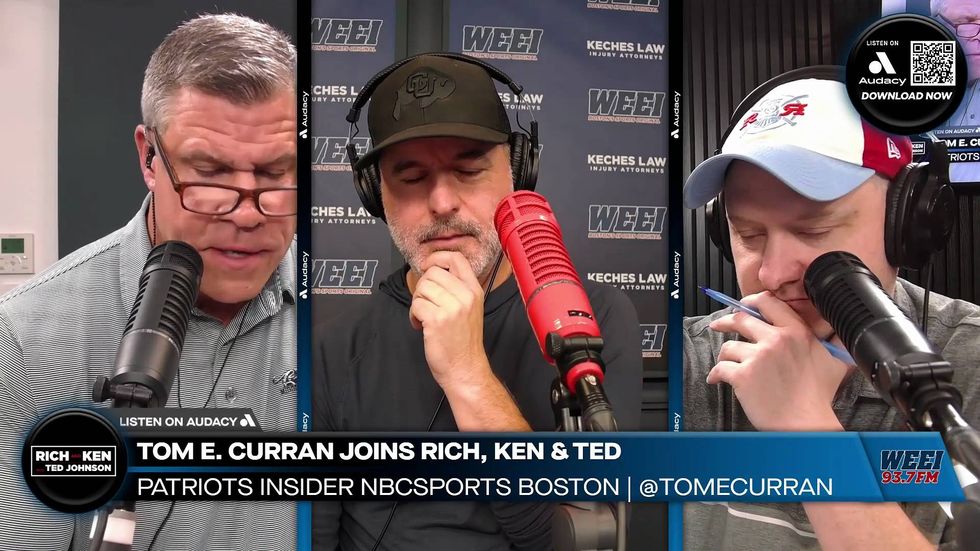
Wiggy: "THIS IS THE WORST TRADE IN SPORTS!" END OF THE JAYS!
Almost a decade together... 1 title. Expect more? Thoughts on the Tatum/Brown era together?
Greg: "Shocking" "Paul George, what is he 90?" #Celtics #JaylenBrown #NBA #Sixers
GHS Road Show presented by @millerlite ! pic.twitter.com/V4QgqMzUCG
— WEEI (@WEEI) July 2, 2026