
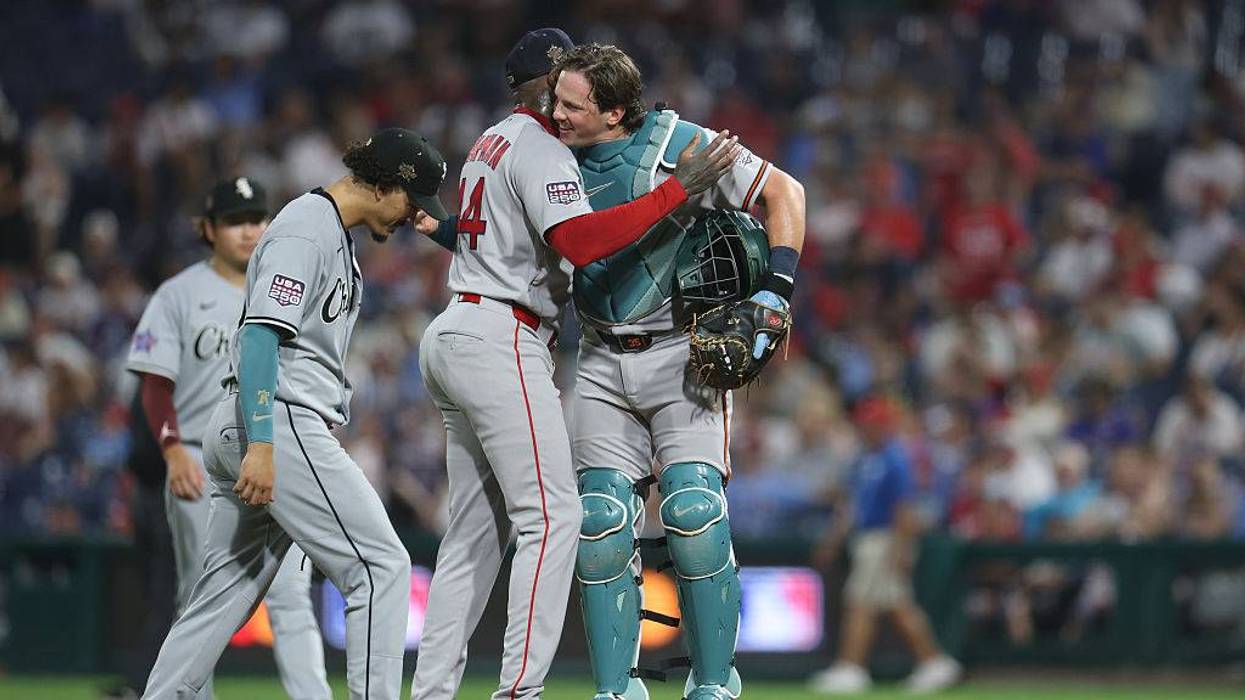

The Red Sox are going for it. With their trade deadline acquisitions of Adley Rutschman, Curtis Mead, Erik Miller, Eli White and Jake Rogers, that much is clear.
The trades for Rutschman and Mead were especially painful due to the likes of Connelly Early, Anthony Eyanson and Kyson Witherspoon departing. Just as notable was the organization’s willingness to trade Marcelo Mayer, the once future face of the organization, for a relief pitcher (Miller).
In addition to the clear message of Craig Breslow and company going after a World Series appearance, it also sends another signal of a shift in philosophy.
The Red Sox sold their fan base on the idea of “sustainability” after the trade of franchise icon Mookie Betts in early 2020. This was built around hoarding prospects and relying on developed players to be the key pieces of future contending teams. From 2020-2023, it was largely a flop.
The 2021 team made the ALCS, but that run was largely due to veterans Xander Bogaerts, Chris Sale, Kike Hernandez, JD Martinez and trade deadline acquisition Kyle Schwarber. The 2022, 2023 and 2024 teams all underwhelmed; Boston finished in last place in the AL East in 2022 and 2023, ultimately costing Chaim Bloom his job. The Red Sox then struggled to reach 81 wins in 2024. Whether you blame Bloom or ownership, the bargain basement BoSox were a failure.
After 2024, a shift began to emerge from Breslow and the front office. In December, the team signed Aroldis Chapman in free agency and traded for Garrett Crochet in the same week. The package for Crochet included the team’s number three prospect, Kyle Teel, and their 2024 first-round pick Braden Montgomery. Two months later, the team added third baseman Alex Bregman. All three players became All-Stars in 2025. The team also made the playoffs for the first time since 2021.
Prior to the 2026 season, the direction seemed mixed. Breslow let Bregman leave via free agency and failed to add a big bat to the lineup via free agency. A young player for young player deal with Milwaukee saw Kyle Harrison leave for a package that included Caleb Durbin, Anthony Siegler and Andruw Monasterio.
Breslow added pitcher Sonny Gray and first baseman Willson Contreras in separate trades with the Cardinals that saw the Red Sox part with Hunter Dobbins and Richard Fitts. Ranger Suarez was also signed to a five-year, $130 million contract. Contreras and Suarez were both All-Stars and Gray should have been (sorry, Michael Wacha). Durbin was awful at the plate to begin the season, but since June 1 he has been one of Boston’s best hitters.
That brings us to the 2026 deadline. Mayer was the organization’s third-ranked prospect in 2025; he was traded for Miller. Early was a promising young lefty, but due to the development of Payton Tolle and Jake Bennett the team felt comfortable dealing him for Curtis Mead. Eyanson and Witherspoon were the top two pitching prospects in the organization heading into the deadline and Enddy Azocar was another top five prospect in the organization. All three of them were dealt for Rutschman and all three now rank in the top 10 in the Orioles system, per MLB.com, with Eyanson being the Orioles’ new No. 1 prospect.
What does all this mean? You can’t be irresponsible and trade every prospect, but the Red Sox are now once again willing to dip into their system to be aggressive to acquire players. This is the strategy that helped them build their four championship teams in the 21st century. Perhaps the return of Theo Epstein has caused this shift. Perhaps John Henry has shown a willingness to spend more money on veterans. Or perhaps this was Breslow’s plan all along. Regardless of who you credit most, the Red Sox appear to have dropped the mantra of sustainability for the goal of contending.