

When it comes to quotes that matter, the one John Henry let slip out late in the 2019 season was a doozy.
"We need to be under the CBT," said the Red Sox’ principal owner. "That was something we've known for more than a year now."
You could hear the golf carts immediately reversing. Tom Werner. Sam Kennedy. And, a few months later, Henry himself.
"You might actually be right for once in that I don’t plan what I’m going to say before answering media questions in a live media event," Henry told the Globe's Dan Shaughnessy. "But this focus on CBT resides with the media far more than it does within the Sox. I think every team probably wants to reset at least once every three years — that’s sort of been the history — but just this week ... I reminded baseball ops that we are focused on competitiveness over the next 5 years over and above resetting to which they said, 'That’s exactly how we’ve been approaching it.'
"You seem to think Chaim was brought in to reduce payroll. That has simply not been the way FSG operates here or across the pond. We try to act responsibly so as to be consistently competitive. Your main point seems to be that I accidentally disclosed a secret plan but unlike you, I am honest about Sox issues. The question was asked and I answered it."
OK. But lesson learned. If you are a Major League Baseball organization you do not tip your hand when it comes how much money there is to spend. And that was exactly what Henry initially did.
No matter what was said after that initial proclamation, we knew $208 million was the number to get under. (You don't throw David Price into the Mookie Betts deal if that isn't a thing.) But now? We really have no idea ... And that's how the Red Sox like it.
While a normal landscape would make us surmise the Red Sox were in position to take a swing at the top tier free agents -- bathing in all that Mookie Money -- the pandemic has left us with questions. And guess what ... This time the Red Sox brass don't have answers.
All we have been left with are proclamations that the ownership group has never been more committed to winning, which are usually followed with the realities that come with baseball's fan-less economic state.
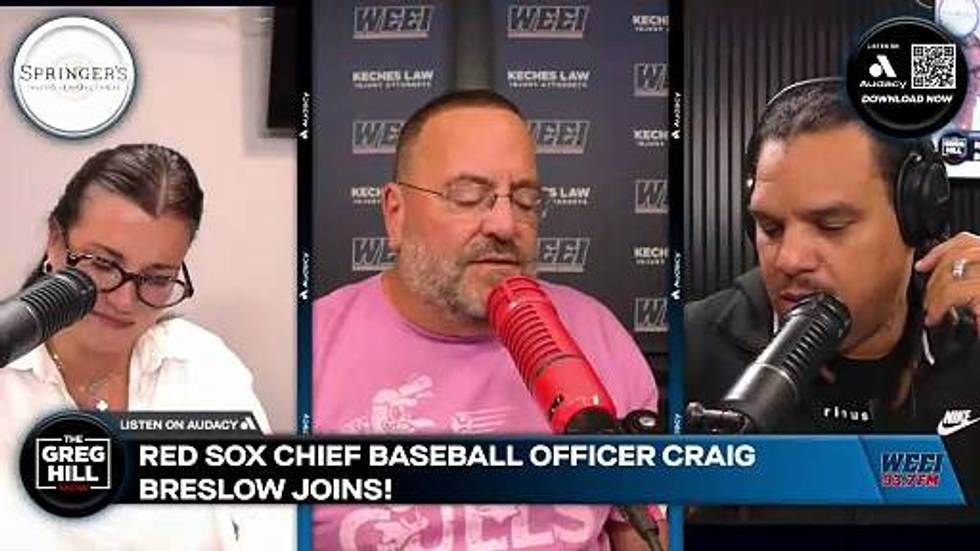
There will not be anymore tips or hints. That is ultimately what is bad for business. They knew it in 15 months ago, and they know it now. Just listen to both Kennedy and Chief Baseball Officer Chaim Bloom during recent WEEI interviews:
Kennedy: "Yeah, no one is complaining or anything like that, but the truth is it has been very, very difficult on the business for the Red Sox, the Patriots, the Celtics, the Bruins. Again, without fans our revenues are zero. It is difficult. We need to start to get our business back. It's really important. So we'll be working closely with the state of Massachusetts and others. I just hope that by spring and summer things will look a lot better. My Dad always said it's always darkest before the dawn. I know it's going to be a really difficult, December, January. So I hope and pray everyone stays safe and healthy and we can hopefully emerge from this in 2021 and beyond."
Bloom: "We talked about generally. We're not operating under any kind of a fixed cap, but we also need to be responsible. We need to understand what the pandemic has done. It's not something we as an organization is immune to. The encouraging thing for me, and it really came to light in some of the conversations I had with ownership throughout the year, is that they obviously have been in this a long time now and they are in this for the long haul. You guys know, because I talk about it all the time, our top line goal which is to be an organization that on a year-in, year-out basis can compete or the division.
"Obviously you can compete for the A.L. East annually. This division, as good as it is, you're going to be a able to compete for a World Series and that's our goal. Things that have a chance to push us meaningful toward that goal we're going to be fully behind. What that means for us in the short-term, I don't know yet. We're trying to monitor the market like everybody else is and figure out where are the best opportunities. Where can our money do the most good this winter in that market and make sure we're addressing our needs accordingly.
"I understand why the luxury tax has been such a topic of conversation around here. I get it. It's been a big deal. I understand why it's a big deal. I think we always need to be focused on that foundation. You cannot take shortcuts in doing this sustainably. If you take shortcut maybe you can do it for a year or two and then you are going to end up back in the cellar and that's no matter what you're resources are. You see organizations who are doing this year-in, year-out they aren't taking those shortcuts. They are always going to be focused on building that foundation. How when you're operating in a market like we are, and we will get back there, when we have a full Fenway Park, we have resources that allow us to do some of those big splashy things on top of that foundation. But if you don't have that foundation it's just not going to work. That's always going to be a frontline focus of ours. I would expect that to be the same in two, three, four years just as it is now."
The Red Sox aren't alone in their desire to not tip their hand. Owners everywhere want to plant the seed that there still will be money spent while in their next breath/sigh we hear about money lost. It's a tough spot, to be sure.
Take John Middleton, for instance.
The Phillies' owner was over-the-top in his insistence that his club would be the place all free agents should make their first call to. They were going to spend money like never before. And they did. They signed Zack Wheeler for five years, $118 million. Then, almost exactly one year later, the narrative had been turned inside-out.
First Middleton let it be known that the Phillies had lost $145 million due to the pandemic. That was followed by Buster Olney's report that some in baseball had heard Philadelphia was shopping Wheeler.
Middleton immediately jumped. Babe Ruth? That was just one player the Phillies wouldn't trade their starting pitcher for. Ted Williams and Mike Schmidt. They were a couple more icons used by the owner to make his point.
We get it, the Phillies aren't giving up. Sure, they might be bleeding money. Sure, the idea of re-signing catcher J.T. Realmuto isn't realistic. And maybe the team which currently owns the eighth-highest payroll in baseball has no plans to move up the charts. But, hey Phillies fans, this is still the same team that promised Bryce Harper money would be spent for year upon years upon years.
Of course, most everyone understands that times are tough for MLB teams with no fans. That reality isn't hard to fathom. But what does that truly mean for what you're going to see when it comes to spending or not spending this offseason? The delicate balance of keeping fan bases excited while thinning out their rosters is a tough one these days.
The reality in many cases have become a mystery.
Welcome to the most unpredictable Major League Baseball offseason ever.