




It could be a little worse. Just ask all of those Mets fans, who are watching David Stearns' blueprint result in an eight-game losing streak. Or a Giants team that sits at 6-12, having hit just nine home runs all season.
But the Red Sox also understand it can be a whole lot better. That was a reminder they were afforded on Wednesday afternoon in Minnesota.
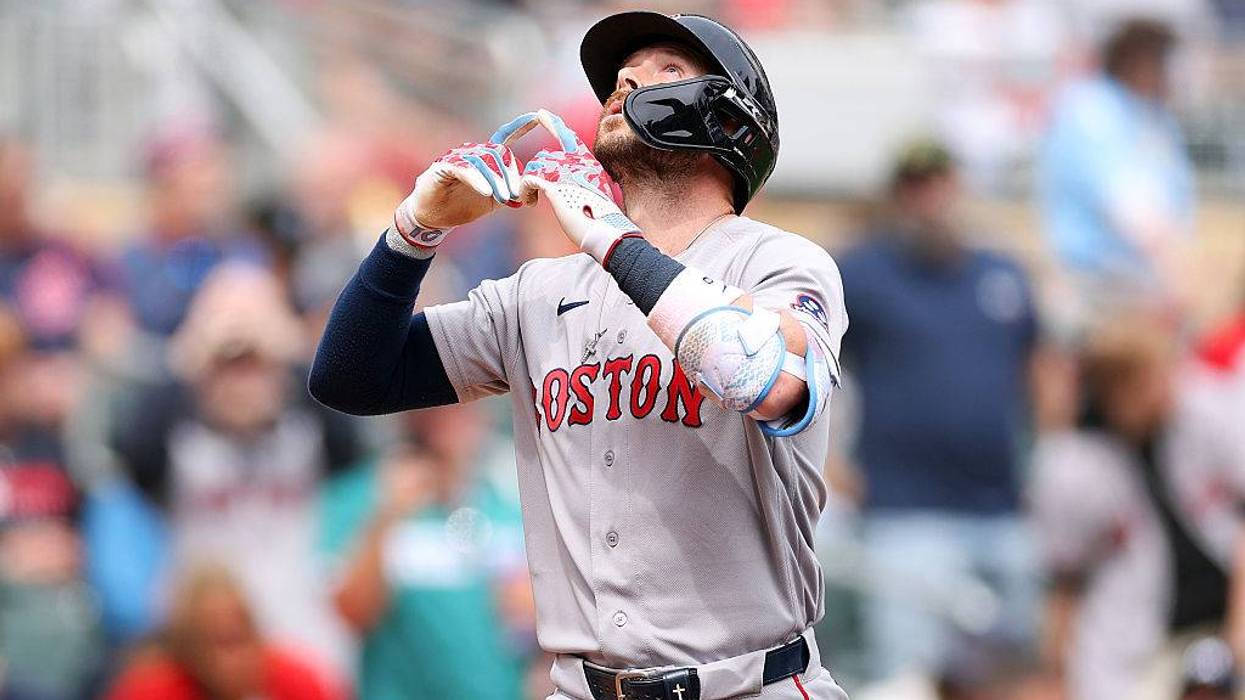
Connelly Early once again offered the appearance of a very reliable major league pitcher, this time giving up one run in six innings on the way to a 9-5 Red Sox win. There was also the five-RBI show put on by Trevor Story, the three-hit game from the emerging Andruw Monasterio and two hits apiece by Isiah Kiner-Falefa and Roman Anthony, who is 5-for-10 with three walks in his last three games.
The Red Sox put 15 runners in scoring position and won for the first time when their opponents scored four or more runs.
This is how it can work. In many ways, this is how it was supposed to work.
But as the Red Sox brace themselves for an impressive gauntlet of starting pitchers, with the Tigers and Yankees coming to town, the hope for Alex Cora and Co. is that they begin to define exactly who this team is.
The easy narrative is the one built heading into the 2026 season, that this was going to be all about run prevention. That hasn't really taken root as the Red Sox had hoped, having allowed the 10th-most runs in baseball (7th-most earned runs).
Only six pitching staffs carry worse ERAs than the Red Sox, who have also surrendered the third-most home runs. And if you choose to not to rely on ERA, consider that the Sox hurlers own the third-worst FIP (Fielding-Independent Pitching) in baseball. Or how about something like the percentage of pitches that get barreled up? The Red Sox are the worst in the majors in that category.
The Red Sox starters have given up four or more runs in eight games thus far, and they have not won any of them. The Yankees, conversely, have three such occasions, winning two. The first-place Rays? Their starters have done it three times. And the Dodgers' starters have had four games in which they have given up four or more, but the offense has rallied to win every one of them.
The problem has been that while the Red Sox's pitchers and fielders haven't been able to live up to their potential, there hasn't been enough out-of-nowhere support to tide them over.
As predicted by many, this is not a home-run-hitting team, clearing the fences the second-fewest times (12) in the majors, with just five of those coming with runners on base. Once again, juxtaposing against the best of the best, the Dodgers, Los Angeles has hit 17 home runs with somebody on base. Seventeen!
Then there is the question of who exactly should be playing, where they should play, and how often they should play. An example of the Red Sox's perplexing existence is Masa Yoshida, who has an impressive .894 OPS in his eight starts. But the Sox are 1-10 when Yoshida plays, and 1-7 when he is in the starting lineup.
So, who should be getting the majority of playing time in left field and/or designated hitter? Finding that answer, like too many things, is a work in progress. The Red Sox's left field position is middle-of-the-pack in combined OPS (.682), with their designated hitters managing just a .607 OPS (20th).
The outfield's output isn't the only conundrum the Sox didn't see coming, with their third baseman managing just a .414 OPS (only better than the Reds).
Through it all, the Red Sox find themselves with an opportunity to figure it out. They are 3 1/2 games out of first place, living in an American League filled with imperfect participants. It would really help their cause if they used this weekend to make the big reveal they had been banking on three weeks ago.