


As the womb of sports talk radio, WFAN forged this industry with icons, from Jim Lampley to Bill Mazer to Greg Gumbel. Then the most iconic sports radio duo in history — Mike and the Mad Dog — cemented the genre and the station onto the national stage.
But over time the microphone has been hijacked by synthetic hot takes and recycled narratives, sound effects and increasing profanity. More and more sports talk shows sprout up like weeds across the map, poaching the pillars of the business — such as Mike Francesa, Chris Russo, Jim Rome and Colin Cowherd — using a bastardized form of each to reach the man caves.
All of it is what makes Tony Paige so comforting. Like the chicken soup for the sporting soul, Paige didn't have theme songs, vulgar drops or scalding takes that spilled on an athlete's personal life. He was about the craft of radio and the aesthetics of sports.
Paige offered his takes in the cool monotone of a DJ at a jazz station. He was a regular guy for an audience that needed one, increasingly tired of horns and screams and self-serving posters lathering the walls. Tony never bragged about his bio, the people he knew or the fact that he was smarter than most of the audience. It wasn't an accident that Paige took the high road over the dungeon of dialogue that so often blares from your radio.
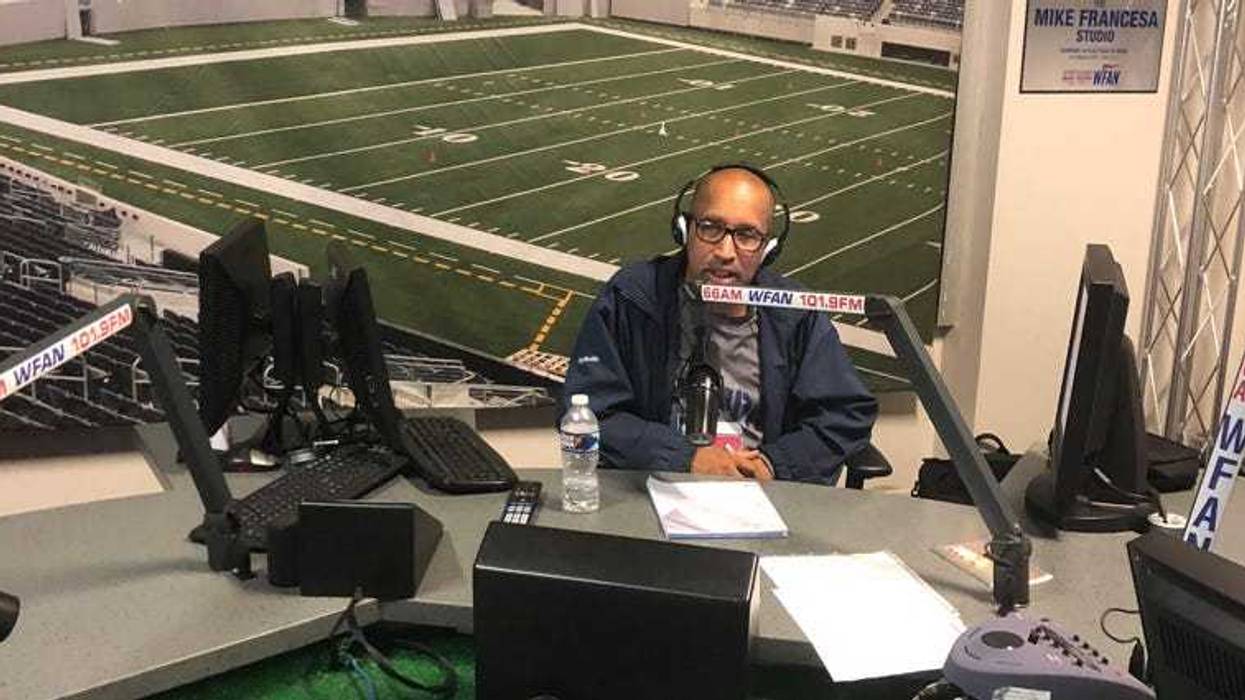
Most enlightened sports fans can smell a phony, which is why so many are flocking to the overnight show, as Paige writes the final page of his career at WFAN, hanging up his headset for good on Sept. 15. And for his listeners and admirers, this offers a peek into the mind and the man behind the voice.
Paige was born in the South Bronx and lived in the Forest Projects.
"I was walking distance from Yankee Stadium," he says. "There was a ballfield across from the old stadium where I used to play."
Paige then went to Taft High School and asserted his fondness for sports early in life.
"I put in my yearbook that I wanted to play second base for the Mets," he says.
Paige attended City College, then finished his education at Florida A&M. His first media job was for a CBS affiliate, WTNT in Tallahassee.
"I was the first black on-air newsman," says Paige. "Back in 1974."
Aware that he, like most of us hooked on sports from childhood, could not play for the Mets, Paige entered the media. After working in Florida, he came back to New York City and made his bones as a broadcaster and writer, working for WOR and NBC.
"Back then 100% sports talk radio was virgin territory," says Paige.
Then he got a call from an angel. Sort of.
"Curtis Sliwa hosted a nighttime show on WABC and asked me to co-host," says Paige, referring to the founder of the Guardian Angels. Paige also was asked to start a sports section for The City Sun, an all-black newspaper that gave him freedom to craft the sports page and perfect his craft.
Paige got his first shot at WFAN in 1995, hosting one night a week, then picking up extra shifts when he could. Then he left to work for ESPN Radio and Duva Boxing before returning to WFAN in 2003 and staying for the rest of his career.
"I hosted two shows a week," says Paige. "Then I won a contest and got the full-time gig, working overnights."
Paige also got an assist from a fellow sports media mainstay.
"Russ Salzberg got me an interview," Paige says. "He wanted me to do updates. But I wanted to host a show."
His goals, like his on-air cadence, were modest.
"I was working part-time, and my wife was working full time. If we both got full-time, we'd have a nice nest egg," he says.
In terms of time, Paige wasn't particular about which show he hosted.
"They didn't see me as a day guy," he says. "It didn't bother me."
When asked about his favorite guests, he pulled from a kaleidoscope of people, personalities and purposes.
"The late John Isaacs," says Paige, "who was a member of the Harlem Rens. His stories were incredible. Both the coach and the team are in the Hall of Fame."
Another comes from a basketball star of a different stripe.
"David Stern," Paige recalls of the former NBA commissioner. "I covered the NBA for The City Sun, and he showed me the same respect as a reporter from The New York Times. Most black papers don't even have a sports section."
Anyone who knows Paige or his show has felt his love for boxing. When asked what triggered such fervor, he thought of a fairly well-known fight.
"Ali vs. Frazier," Paige said of the classic from March 8, 1971, still billed the "Fight of the Century." "I watched it in black and white, with no sound and no undercard, in the same ballroom where Malcom X was shot."
There were a few sports figures Paige did not interview on his show, but wishes he had.
"Muhammad Ali and Mike Tyson," he says, always favoring the fight game. "I'd also say Barack Obama, Willie Mays and Jackie Robinson, who died when I was a teenager."
Paige remembers getting hooked on our pastime as a kid.
"My mom took me to Shea Stadium when I was 10," he says.
If you've wondered how or why Paige kept his low-key regularity in an industry often leveled by loud noise, he kept it typically simple.
"I blame my parents for being normal," says Paige. "Squeaky wheel gets the grease, and gets replaced."
He can occasionally get heated during his show but catches himself.
"Sometimes I get upset, but it's radio," he says. "This is supposed to be fun."
Still, it's got to be tempting to summon some kind of persona. Not for Paige, who decided he would rise or fall by being authentic.
"I've been touched the last couple weeks by all the callers telling me what I've meant to them," he says. "They say I let them talk. That I'm kind. I've always looked at it that conversation is key. A certain civility is needed. A lot of people called and said this was their first time on the show, because they just enjoyed listening to me."
Many fans may wonder how someone works overnight, which crashes against our biorhythms. As always, Paige keeps it facile.
"I got home at 8 a.m., had some breakfast, then off to sleep," he says.
If there was an afternoon ballgame, Paige says he'd watch in bed and snooze a little longer.
If you're looking for dirt on his retirement, for some soap-operatic beef with management, you won't find any.
"I turn 66 in September," says Paige. "And I said I'd retire when I turned 66."
Pressed for more details, he concedes his health is a small concern, as is the toll overnights takes on an aging body.
"I started thinking about it a year ago because I had kidney surgery. I had a clean bill of health after that," he says. "Then a checkup a month ago showed I had stones in both kidneys. Maybe it was God's way of telling me its time to do something else."
But inertia is not in Paige's lexicon. When he hangs up his mike, he won't retire his talent.
"I will be writing a couple columns a month for the Daily News," says Paige. "And I'd like to do some TV boxing coverage."
Paige was aware of the inherent conflict in careers.
"I can't be doing 11 a.m. pressers plus an overnight radio show," he says.
Plus Paige wants to write a book.
As someone who was privileged to listen to Paige from an 18-wheeler, hauling mail to post offices throughout New Jersey, and later as a guest on his show, I think I echo the public's sentiment when I declare that Paige taught us that there's nobility in being normal, even in a medium prone to narcissism.
Maybe Tony Paige will turn the page on his career, but we will bookmark the page on one of the most honest and classiest people in this, or any, industry.
Follow Jason on Twitter at @JasonKeidel.