
Beware the law of unintended consequences.
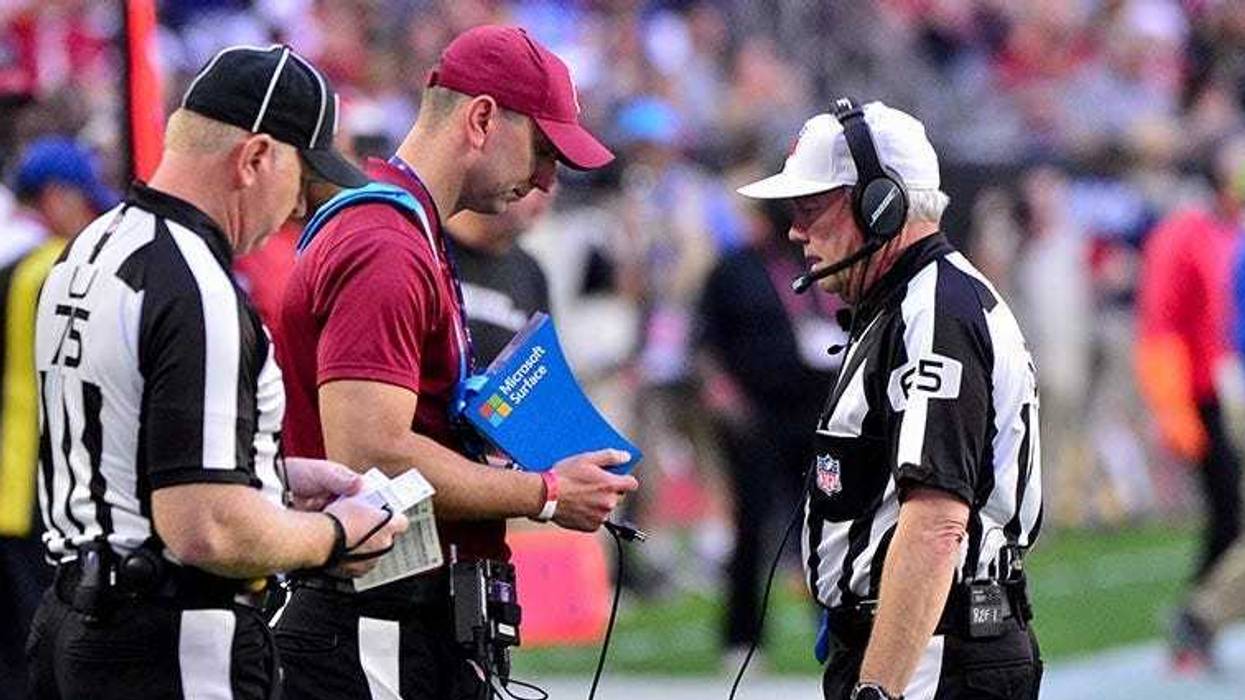
The NFL voted on Tuesday to allow challenges and replay reviews for pass interference, both called and uncalled.
The vote was 31-1, which means the Saints weren't the only ones motivated to rebel. New Orleans was denied an opportunity to advance to last season's Super Bowl when the referees missed a blatant pass interference foul on Rams defensive back Nickell Robey-Coleman, who hit Saints wide receiver Tommylee Lewis very, very early on a third-down play late in the fourth quarter of the tied NFC Championship Game. A penalty would have allowed New Orleans to run down the clock before kicking a game-winning field goal. Instead, the Rams had enough time to drive for the tying field goal and eventually won in overtime.
The remedy the NFL came up with to prevent a recurrence, unfortunately, is worse than the disease.
While the total number of challenges for each team will remain at two, with a third challenge allowed if proven correct on the first two, all plays inside of two minutes in each half are reviewable by the replay booth.
Welcome to the world of college basketball, where tight games come to a halt after each play. I won't say that pass interference occurs on every throw, but the majority of them are very close. Think about how often receivers come up off the ground throwing an imaginary flag in the air, trying to coax a pass interference call. That will be replaced by a version of the NBA finger revolving, the signal that pleads for the play to be reviewed.
And since these plays are so often indeterminable beyond a shadow of a doubt without the benefit of replay, the refs will oblige. The pressure in big games will only make it worse. Better safe than sorry, right?
Wrong. The league is messing with one of the best parts of their games—the drama in two-minute drills, especially when the driving team is out of timeouts. Almost every Hail Mary, no matter the result, will require a five-minute post-play process.
There's enough dead time at NFL games for TV commercials. Do we really need all these extra breaks in the action?
I'm not opposed to technological advances in sports. In some cases, like in baseball where a Yale study found errors in about a third of all balls-and-strikes calls that landed within a quarter-inch inside or outside the strike zone, I think it's imperative that MLB owners wake up and smell the century.
Football, unfortunately, does not contain such a static environment. With all the moving parts, the game has to be officiated under subjective eyes, which may or may not have the correct angle to make the proper call or non-call.
As a compromise, maybe the league could have made an exception and just included OPI/DPI in the list of areas subject to coach challenges, but not automatic replay reviews inside two minutes. Coaches would need to save one of their challenge flags. If they were out of timeouts inside two minutes, an incorrect challenge would result in a 5-yard delay of game penalty, like in hockey after a coach loses an offsides challenge before a goal against. Or maybe make it 15 yards for unsportsmanlike conduct to ensure that the challenge flag is only used for badly missed calls.
Replay reviews, remember, were meant to confirm big plays like scores and change of possessions. Instead, replay is too often used to attempt to nail down exact spots on the field and whether a substituted player got off the field in time for him to not affect the play.
It was never supposed to eliminate all misjudgments, no matter how egregious. Would the Saints have felt any differently if, for instance, it was a defensive hold that was missed? Or what about all the shenanigans that occur in the trenches on virtually every play? These wouldn't be reviewable under the new guidelines either.
Human error will always be a part of sports. Replay helps minimize the damage from officiating mistakes, but it shouldn't have to come at the expense of messing with the essence of the games.
For a FAN's perspective of the Nets, Devils and Jets, follow Steve on Twitter @SteveLichtenst1.