

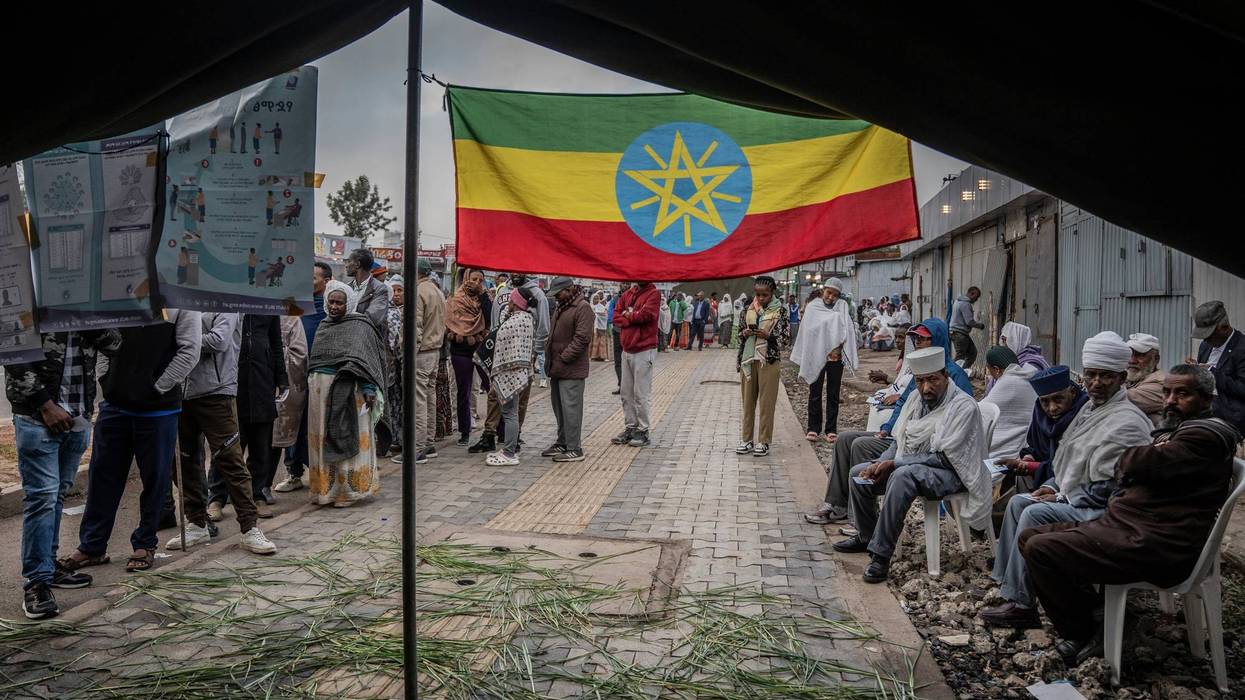

ADDIS ABABA, Ethiopia (AP) — Ethiopians voted Monday in an election marred by insecurity but widely expected to see the ruling Prosperity Party secure the majority of legislative seats and give Prime Minister Abiy Ahmed another five-year term.
A heavy military presence was observed in the capital, Addis Ababa, as watchdogs called for a peaceful vote in the country that is Africa’s second most populous and host of the African Union.
The head of the electoral commission, Melatework Hailu, said security incidents were reported at polling stations in two volatile regions, Oromia and Amhara. Voting resumed at some but did not at 143 others, and it was not clear whether voters would have another chance to cast ballots.
No details were given about the insecurity. Voting in 50,000 other polling stations proceeded as Ethiopians choose more than 500 members of the House of Representatives, who will vote to select the prime minister.
More than 50 million people, out of Ethiopia’s estimated population of 130 million, are registered to vote. Voters are also electing members of local government councils. Results were expected later Monday.
But the Tigray region again was not taking part in the election, denying it a voice in parliament and further pushing it to the margins after years of friction with the federal government, including armed conflict. The region has not had federal representation for six years.
Elsewhere, opposition parties have raised concerns over what they describe as a shrinking political space, alleging that they were prevented from campaigning. Ethiopia has also faced criticism over reported human rights abuses targeting government critics and journalists.
A human rights defender, Noah Yesuf, called the election illegitimate "from the beginning."
“The fairness of an election is judged by whether there is a level playing field for the opposition and a conducive environment for citizens to freely participate,” he told The Associated Press.
There was an element of voter apathy as some citizens said they felt let down by politicians.
But Senait Dereje, a 37-year-old shopkeeper, said she was certain her vote matters.
“I am not sure if my vote will bring the change that I want and that will help change my livelihood,” Dereje told the AP. “I know many friends refuse to vote as they have given up on the politicians, but I have not and I see it as a referendum-like vote on the mixed record of the government."
This year’s election themes highlight national reconciliation due to fighting in regions including Tigray, Oromia and Amhara.