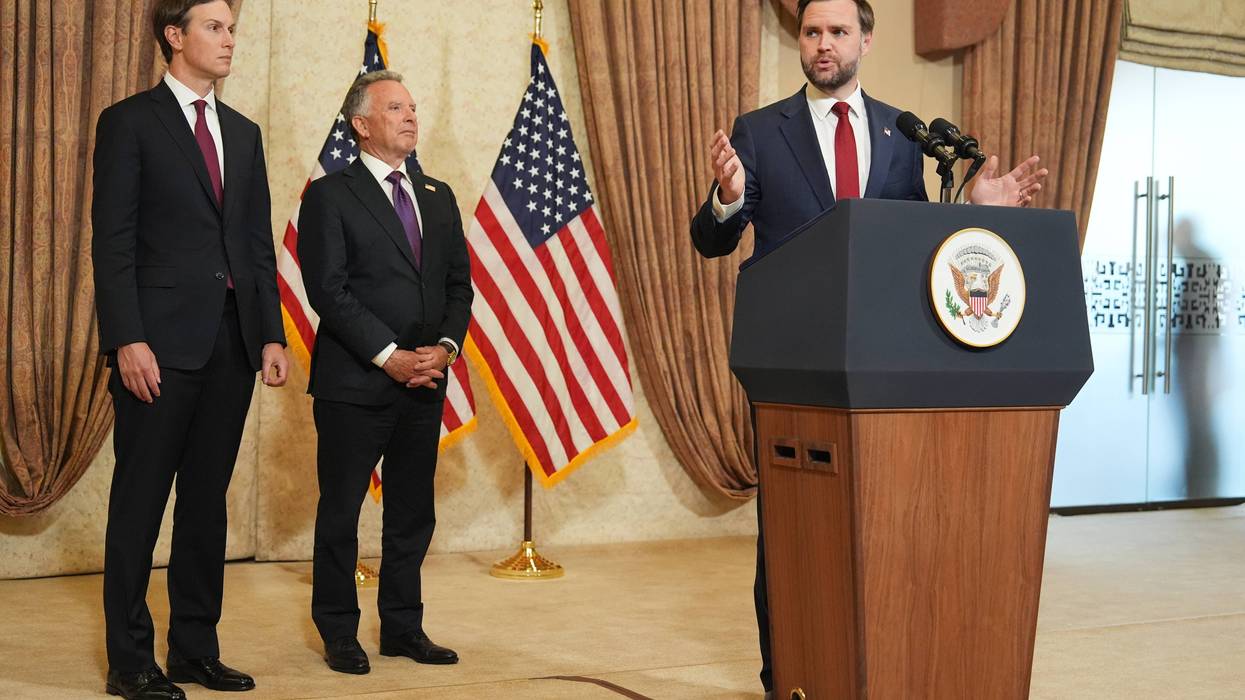



Vice President JD Vance said negotiations between the United States and Iran ended early Sunday without a deal after the Iranians refused to accept U.S. terms to not develop a nuclear weapon.
The high-stakes talks in Pakistan ended after 21 hours, Vance said, with the vice president in constant communication with President Donald Trump and others in the administration.
“But the simple fact is that we need to see an affirmative commitment that they will not seek a nuclear weapon, and they will not seek the tools that would enable them to quickly achieve a nuclear weapon,” Vance told reporters.
The war that has killed thousands of people and shaken global markets entered its seventh week.
The U.S. delegation led by Vance and the Iranian delegation led by parliament Speaker Mohammad Bagher Qalibaf had discussed how to advance a ceasefire already threatened by deep disagreements and Israel’s continued attacks against the Iranian-backed Hezbollah in Lebanon.
Here is the latest:
Pope Leo XIV demands ceasefire in Lebanon and respect of international law
Leo said Sunday he was “closer than ever” to the people of Lebanon at the end of his noontime prayers, and called on all sides to stop fighting and seek peace.
“The principle of humanity, inscribed in the conscience of every person and recognized in international law, entails the moral obligation to protect the civilian population from the atrocious effects of war,” Leo said.
Though Israel’s strikes over Beirut have calmed in recent days, its attacks on southern Lebanon have intensified alongside a ground invasion it renewed after Hezbollah launched rockets toward Israel in the opening days of the U.S.-Israeli war against Iran.
Leo wished Christians celebrating Orthodox Easter, and said he hoped especially that the international community doesn’t turn its back on the “beloved people of Ukraine.”
He noted that Wednesday marks the third anniversary of the “fratricidal war” in Sudan, and appealed for talks to end what he called an “inhuman tragedy.”
Iranian official says key demands include war reparations and controlling Strait of Hormuz
Iran’s First Vice President Reza Aref said Tehran sought U.S. recognition of its control of transit through the Strait of Hormuz in the collapsed Islamabad talks.
Iran having “authority in the Strait of Hormuz” and pursuing compensation for the damage caused by U.S. and Israeli strikes were “the rights of the (Iranian) people," he said.
“This is our firm commitment to a strong Iran,” Aref wrote on social media.
Iran’s chief negotiator in Pakistan blames the US for failing to reach a deal
In a series of posts on X, Parliament Speaker Mohammad Bagher Qalibaf said the Iranian delegation provided “forward-looking initiatives” during the 21-hour talks but the Americans could not gain Iran’s trust.
He said now is the time for the U.S. “to decide whether it can gain our trust or not.”
He didn’t elaborate. But Iranian state media reported earlier that major points of disagreement included Iran’s nuclear program and transit through the Strait of Hormuz.
Turkish politicians condemn Israel’s criticism of Erdogan
Israeli Prime Minister Benjamin Netanyahu on Saturday criticized Turkish President Recep Tayyip in a post on X in which he wrote: “Israel under my leadership will continue to fight Iran’s terror regime and its proxies, unlike Erdogan who accommodates them and massacred his own Kurdish citizens.”
In response, Omer Celik, spokesperson of the ruling Islamic-oriented Justice and Development Party, or AKP, said Sunday that Israel’s comments aimed to sabotage the peace talks in Pakistan, foment unrest among the Kurdish minority and pit Turkey against Iran.
Numan Kurtulmus, the speaker of Turkey’s parliament, called Netanyahu “the ringleader terrorist of the 21st century’s massacre and terror network.”
“The audacity of someone whose hands are stained with children’s blood — someone pursued by international law — to presume to lecture Turkey on morality is merely an indicator of his efforts to cover up his own crimes against humanity, and it holds no validity whatsoever,” Kurtulmus said.
Israeli strike kills 6 people in southern Lebanese town
The strike on Sunday morning hit a home of seven people in the Lebanese town of Maaroub, Lebanon’s state-run National News Agency reported.
The strike came without warning, and Israel did not immediately comment on it.
Israel’s government has said its strikes target operatives or infrastructure belonging to the Hezbollah militant group.
Israeli strikes over Beirut have decreased in recent days, but its attacks on southern Lebanon have intensified alongside a ground invasion.
Iranian delegation leaves Islamabad
Iran's state-run TV said the delegation left Pakistan's capital after talks with the U.S. failed to reach a deal.
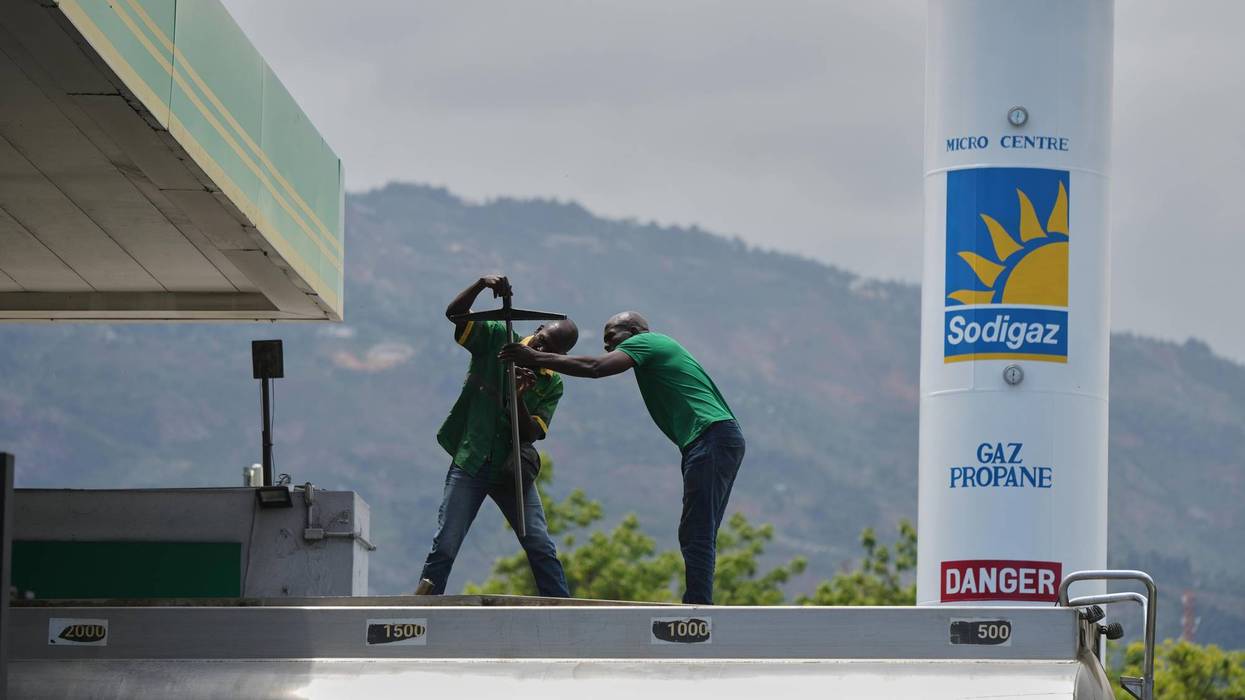
Saudi Arabia says East-Wast oil pipeline restored to full capacity
The East-West pipeline, used to send oil to the Red Sea for transport, was repaired after an attack, the Saudi Energy Ministry said in a statement Sunday. It said it has full capacity of about 7 million barrels a day.
The pumping station was attacked Thursday, affecting about 700,000 barrels of output through the pipeline, which has allowed Saudi Arabia to continue exporting a substantial portion of its oil.
Saudi Aramco operates the pipeline from the Aqaiq oil processing center near the Persian Gulf to the Yanbu port on the Red Sea, avoiding the Iranian chokepoint on the Strait of Hormuz and the Persian Gulf. The ministry said the Manila oil field was also repaired, restoring a capacity of around 300,000 barrels a day.
It said work was still underway at another field, Kurais, to restore a capacity of another 300,000 barrels a day.
Iran says talks broke down over ‘2 to 3 big issues’
Iran’s Foreign Ministry said Sunday that negotiations with the U.S. fell apart over a “gap between our opinions over two or three important issues.”
“Ultimately the talks didn’t result in an agreement,” spokesman Esmaeil Baghaei told Iran’s state TV. He did not detail what those issues were.
On some topics, Baghaei said U.S. and Iranian negotiators “actually reached mutual understanding.” The negotiators discussed the Strait of Hormuz, Baghaei said, but did not mention discussion of nuclear weapons.
Pakistan calls on Iran, US to keep commitment to ceasefire
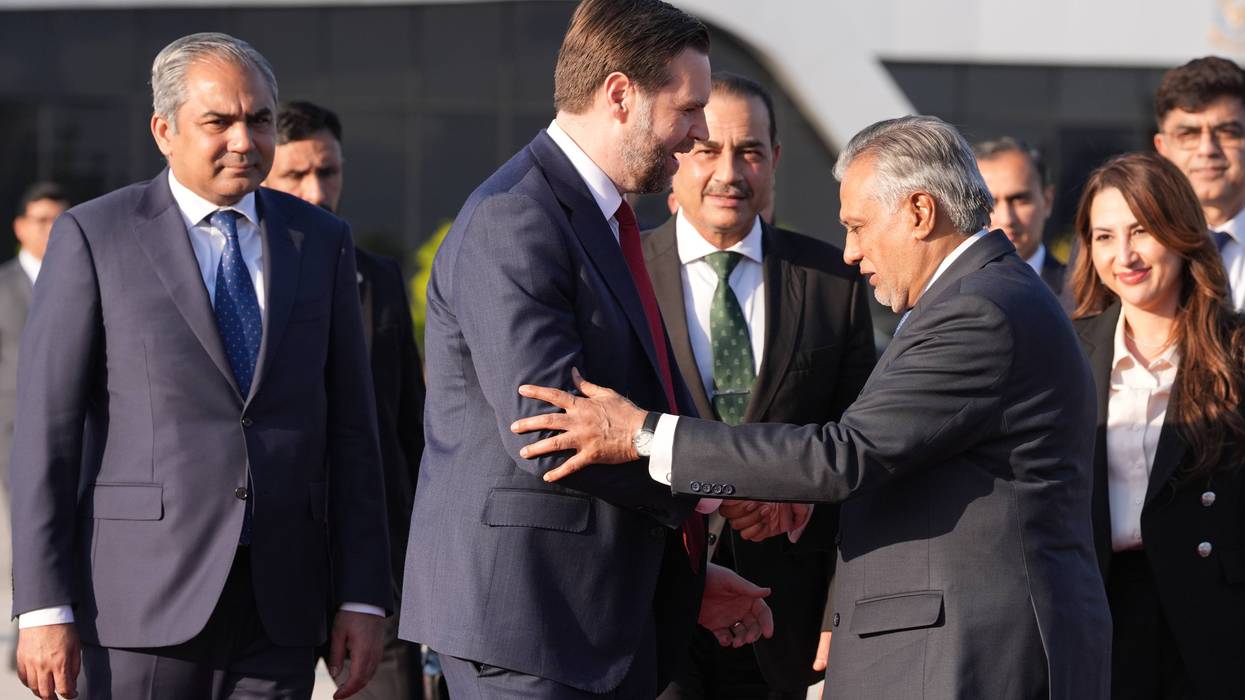
Pakistan’s Foreign Minister Ishaq Dar called on Iran and the United States to keep their commitment to maintain a ceasefire, after both countries ended historic face-to-face talks without an agreement.
“It is imperative that the parties continue to uphold their commitment to ceasefire,” Dar said.
He added that Pakistan will continue to play is mediating role and will try to keep facilitating the dialogue between Iran and the U.S. in coming days.
Vance leaves Pakistan after impasse in negotiations with Iran
Vice President JD Vance boarded his government plane at 7:08 a.m. local time in Islamabad, planning to depart Pakistan after he said that Iran declined to back down on developing a nuclear weapon.
That’s according to a reporter traveling with Vance.
The war with Iran started at the end of February and the extensive talks ended after 21 hours. The U.S. and Iran agreed to a two-week ceasefire on April 7 for negotiations.
Vance says talks with Iran ended without agreement
Vice President JD Vance said negotiations between the U.S. and the Iranians have ended without a peace deal after the Iranians refused to accept American terms to not develop a nuclear weapon.
The high-states talks ended after 21 hours, Vance said, with the vice president in constant communication with President Donald Trump and others in the administration.
“But the simple fact is that we need to see an affirmative commitment that they will not seek a nuclear weapon, and they will not seek the tools that would enable them to quickly achieve a nuclear weapon,” Vance told reporters. “That is the core goal of the president of the United States. And that’s what we’ve tried to achieve through these negotiations.”